The cat app that takes cats seriously
Clicker lessons from sit to high five, play built on the hunt, a litter log and a health log, made for cats rather than borrowed from a dog app.


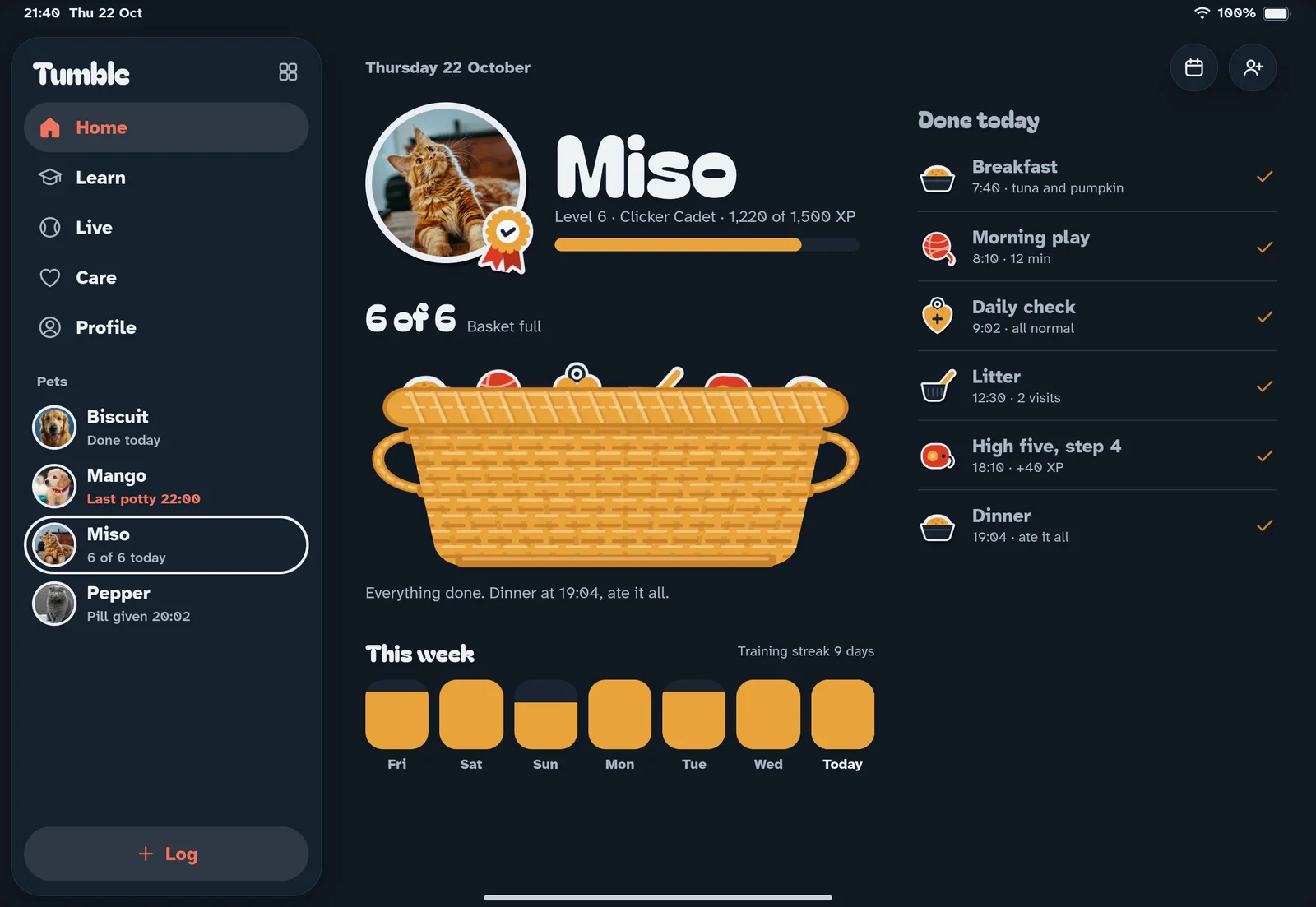
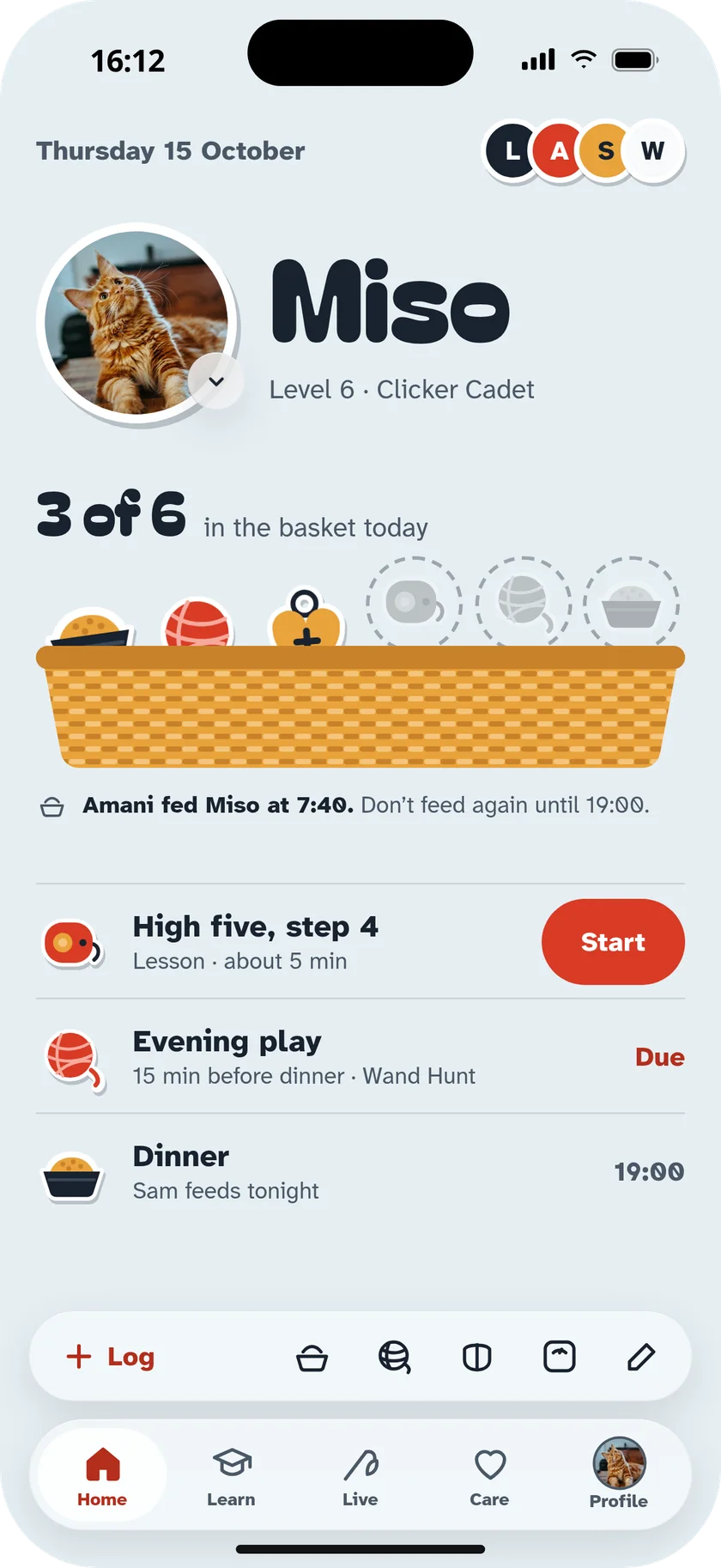
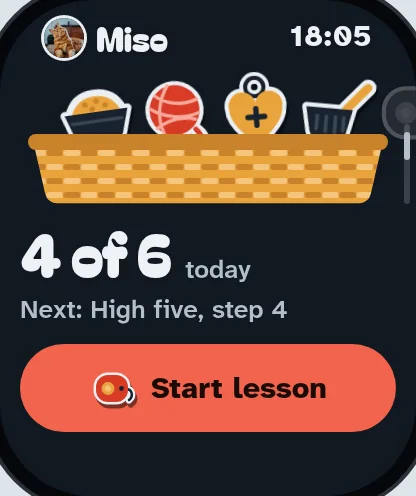
What's inside
Learn
74 clicker lessons in five courses: Foundations, Starter tricks, Intermediate tricks, Agility, Advanced and shaping.

Play
25 games that follow the real hunt, stalk, chase, pounce, catch, then a snack. Plus puzzles from very easy to expert.
Meals
Log a meal in a tap, flag a cat who stops eating, and never feed twice.
Care
Litter log, weight, FVRCP and flea dates, and a report your vet can read.
30 levels, one pet at a time
- 1Curious Kitten
- 2Treat Finder
- 3Paw Practiser
- 4Treat Seeker
- 5Box Inspector
- 6Clicker Cadet
- 7Whisker Master
- 8Trick Tabby
- 9Agility Ace
- 10Purrfessor
- 11Cat Laureate
- 12Feather Chaser
- 13Puzzle Prowler
- 14High-Five Hero
- 15Shelf Scaler
- 16Hoop Hopper
- 17Tunnel Racer
- 18Weave Wizard
- 19Shaping Sage
- 20Cue Captain
- 21Pounce Pro
- 22Course Champion
- 23Tail Tactician
- 24Grand Mouser
- 25Purr Virtuoso
- 26Velvet Paw
- 27Basket Elder
- 28Feline Sovereign
- 29Nine Lives Master
- 30Legend of the Basket
Popular guides
All guidesLesson · 3 min
How to teach your cat to high five
Your cat taps your raised palm with a front paw, a friendly first trick most cats learn in a week.
Lesson · 2 min
Clicker training for cats: how to charge the clicker
Teach your cat that one short sound always means a treat is coming. Pick a clicker, soft click or word.
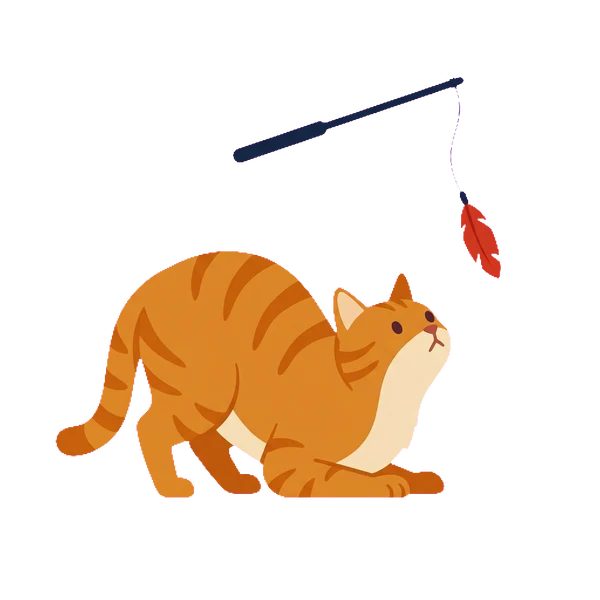
Game · 10 min
Wand hunt for cats: how to play
The everyday hunt. Move a wand toy like prey so your cat can stalk, chase, pounce and finally catch it, then wind down with a snack.
Lesson · 3 min
How to teach your cat to come when called
Pair a special recall sound with great treats, then call your cat from further away.
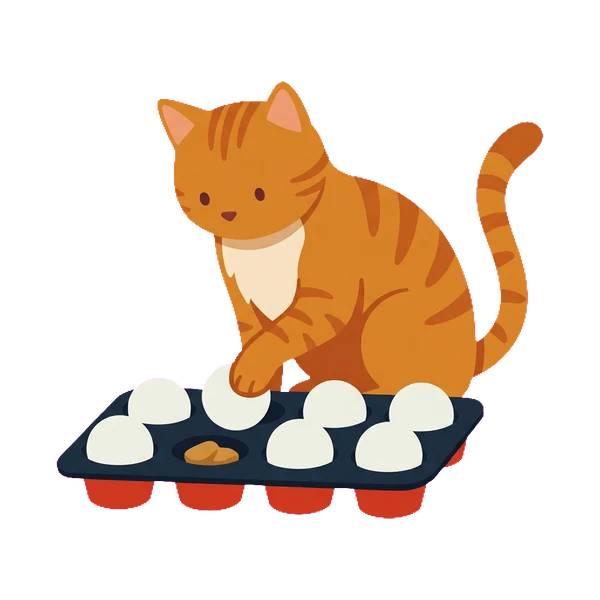
Game · 10 min
Muffin-tin puzzle for cats: how to play
Kibble in a muffin tin, cups covered with balls. Your cat scoops the balls out to find the food.
Lesson · 3 min
How to teach your cat to jump through a hoop
Your cat goes through a hoop on the floor, then raised a little until it hops through.

Call the vet now if you see
From Tumble's red-flag guide. General guidance, not diagnosis.
- Straining to pee with little or nothing coming outA cat who keeps going to the litter tray and passes little or no urine may be blocked. This is most common in male cats and can be fatal within a day or two.
- Open-mouth breathing or struggling to breatheCats rarely pant. Breathing with the mouth open, fast breathing at rest or a heaving belly is an emergency.
- Sudden back leg weakness or paralysis with painA cat who suddenly cannot use one or both back legs, crying in pain, may have a blood clot blocking the leg arteries.
- Contact with lilies, antifreeze, paracetamol or dog flea treatmentSome poisons are deadly to cats even in tiny amounts. Go now, before signs show.
- Collapse, unresponsive or can't standA cat who collapses, is floppy, or cannot get up needs a vet now.
- Seizure longer than 5 minutes, or more than one in a dayOne short seizure that stops on its own needs a vet call. A long seizure or a cluster is an emergency.
Worth reading
- Why cats bite and scratch: the main types of aggressionMost cat aggression is fear, play, pain or frustration, not spite. Learn the common types, what triggers each, and safe ways to reduce it.
- Do cats love us? The science of attachmentCats are not aloof. Research shows many form secure bonds with their people, recognise our voices and read our moods. Here is what the studies say and how to build a strong bond.
- Choosing a marker: clicker, soft click or wordSome cats love the clicker; others flinch at it. Compare box clickers, soft clickers, pen clicks, tongue clicks and verbal markers, and pick the right one for your cat.
- Clicker training basics for catsHow a clicker works, how to 'charge' it, timing, treat delivery and the most common beginner mistakes. Everything you need before your first lesson.
Questions
Can cats really be trained?
Yes. Cats learn with the same clicker method as dogs: mark the moment, pay with a treat, keep sessions to a few minutes. Most cats learn sit and high five within a couple of weeks.
My cat is shy. Will this work?
Lessons start with tiny steps and a soft click option. Play-first sessions and choice-based training suit shy cats well.
Is it OK for indoor cats?
Indoor cats benefit most. Tumble's play and puzzle games are designed for small spaces and short sessions.
Fill today's basket.
Every lesson, game, walk and meal you log drops a toy in the basket. Six toys and the day is done.
Scan with your phone
Your camera opens the right store for your phone.