Choosing a marker: clicker, soft click or word
Some cats love the clicker; others flinch at it. Compare box clickers, soft clickers, pen clicks, tongue clicks and verbal markers, and pick the right one for your cat.
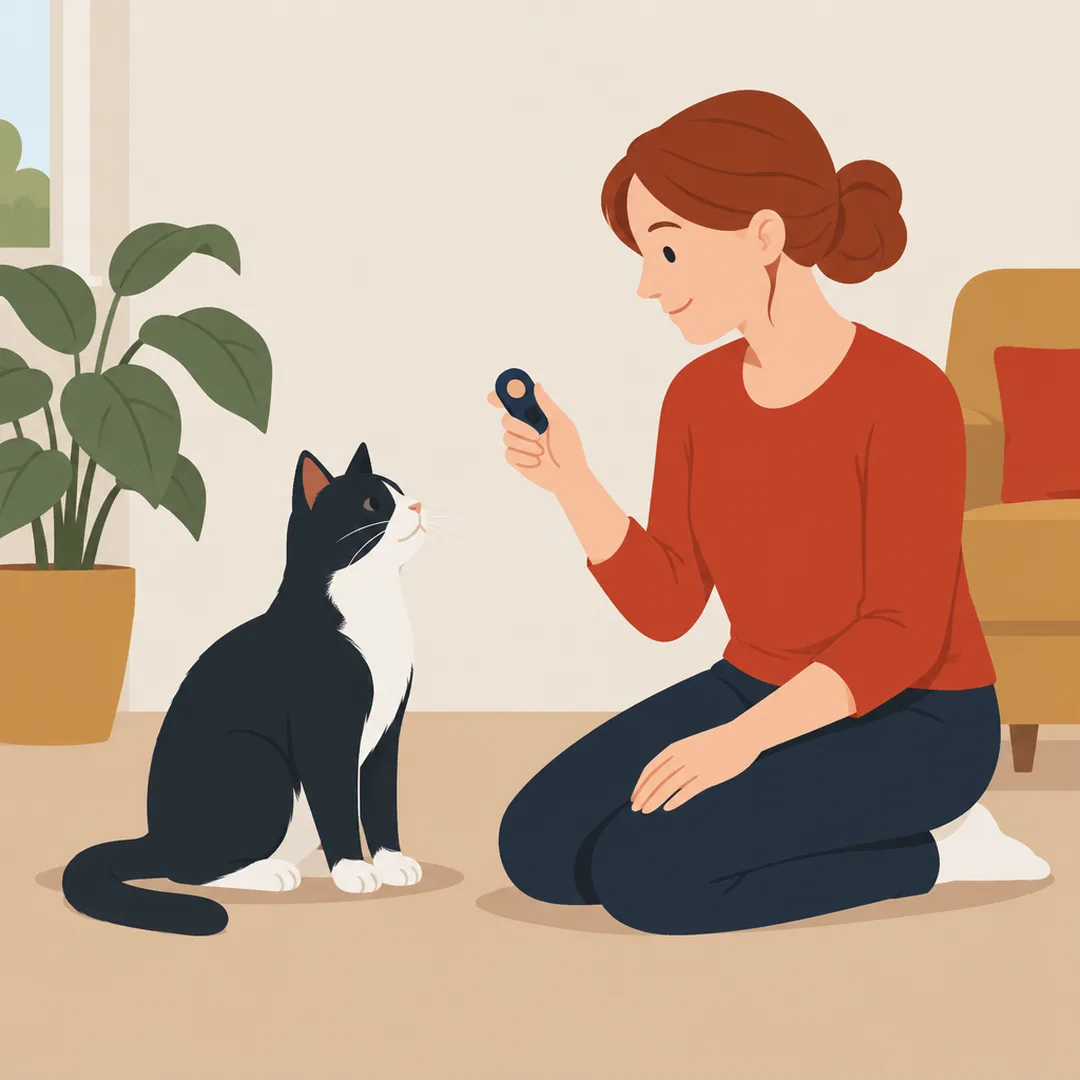
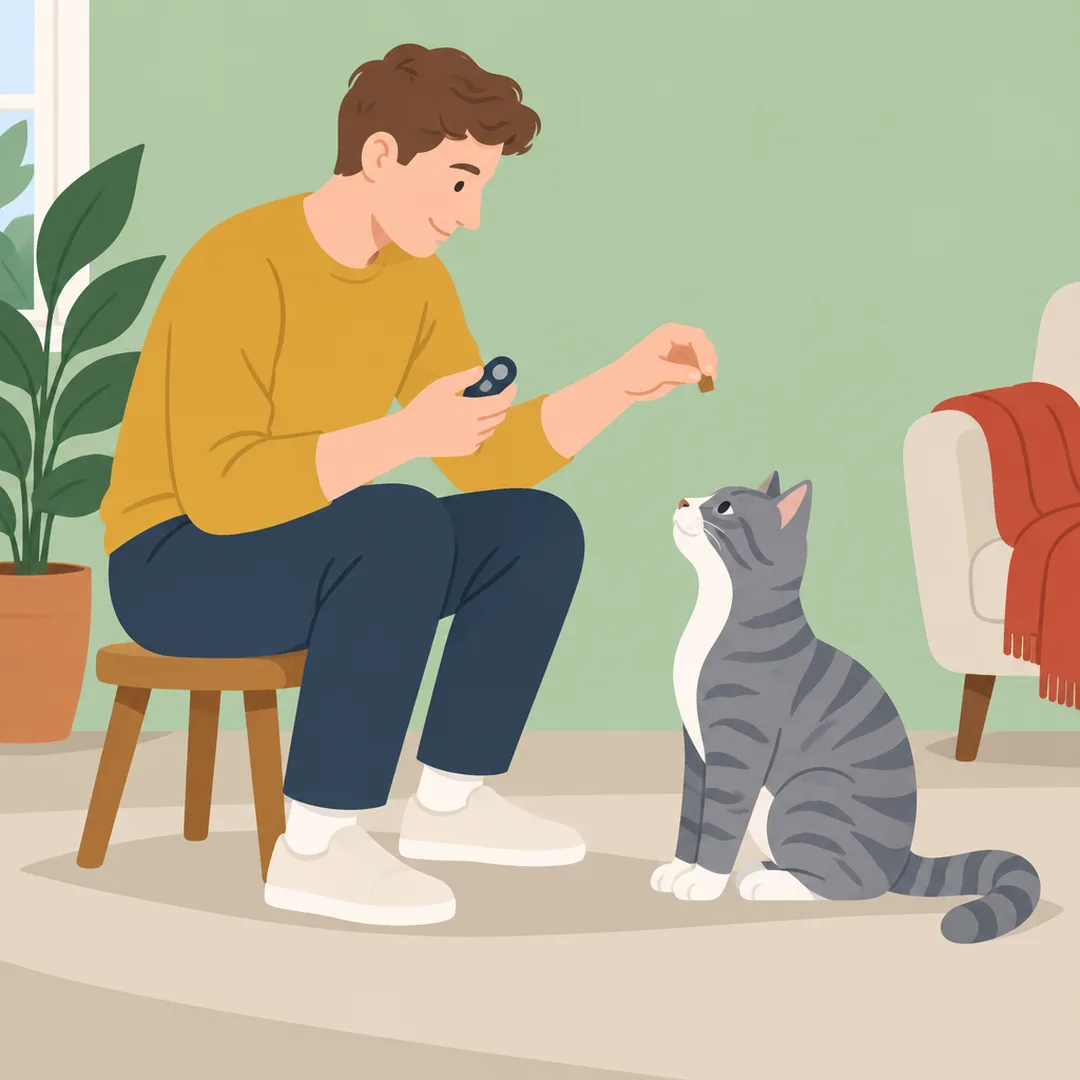
A marker is a signal that tells your cat "yes, that". It can be a click, a quieter click, a sound you make with your mouth, or a short word. What matters is that it is short, always the same, and always followed by a reward. Cats have very sensitive hearing, so the right marker for one cat can be too much for another.
What makes a good marker
- Short and distinct. It should not sound like everyday noises or words you use all the time.
- Consistent. The same sound every time, from everyone who trains the cat.
- Comfortable for your cat. It should catch attention without startling.
- Easy for you. You should be able to make it at the exact moment, while also handling treats or a target.
Your options
Box clicker. The classic metal tongue in a plastic box. Very loud and very precise. Great for confident cats, noisy homes or training across a room. Too sharp for many sound-sensitive cats.
Button clicker. A click from a small button. Usually a bit softer, easy to use one-handed, and many have a wrist strap.
Soft click or pen click. A retractable ballpoint pen, a soft clicker sold for sound-sensitive animals, or the lid of a snap jar. Much quieter, still precise. A good default for cats, and the "soft-click" option in Tumble lessons.
Tongue click. Clicking your tongue against the roof of your mouth. Always with you, hands free. Make it distinct from the sound you use to call your cat.
Verbal marker. A short word such as "yes" or "good", said in the same tone each time. Always available, but slower than a click and easy to blur with normal talking. Pick a word you do not use often around the cat, or a sound like "tsk".
Visual marker for deaf cats. A thumbs-up, an open-hand flash or a brief flash of a small light (not into the eyes). Deaf cats learn visual markers well.
Testing your cat's reaction
Cats can hear frequencies up to around 85 kHz, far higher than people can, and loud sudden sounds can startle them. Before charging a marker:
- Make the sound from across the room while your cat is relaxed.
- Watch the reaction.
- Ears turn toward you, head lifts, bright eyes: fine.
- Ears flatten, flinching, crouching, leaving: too loud. Switch to something softer, or start further away.
- Then try it closer, paired with a treat each time.
Muffling a clicker
If you like your clicker but your cat is unsure:
- Keep it in your pocket or behind your back.
- Wrap a little tape or a sock around it.
- Start at a distance and gradually bring it closer as your cat learns click means treat.
Can I use more than one marker?
Yes, as long as each one is charged and always followed by a reward. Many people use a clicker for teaching new skills and a verbal "yes" for everyday moments when they do not have the clicker. Charge each marker separately. Some trainers also use a different marker to mean "go get the treat I'm tossing" versus "treat coming to you", but keep it simple at the start.
Markers for multiple cats
If you train more than one cat in the same room, a click is heard by everyone. Train cats separately at first, behind a closed door. Later, you can use each cat's name before the marker, or a different sound for each cat.
Choosing quickly
- Sound-sensitive or shy cat: soft click, pen click or verbal marker.
- Confident, food-driven cat: any clicker.
- Hands full (grooming, carrier training, harness): tongue click or verbal marker.
- Deaf cat: visual marker.
- Kids training the cat: a button clicker on a wrist strap is easiest for small hands, with the same rules for everyone.
Key points
- A marker is any short, consistent signal that means "yes, treat coming".
- Cats hear far better than we do; choose a marker that catches attention without startling.
- Soft clicks, pen clicks and verbal markers work well for sound-sensitive cats.
- Charge any marker by pairing it with treats before you use it in training.
- Every marker, every time, is followed by a reward.