Do cats love us? The science of attachment
Cats are not aloof. Research shows many form secure bonds with their people, recognise our voices and read our moods. Here is what the studies say and how to build a strong bond.
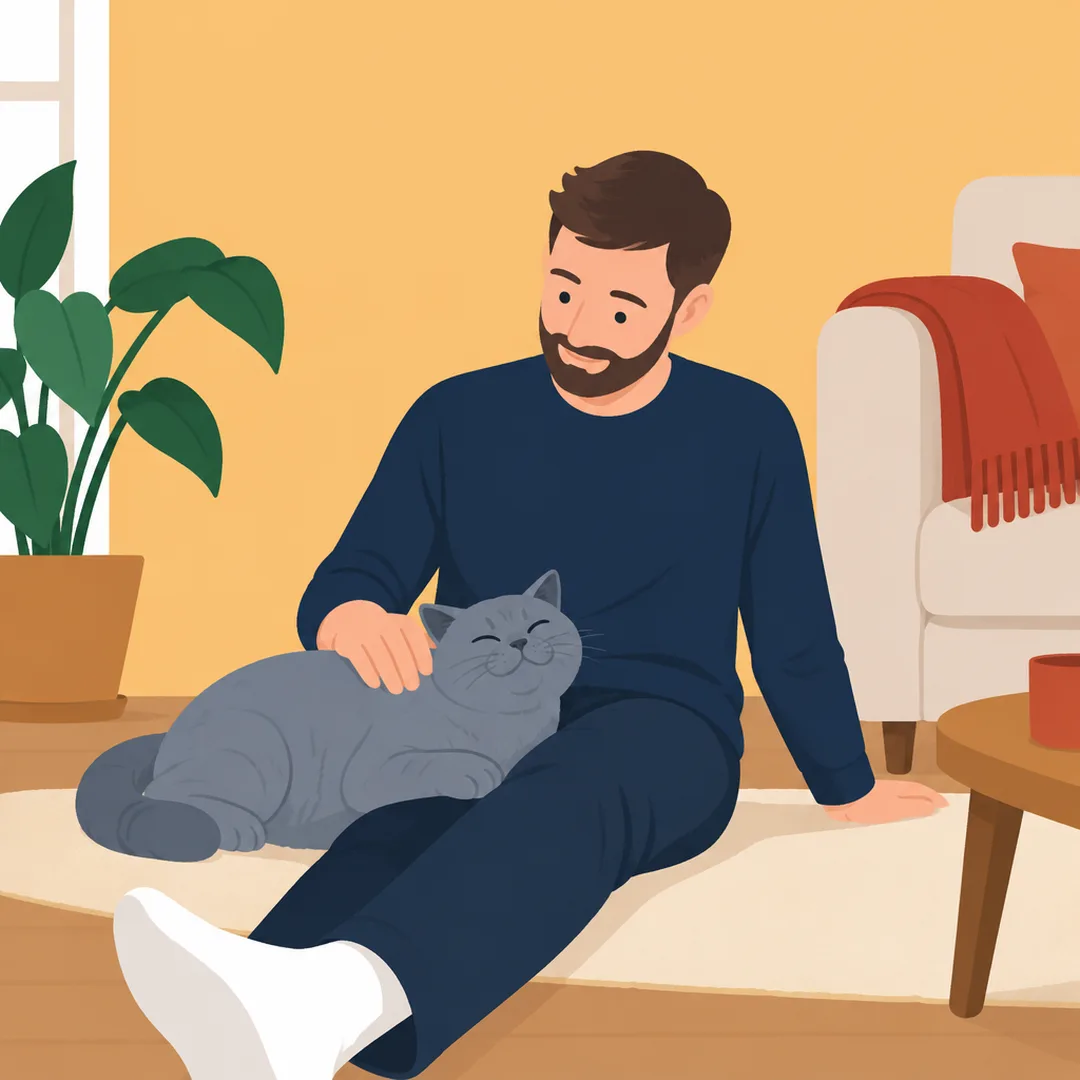
Cats have a reputation for being independent and aloof. The research of the last decade tells a different story. Many cats form real attachment bonds with their people, similar in pattern to those seen in dogs and even human infants. They also read our cues more than we give them credit for.
The secure base test
Attachment researchers use a simple test first designed for human babies and later used for dogs. A caregiver and the animal spend two minutes together in an unfamiliar room. The caregiver leaves for two minutes, then comes back.
- A securely attached individual is a bit stressed when the person leaves, greets them on return, then relaxes and goes back to exploring. The person is a "secure base".
- An insecurely attached individual may cling to the person and not explore (ambivalent), ignore them entirely (avoidant) or behave in a confused way (disorganised).
What the research found
In a 2019 study at Oregon State University, about 64% of kittens tested were securely attached to their owners and about 36% were insecurely attached. Those proportions are close to what is found in human infants (about 65% secure). The same pattern appeared in adult cats. Kittens who joined a six-week training and socialisation course kept the same attachment style, suggesting attachment is fairly stable once formed.
Other findings:
- Cats prefer people. In a preference test, most pet and shelter cats chose social interaction with a person over food, toys or interesting scents, though food was a close second.
- Cats know their names. Japanese researchers showed cats can tell their own name apart from similar-sounding words, even when a stranger says it.
- Cats recognise our voices. Earlier studies found cats react more (ear and head movements) to their owner's voice than to strangers' voices.
- Cats notice our moods. Cats in one study showed more positive behaviour and spent longer in contact with owners who were smiling than frowning, though they did this mainly for their own owner.
- The slow blink works. Cats were more likely to slow blink back to people who slow blinked at them, and to approach a stranger who did so.
Why cats seem independent
Cats evolved from a solitary hunter. They do not need to follow a group to survive, and their social signals are subtle: a tail raised in greeting, a slow blink, a choice to sit in the same room as you. Unlike dogs, cats were never bred for close cooperation with people. Their affection is real but shown quietly, and on their own terms.
Cats also value control. A cat that can choose when to come and go is more likely to seek you out than one that is held or followed.
Building a secure bond
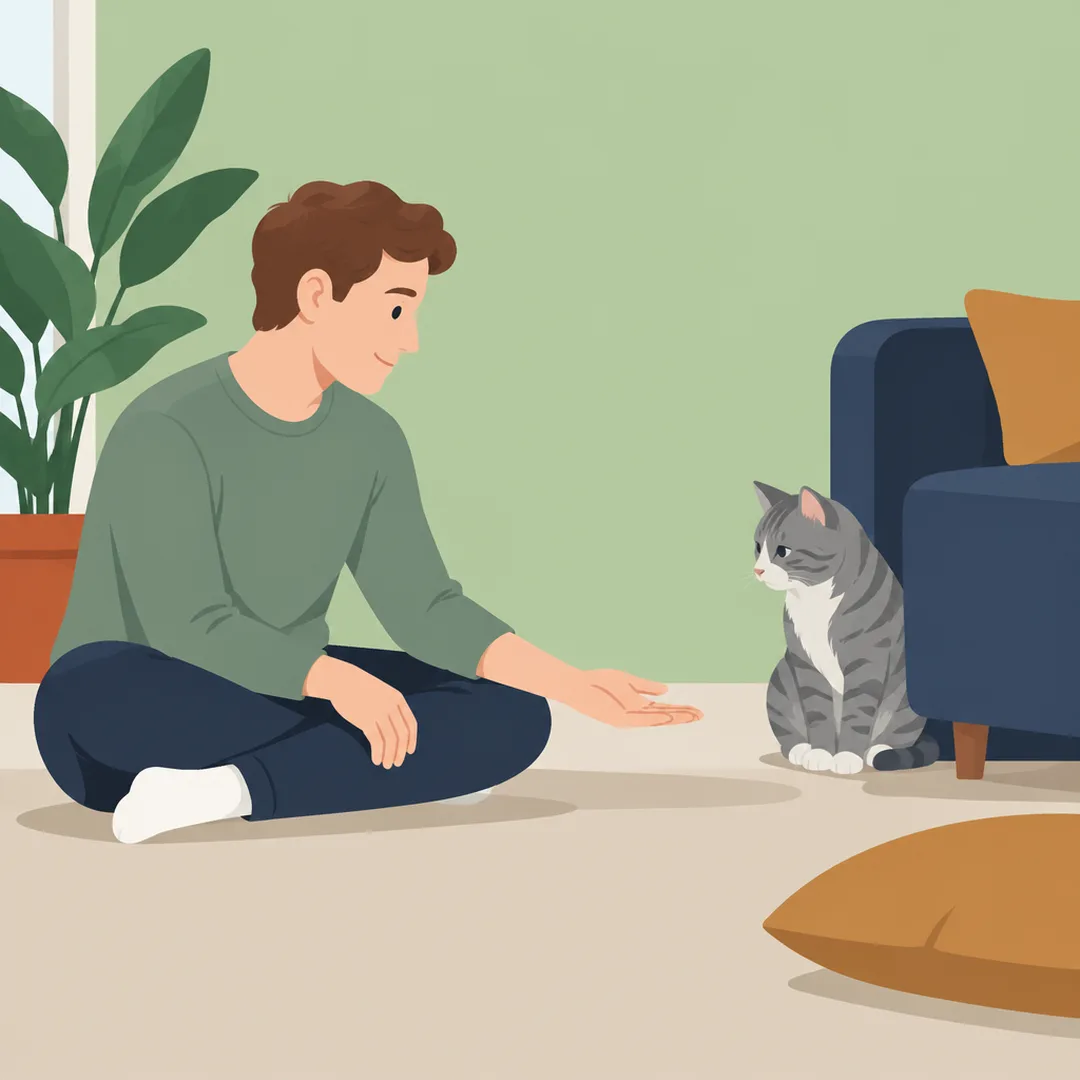
- Let your cat start contact. Offer a hand at nose height, let them sniff and choose to rub. If they turn away, wait.
- Keep touch short and sweet. A few seconds, then pause. Let your cat ask for more.
- Be predictable. Regular meals, play and quiet time make you a reliable, safe presence.
- Play every day. Shared play is one of the strongest bonding activities.
- Train with rewards. Short clicker sessions build communication and trust, and give your cat choices.
- Respect hiding. Never drag a cat out of a safe spot.
- Use the slow blink. It costs nothing and signals you are not a threat.
- Talk to your cat. Your voice becomes a familiar, comforting signal.
Can attachment go wrong?
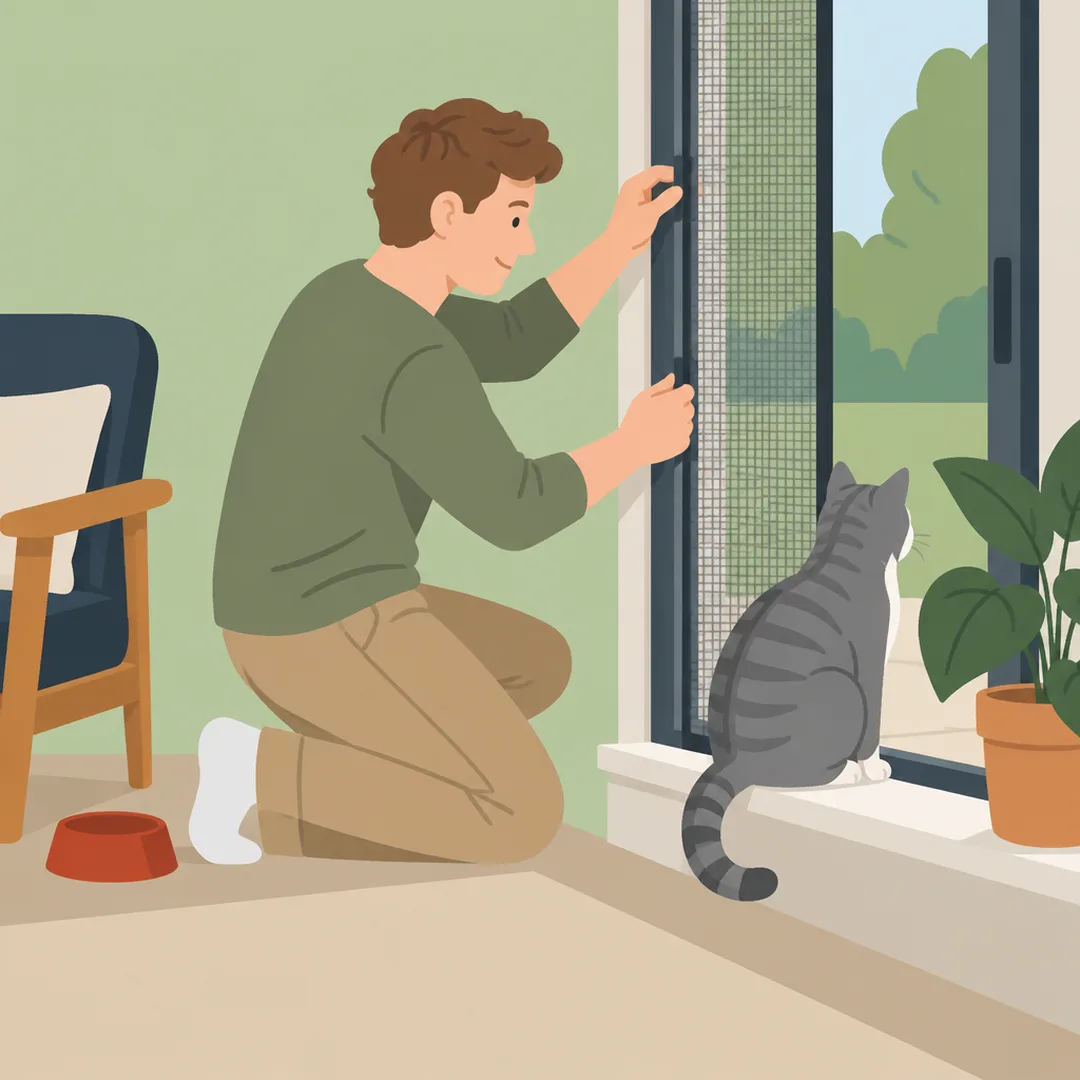
Some cats become very distressed when left alone: vocalising, house-soiling, over-grooming or vomiting when their person is away. This is sometimes described as separation-related behaviour. Ruling out medical causes comes first. Then a predictable routine, enrichment while you are out (puzzle feeders, window perches) and short practice absences help. A vet or behaviourist can help with severe cases.
What attachment does not mean
An insecure cat is not a "bad" cat, and a secure cat is not one that wants to be cuddled all the time. Many securely attached cats prefer to sit near you rather than on you. Read your own cat's preferences.
Key points
- About two thirds of cats in research form secure attachments to their people, similar to human infants and dogs.
- Most cats prefer interaction with people over food or toys in preference tests.
- Cats recognise their names, our voices and, to some degree, our expressions.
- Choice and predictability build trust; forced handling erodes it.
- Daily play, short touch sessions, reward-based training and slow blinks strengthen your bond.
Sources
- Vitale, Behnke & Udell (2019) Attachment bonds between domestic cats and humans. Current Biology
- Saito et al. (2019) Domestic cats discriminate their names from other words. Scientific Reports
- Humphrey et al. (2020) The role of cat eye narrowing movements in cat-human communication. Scientific Reports
- Vitale Shreve, Mehrkam & Udell (2017) Social interaction, food, scent or toys? A formal assessment of domestic pet and shelter cat preferences. Behavioural Processes
- Galvan & Vonk (2016) Man's other best friend: domestic cats and their discrimination of human emotion cues. Animal Cognition
- AAFP: Cat Friendly Interactions