Loose-leash walking principles
Dogs pull because pulling works and because we walk too slowly for them. The principles behind a loose lead, the gear that helps, and a simple plan to start.
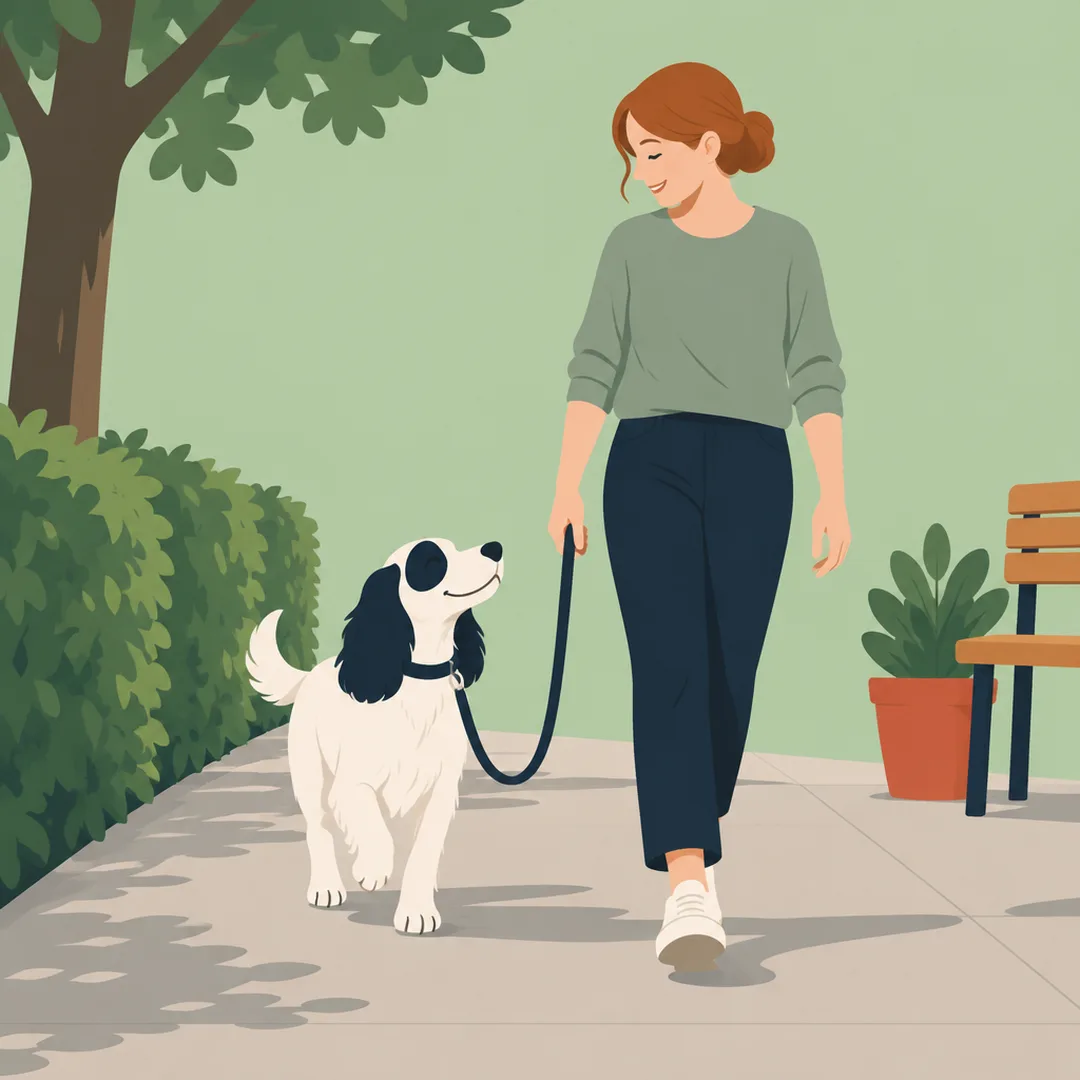
Almost every dog pulls at some point. It is not a bid for control. Dogs walk faster than we do, the world smells amazing, and pulling usually gets them there. Every time a tight lead moves you forward, pulling is rewarded. Loose-lead walking works by changing what pays.
What a loose lead looks like
You do not need a perfect "heel" for everyday walks. A loose lead simply means the lead hangs in a soft J-shape between you and your dog. Your dog can be in front, beside or sniffing to the side, as long as the lead stays slack.
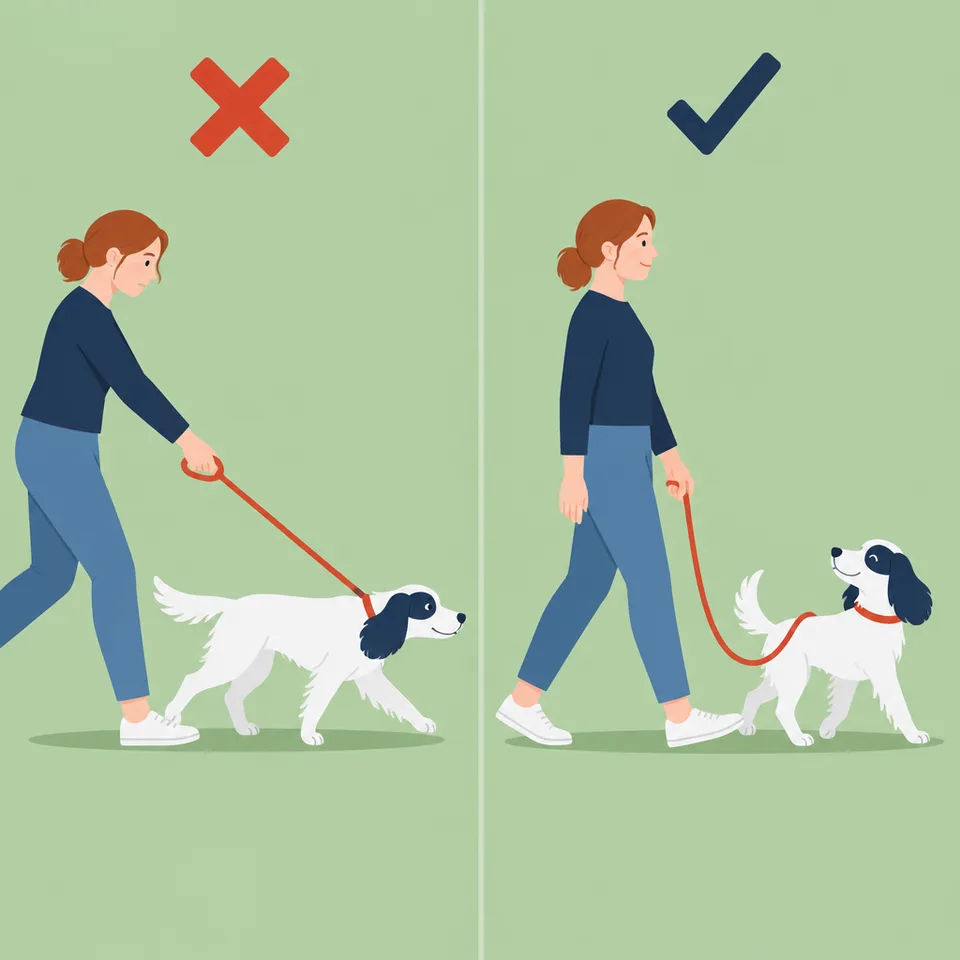
The four principles
- Tight lead means we stop. Loose lead means we go. Be consistent. If pulling sometimes works, your dog will keep trying.
- Reward the spot you want. Treats delivered right beside your leg make that the best place in the world.
- Meet your dog's needs first. A dog bursting with energy cannot walk politely. Let them sniff, and give them other outlets.
- Start where it is easy. Practise indoors and in the garden before the street. The street is the exam, not the lesson.
Reward the spot you want
Pick a side (left is traditional, but either is fine). Keep treats in a pouch on that side and deliver them with the hand on that side, at your dog's mouth height, right next to your leg. If you feed from the front or across your body, your dog learns to swing in front of you.
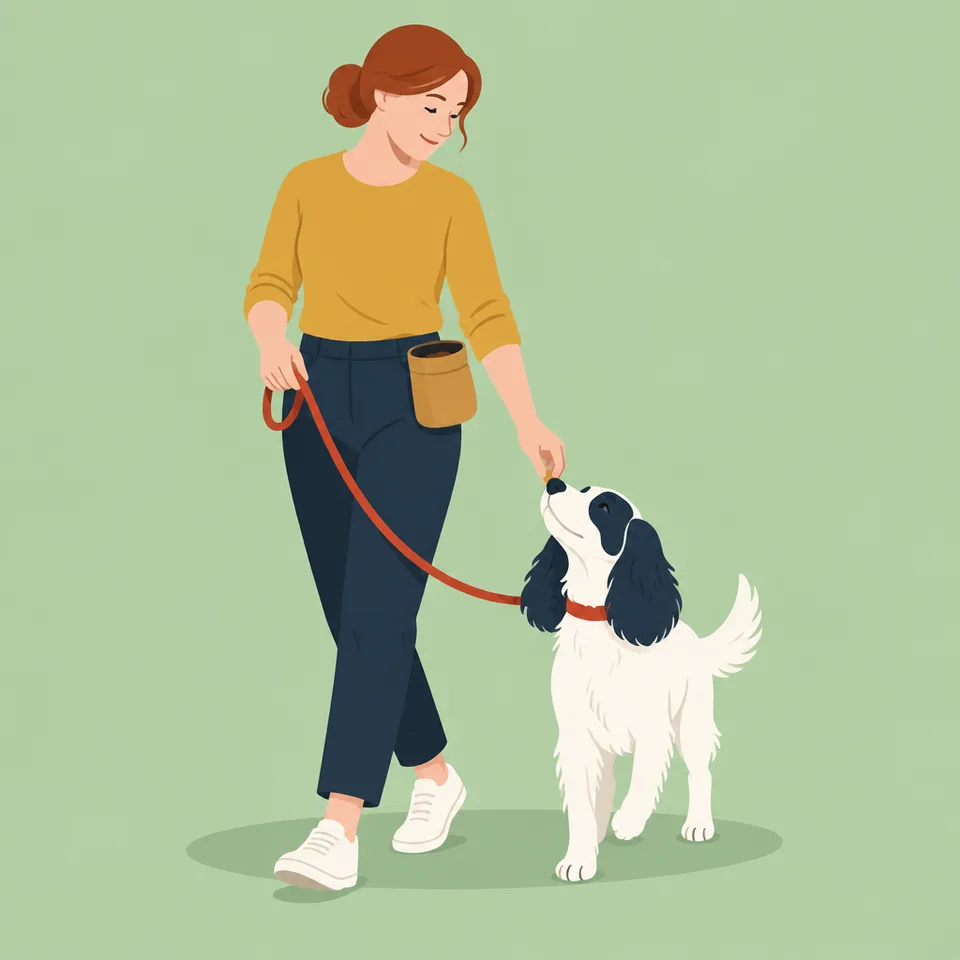
A simple start:
- Indoors, with your dog on lead, take one step. If the lead stays loose, mark ("yes" or click) and treat by your leg.
- Build to two steps, then three, then five. Reward often: early on, every step or two.
- Add turns. Turn away from your dog and reward as they follow.
- Move to the garden, then a quiet street at a quiet time.
When the lead goes tight
- Stop. Stand still, like a tree. Do not jerk the lead or pull back.
- Wait for any slack: your dog turns their head, steps back or eases off.
- Mark and move forward. Moving forward is the reward.
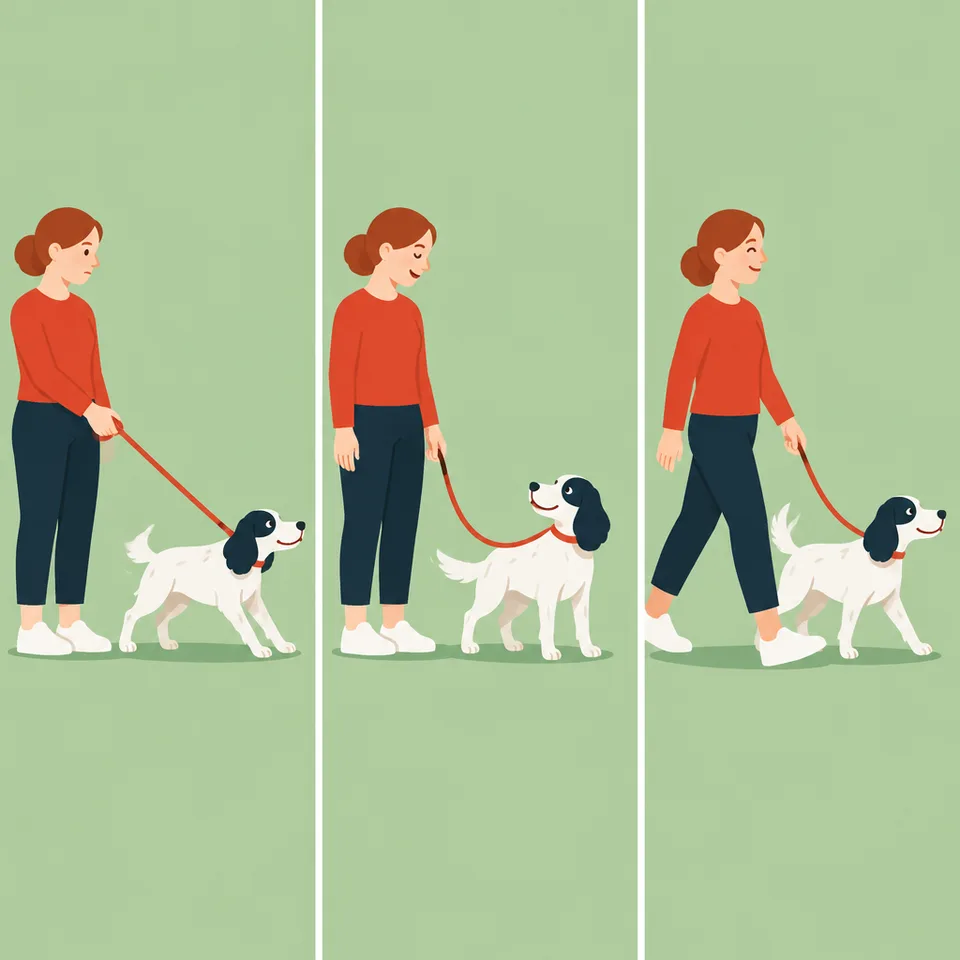
If you stop a lot, the walk will be slow at first. That is normal. Another option is to turn and walk the other way, rewarding your dog for catching up.
Make walks a two-way deal
- Give sniffing breaks. Say "go sniff" and let your dog explore on a loose lead, then cue "let's go" and walk on. Sniffing is a great reward.
- Use a longer lead (2 to 3 metres) in quiet places so your dog has room without pulling.
- Some walks can be pure sniff walks, on a long line in a field, with no "walk nicely" asked at all. See the sniff walk article.
- Short, frequent sessions beat one long, frustrating walk.
Gear that helps
- A well-fitted Y-front harness. It spreads pressure across the chest instead of the throat. A study by Pauli and colleagues found that pulling against a collar raised pressure in the eyes, while a harness did not, which matters for dogs with eye conditions. Neck pressure is also a concern for toy breeds prone to tracheal collapse.
- A front-clip harness can reduce pulling by turning the dog gently toward you when they surge.
- A comfortable lead of 1.8 to 3 metres. Avoid retractable leads for training: they teach dogs that pulling extends the lead.
- Treats and a pouch. Small, soft and easy to swallow.
Fit the harness so you can slide two fingers under each strap, and so it does not sit across the front of the shoulders or rub behind the front legs.
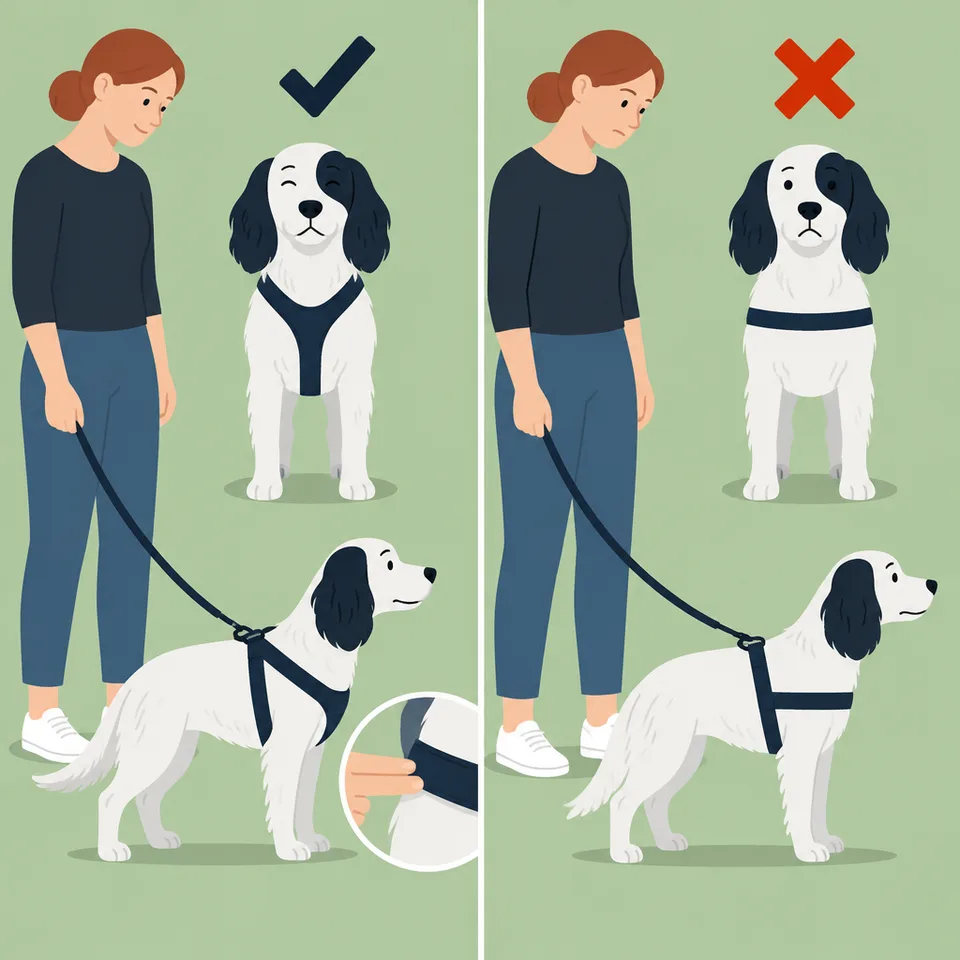
Avoid choke chains, prong collars and shock collars. The AVSAB recommends reward-based methods only, and these tools can cause pain, fear and injury.
Troubleshooting
- Pulls toward other dogs or people: this can be excitement or worry. Increase distance, reward your dog for looking at the trigger and back to you, and see the reactivity article.
- Zig-zags in front: deliver treats more precisely at your side and walk a bit faster.
- Fine indoors, terrible outside: go back to quieter places and pay more. Make it easier, not louder.
- Lunges at the start of walks: practise calm at the door. The door opens when your dog is calm; it closes if they rush.
Small and large dog notes
- Small dogs are often allowed to pull because it does not hurt us, but it can strain their necks. Use a harness and bend down less by using a target stick or a long-handled spoon with soft food to reward.
- Large, strong dogs can pull you over. Train in calm places first, use a front-clip harness, and walk at quiet times while you practise. Hold the lead with both hands near your waist.
- Puppies have short attention spans. Two minutes of practice, then play.
Key points
- Dogs pull because it works; stop when the lead goes tight and go when it is loose.
- Reward often, right beside your leg, at your dog's mouth height.
- Practise somewhere easy first, then build to busy streets.
- Use a well-fitted harness and give plenty of sniffing time.
- Skip choke, prong and shock collars; reward-based training is safer and works.