Reactivity
A dog that barks and lunges on leash may be showing fear or aggression. This guide covers safe gear, calmer walks, and how distance and rewards can change how your dog feels.
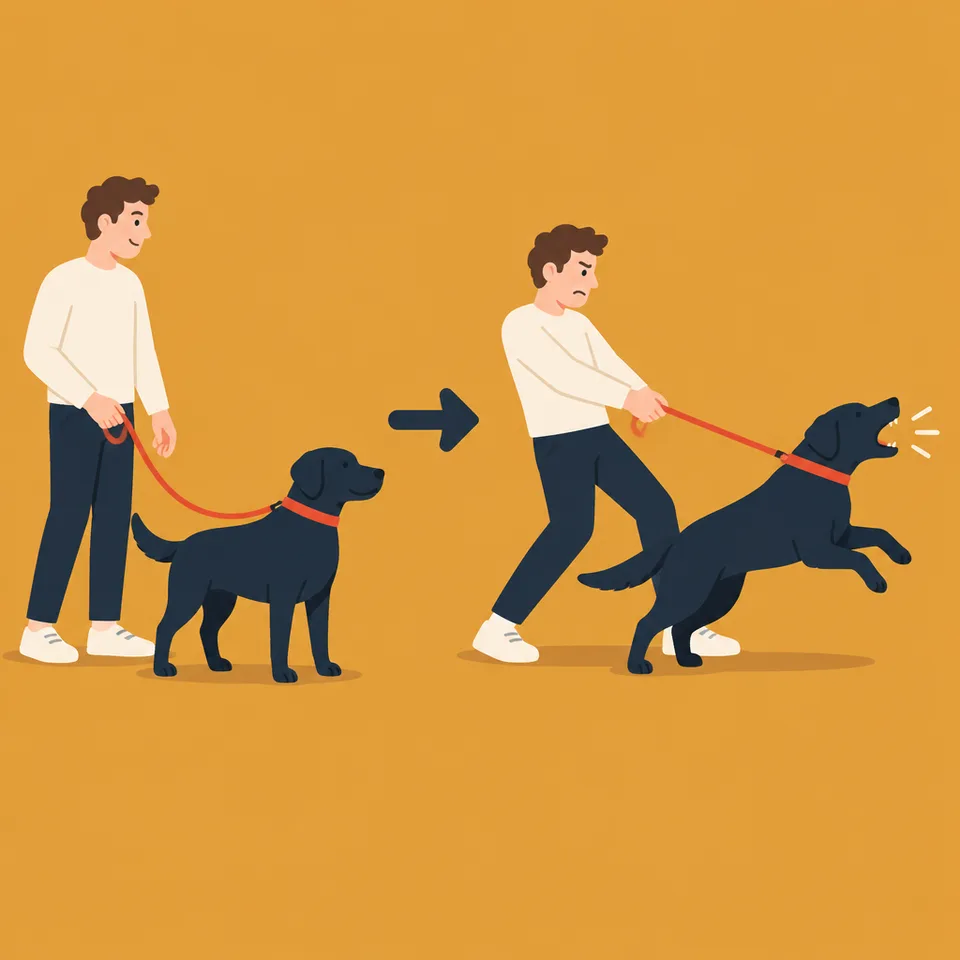
Reactivity means your dog barks, leaps or lunges when it sees a trigger such as another dog, a passing person, a cyclist or a jogger. This guide covers safe gear, calmer walks, and how distance and rewards can change how your dog feels. It does not diagnose your dog. A behavioral evaluation can check for underlying anxiety or aggression.
What reactivity can look like
A reactive dog may bark and leap at passing people or dogs, even when the owner calls the dog friendly. Some dogs also jump up uncontrollably.
High-drive working dogs may find their own jobs, such as chasing and barking at people, dogs and cars, when no job is given. The behavior can get more intense over time rather than fading with age.
Why it happens
There may be inappropriate intervention, inadvertent reinforcement, or a genetic predisposition toward fearful or aggressive behavior. A friendly but excitable dog can also learn aggressive-looking behavior by accident.
A behavioral evaluation should screen for underlying anxiety or aggression, because the plan depends on what is driving the reaction.
Start with safety and the right gear
For safety, use a well-fitting basket muzzle. It lets your dog eat, drink and pant, and can prevent an altercation if an off-leash dog bounds up. It also warns people to keep their distance.
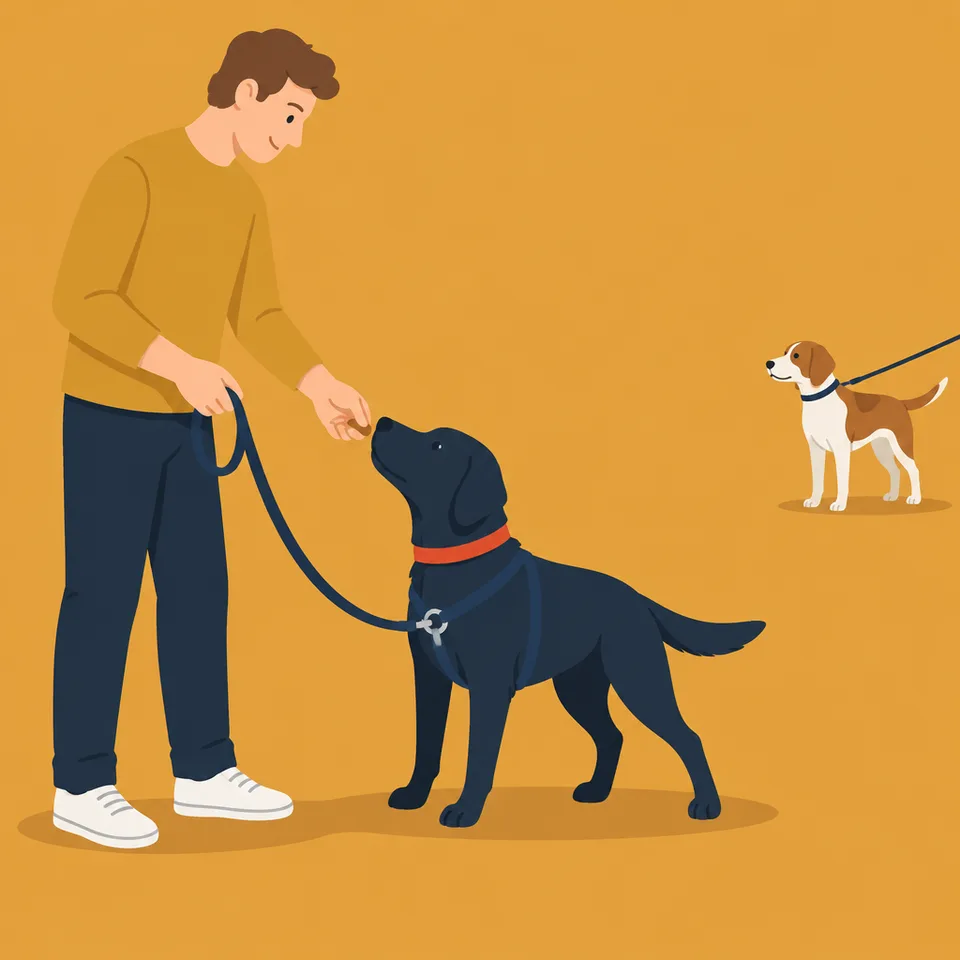
A flat collar is not ideal for a reactive dog. Use a harness or head collar for more control and security.
Make a plan and teach skills away from triggers
Write down the behaviors you want to change and put them in order. Learn which triggers set off the behavior you will work on first.
In a quiet place with no triggers, teach relaxation and attention. Teach cues such as sit, look and look away. A skilled trainer or technician can help. Keep away from triggers until these skills are solid.
Introduce one trigger at a time
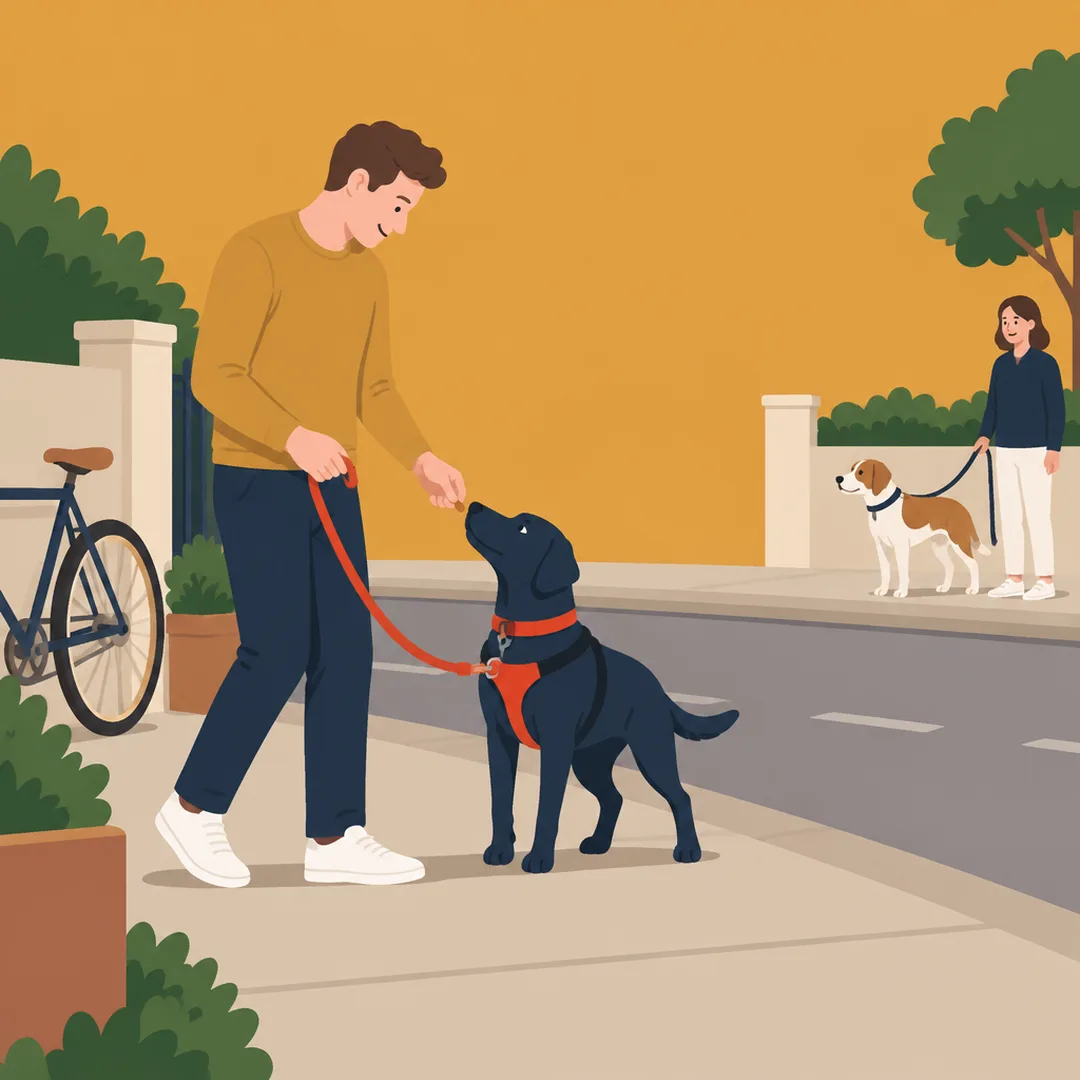
Once the skills are solid, add a single trigger. Desensitization and counter-conditioning pair that trigger with something good, such as food, so the trigger comes to predict a reward. Response substitution, or a countercommand, gives your dog a different behavior to do instead.
Keep exposure to triggers small while you work.
Keep walks calm
Stay vigilant. If another dog, a cyclist or a jogger is heading your way, consider crossing the road or taking another route so your dog has no contact with the trigger. In the early stages, stick to sparsely populated areas.
If a problem happens anyway, take deep, calming breaths and do not yank the leash. A tight leash passes your fear and stress straight to your dog.
Never punish
Punishment and aversive training do not help. Animals trained with aversive methods are less likely to learn, and punishment can cause lasting mental trauma.
Commands should replace corrections. Poorly timed punishment can exacerbate fear and aggression and increase arousal.
Get professional help
Reactivity can be complex. Your veterinarian can refer you to a veterinary behaviorist for specialized care. A behaviorist can make a behavior-modification plan that may include stress-reducing medications and supplements. No drug names or doses are given here.
Ask any trainer about their methods, and choose positive, fear-free training.
Key points
- Reactivity is a reaction with several possible causes, including anxiety or aggression.
- Use a basket muzzle and a harness or head collar for safety and control.
- Teach relaxation, attention and cues away from triggers, and keep triggers distant until those skills are solid.
- Add one trigger at a time and pair it with rewards, such as food.
- Stay vigilant on walks, avoid contact with triggers, and never punish.
- Ask your veterinarian about a referral, and choose fear-free training.