Positive reinforcement training
Rewarding the behaviour you want is the most humane and effective way to train a dog. Here is how reinforcement works, how to pick and time rewards, and why punishment backfires.
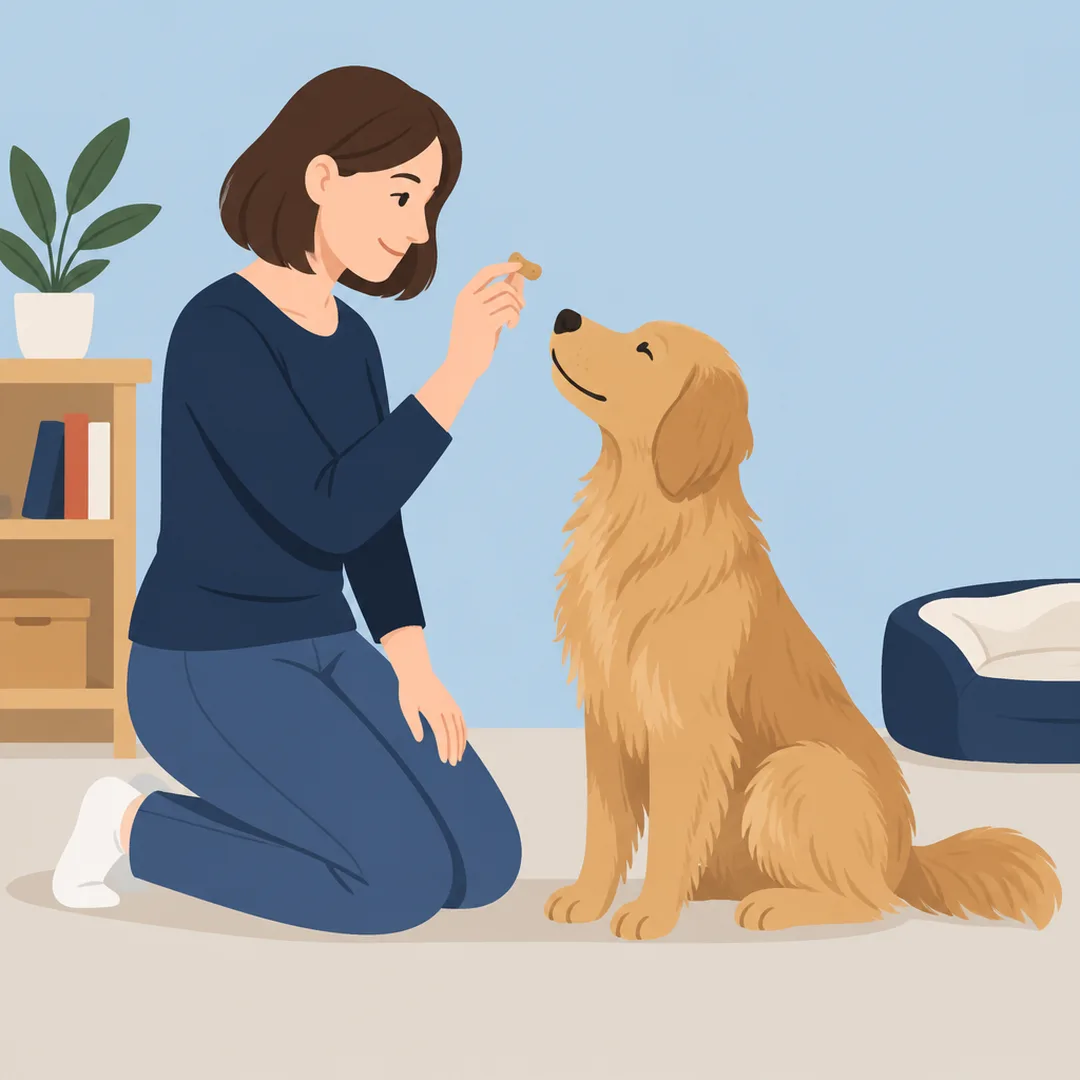
Rewarding the behaviour you want is the most humane and effective way to train a dog. This guide covers how reinforcement works, how to choose and deliver rewards, and why punishment backfires.
How reward-based training works
Dogs repeat behaviours that work for them, including the ones you do not like.
Reward-based training means you set the dog up to succeed and then pay for the behaviour you want. The RSPCA supports it because the dog gets something it values, such as high value treats, praise or play with a favourite toy. If 'sit' always earns something good, your dog will offer sits more often.
Set your dog up to succeed
Start where your dog cannot easily fail: a quiet room, one small step, and a reward as soon as the behaviour happens.
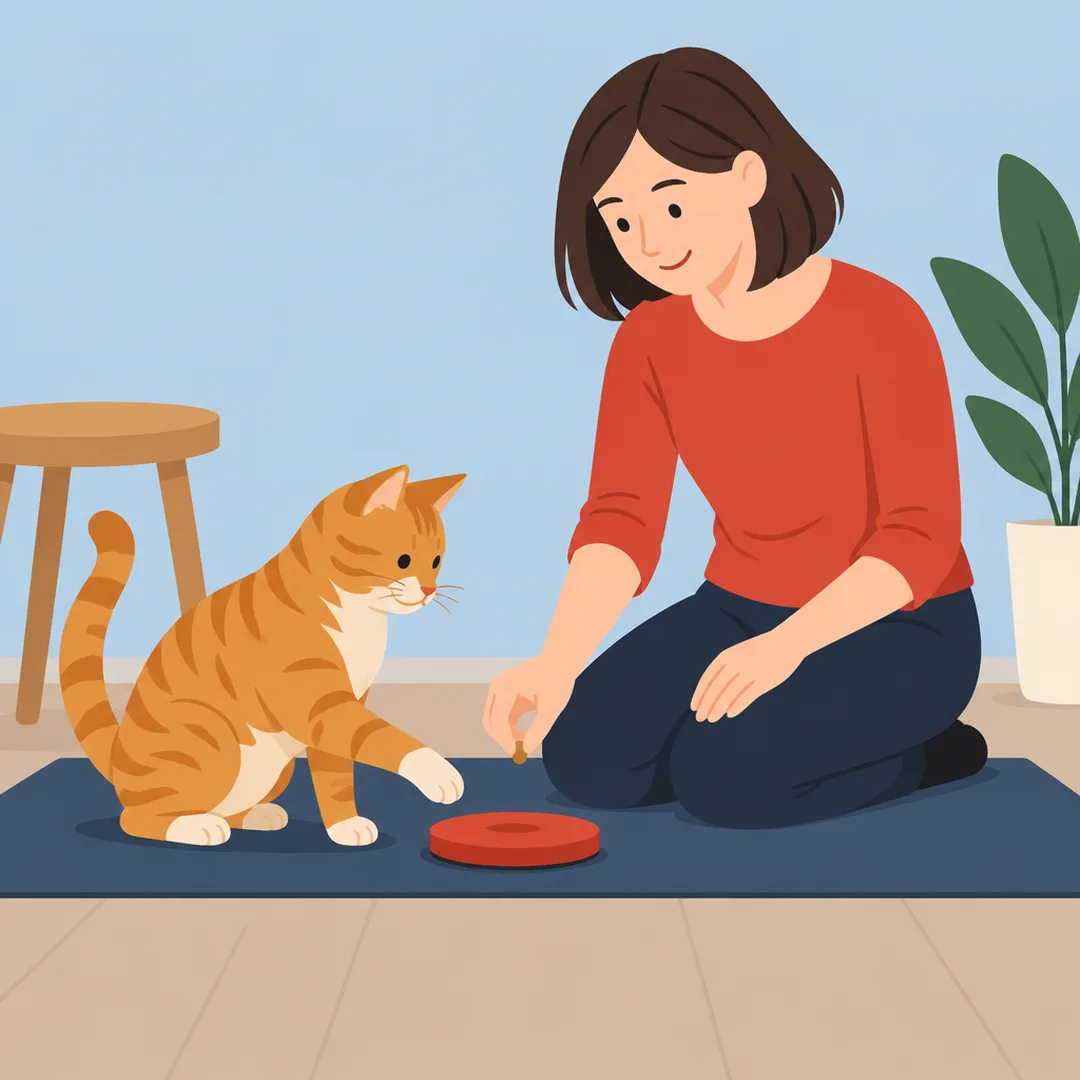
Break the skill into pieces and reward the closest attempt first. Merck calls this shaping. The puppy is rewarded for squatting, then only for a bigger squat, and finally for a true sit.
Pick rewards your dog actually values
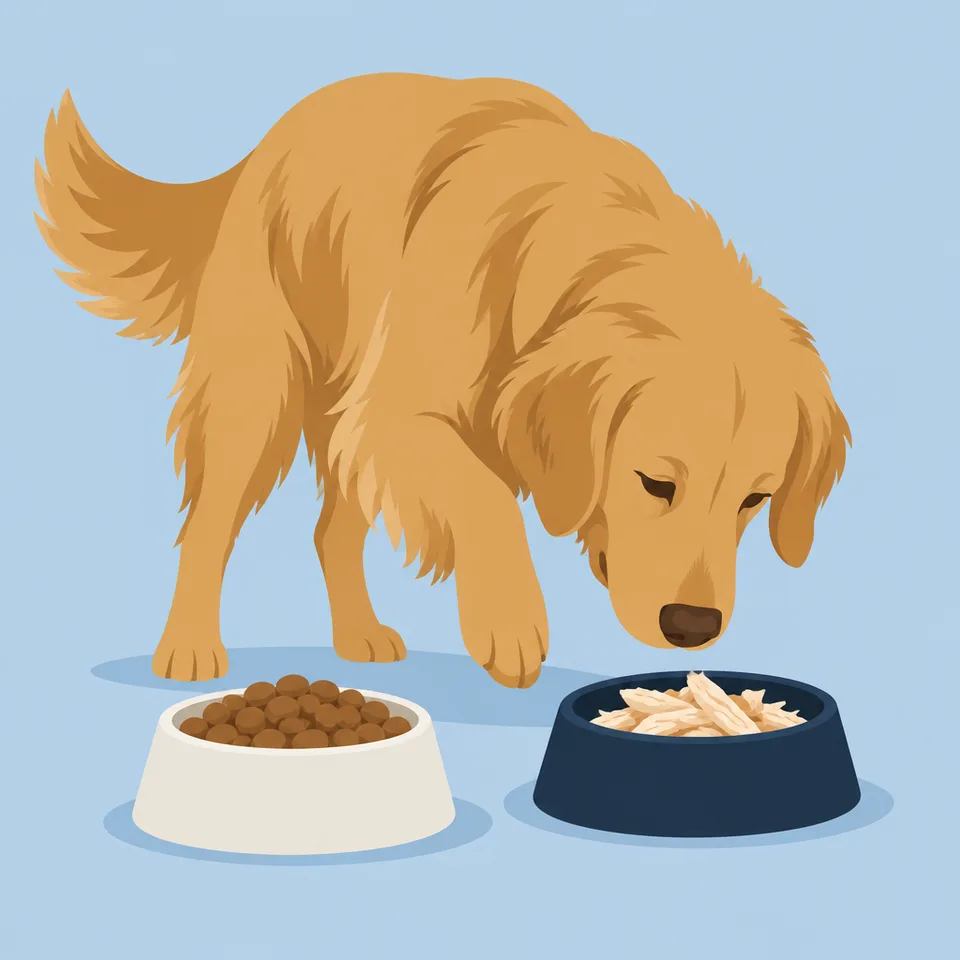
Rewards are not equal. Dry food or kibble is usually low value for most dogs, while cooked chicken is often high value.
Experiment to find what your dog loves. Save the best rewards for the hardest work, such as coming back around distractions, and use lower value rewards for behaviours your dog already knows. Merck adds that food is one of the best ways to motivate a dog.
Mark the moment the dog gets it right
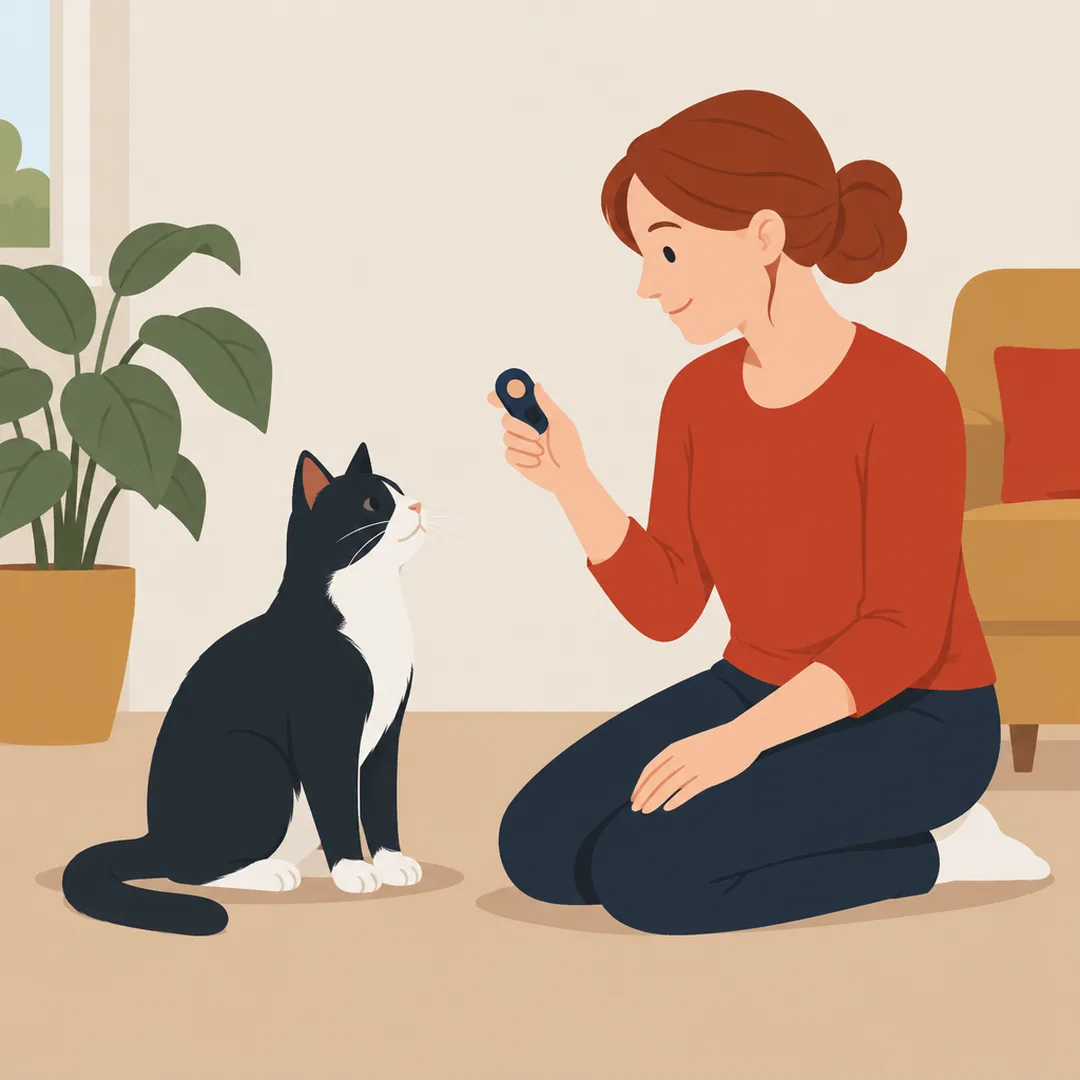
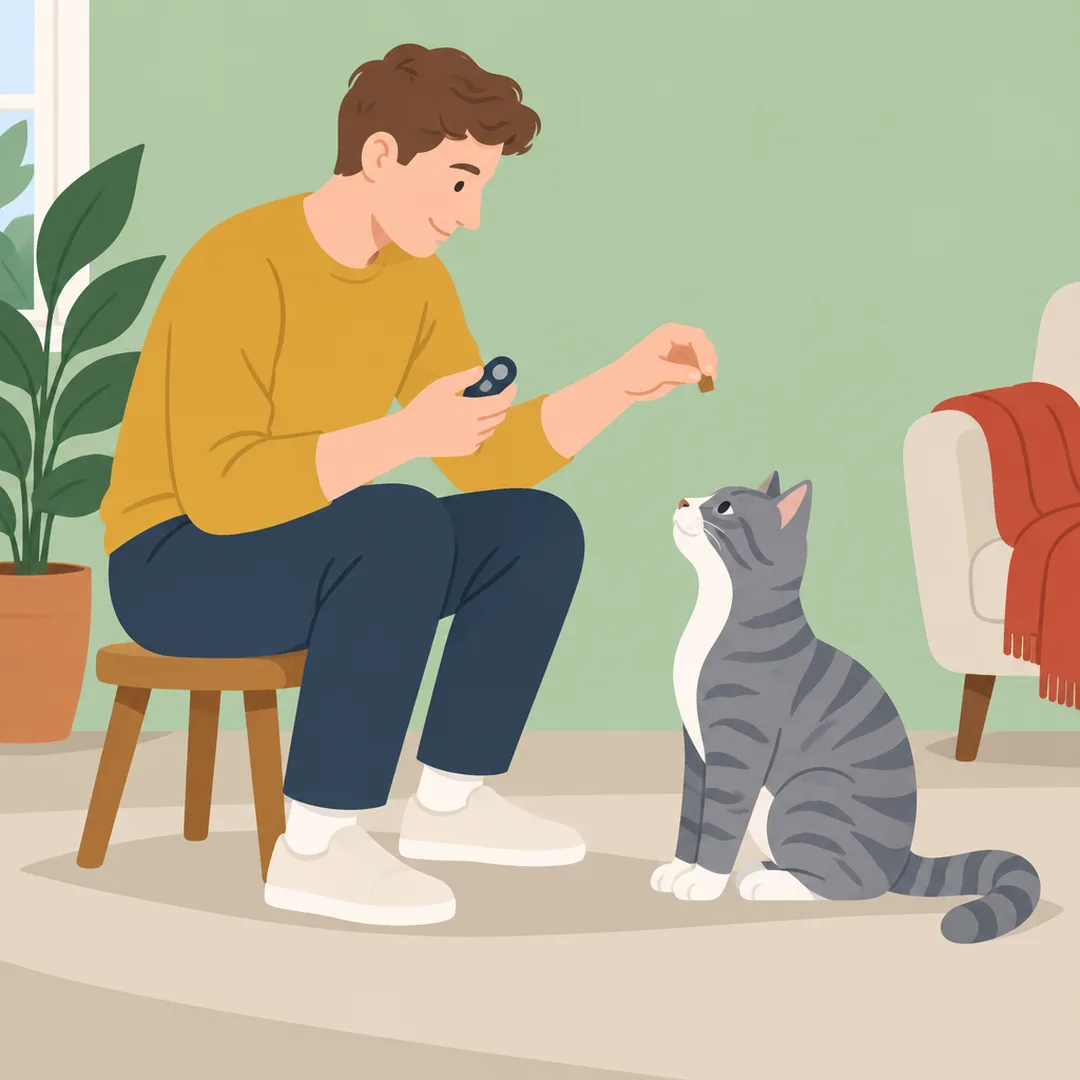
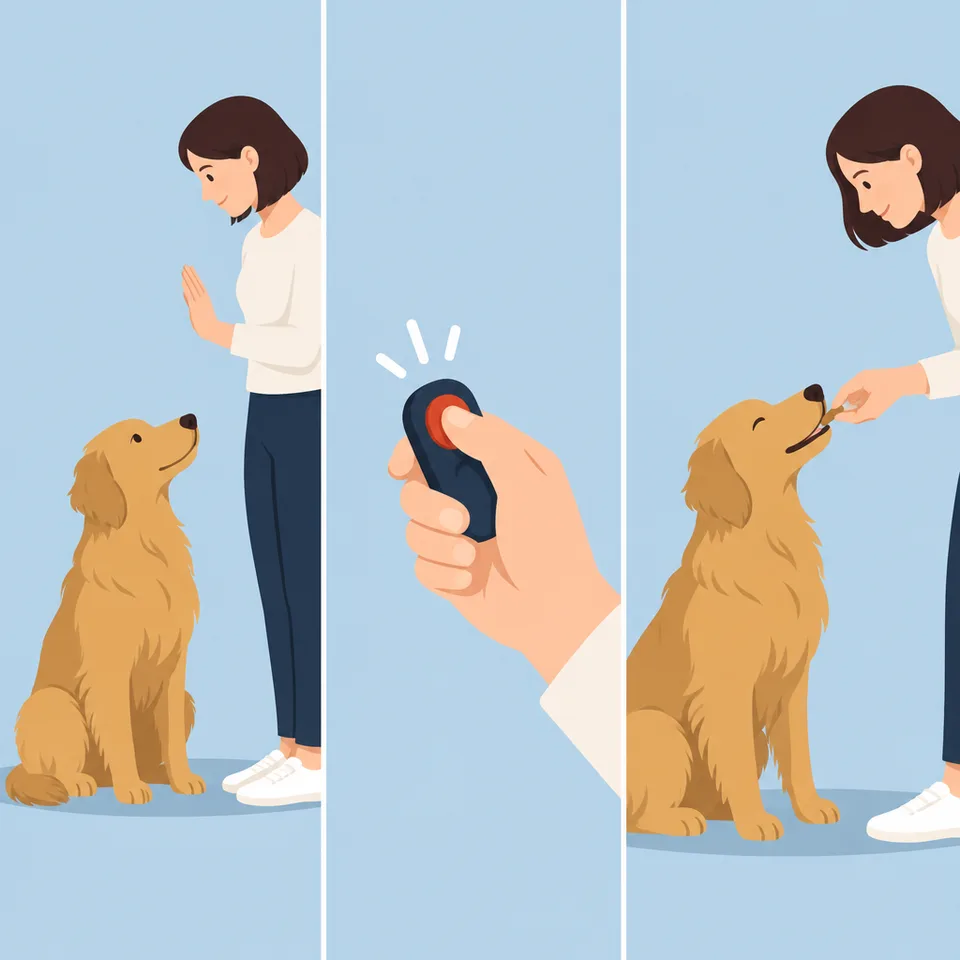
The reward must arrive at the right instant, and a marker sound buys you time. A word like "good girl", a hand signal or a clicker tells the dog a reward is coming, but only once it has been paired with food or petting.
You can train well without a marker. A clicker needs frequent practice and very good timing.
Use treats, toys and praise well
Rewards can be a food treat, a favourite chew toy, or verbal praise such as "good dog!" in a pleasant tone of voice. Give the reward when the dog performs the good behaviour, not seconds later.
Ignore what you don't want to reward
Attention is a reward. If your dog gets attention, including eye contact, for a behaviour, that behaviour may keep going. A dog who jumps up should be ignored, and only get attention when four paws are on the ground. Reward the moment those paws land, every time. Shouting can backfire too, because some dogs read it as attention.
Why punishment is not the answer
Aversion therapy and physical punishment must not be used in training. Punishing a dog can make the problem worse and compromises animal welfare.
Punishment is also hard to get right: it has to land within a few seconds of the start of the behaviour, every time. Dogs trained with rewards have fewer behavioural problems and are less fearful.
Keep it going, and pick the right class
Basic obedience sets your dog up to succeed, and ongoing training keeps building skills and your relationship. For puppies, a reputable puppy school is highly recommended, especially during the socialisation period from about 3 to 12-14 weeks.
Look for reward-based trainers. Sit in on a class without your dog first, ask what the trainer plans to do with your dog, and avoid anyone who offers guarantees or objects to using food as a reward.
Key points
- Reward the behaviour you want, as soon as it happens, and your dog will offer it more often.
- Take one small step at a time and reward the closest attempt at first.
- Save high value rewards for hard tasks and use lower value ones for known behaviours.
- Ignore unwanted behaviour only when attention is feeding it, and never punish.
- Choose reward-based trainers, and keep training going for life.