Crate training
A crate can be a safe den your dog naps in, or a scary box if you rush it. Here is how to choose one, build the habit with treats and short sessions, and what to do if your dog panics.
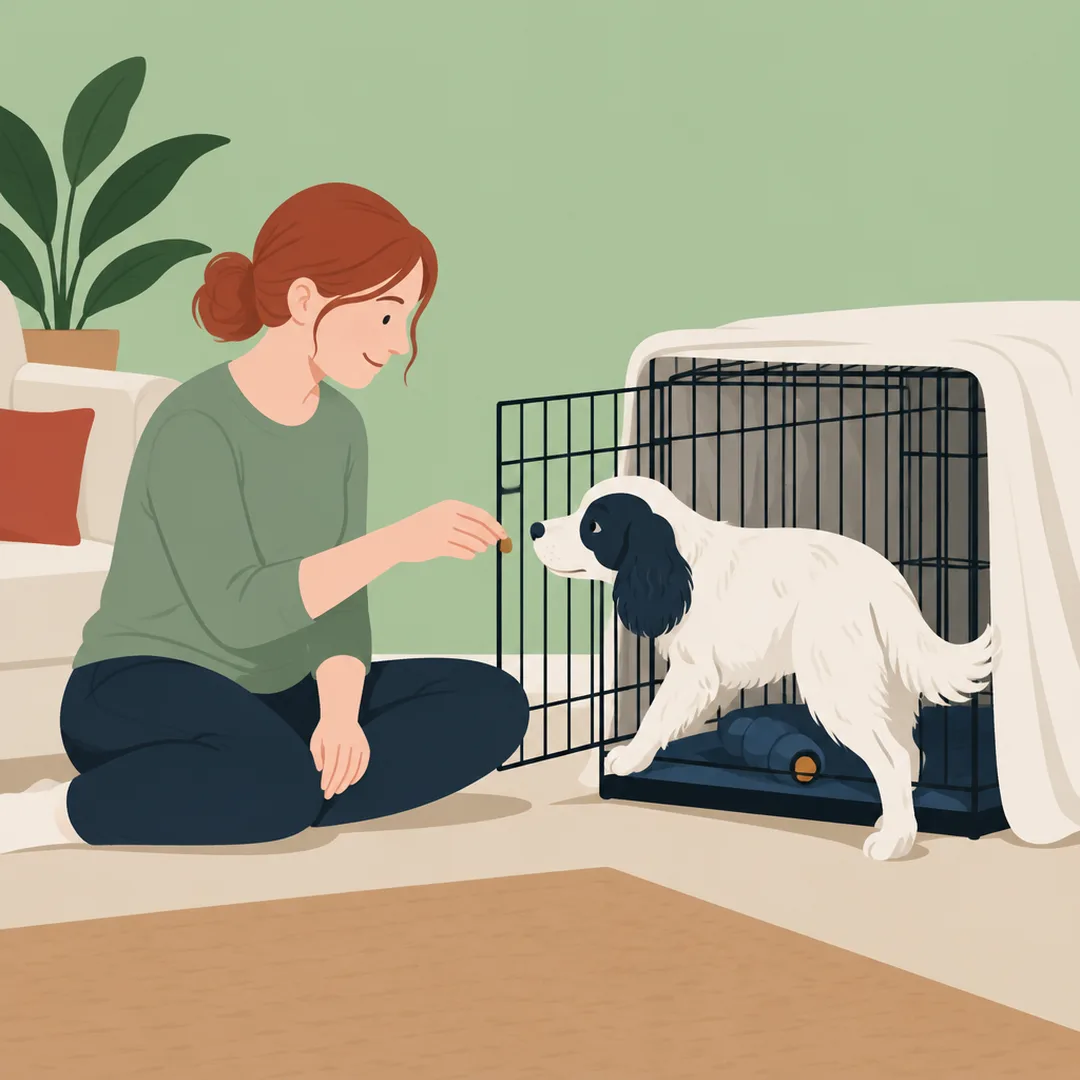
A crate can be the place your dog chooses to nap, or a source of panic if you rush it. Here is how to pick one, introduce it with treats, and spot distress.
Why crate train your dog
A crate keeps a young puppy or new dog safe when you cannot supervise, prevents housetraining mistakes and protects your home. It also helps around visitors, travel, the vet, boarding and emergencies. Dogs generally do not like to pee or poop where they sleep, which is why it helps housetraining.
Pick a crate and a spot
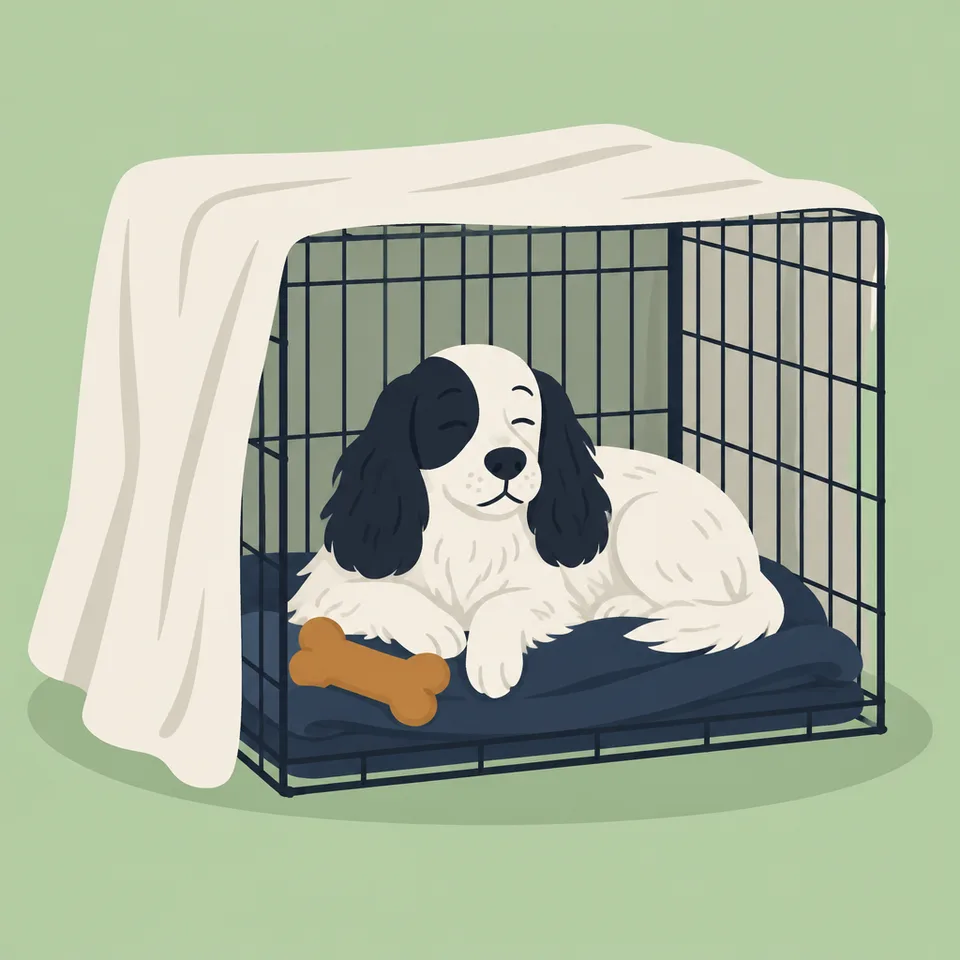
The crate needs enough floor space to lie down and stretch, and enough height to stand without bumping their head. For a puppy, buy the adult size and use a divider. Cover a wire crate with a sheet that leaves one or two sides open. Put it where the family gathers.
Introduce the crate step by step
Start with a hungry, recently exercised dog and pea-sized treats. Toss a treat just inside and let your dog walk out. Repeat, tossing a little further in each time. Feed meals in the crate from a slow-feeding bowl or food toy. Leave the door open for these sessions.
Close the door, then step away
While your dog is busy with a food toy, close the door and sit nearby. After a few good sessions, close the door and leave the room, returning while they are still chewing. Give treats every 15 seconds at first, then switch to a long-lasting chew. Watch on a camera for the first few separations.
Add a cue
Once your dog enters willingly, add a word. Toss a treat in, say "yes!" as they enter, drop two or three more treats, then toss one out. Say your cue, such as "kennel", just as they start toward the crate. Practise from further away until they run there from anywhere.
Coming out calmly
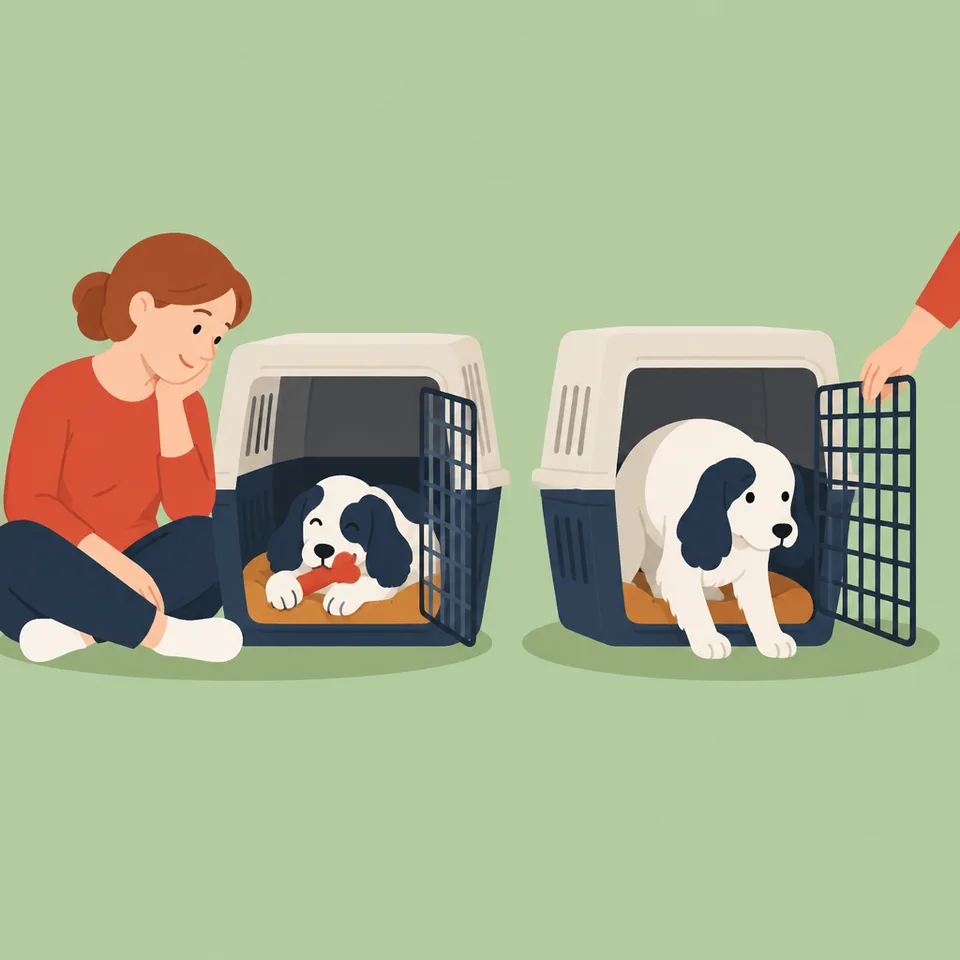
Ask for a sit or down, reward, then open the door and release with a word such as "free". Only open the door when your dog is sitting still. If they rush out, calmly close the door (never on a paw or nose), wait a few seconds and try again.
If your dog is distressed
Brief vocalising or pawing early on is normal: give a few minutes to settle if it is not escalating. Salivating, persistent vocalising, escape attempts or not settling means stop. Let them out, end the session, and contact your vet before continuing. Never force a distressed dog to stay crated alone.
How long is too long
Puppies: no more than an hour or two at a time, except at night. Adult dogs: no more than four hours, with exercise before and after. A dog should never be left without the chance to relieve themselves, play and move. Crating is a management tool, not a way of life.
If a crate does not suit your dog
A dog-proof room behind a baby gate, or an exercise pen, can be kinder, especially for a dog with a bad past crate experience. Extended confinement is not healthy, so keep any setup short and pair it with training, exercise and company.
Key points
- Crate training is a life skill, not a punishment: it keeps dogs safe and helps housetraining.
- Buy the adult size for a puppy and use a divider; the crate must let your dog stand, turn and lie down.
- Build it in small steps: treats at the door, meals inside, door closed briefly, then time alone.
- Teach a cue and a calm release word so entering and leaving are both peaceful.
- Distress signs (salivating, persistent vocalising, escape attempts, not settling) mean stop and get help.
When to call the vet
If your dog shows signs of distress in the crate, or you are worried about their comfort, consult your vet before continuing with your training plan. You can also work with your veterinarian or a qualified trainer to help your dog get used to the crate and feel less anxious.