Why train a cat?
Yes, cats can be trained, and they enjoy it. Training with rewards makes vet visits, grooming and daily life easier, and gives your cat's brain a workout.
Ask most people whether cats can be trained and they will laugh. But cats learn all the time. Your cat already knows the sound of the treat bag, which cupboard holds the carrier and exactly when breakfast is due. Training simply uses that learning on purpose, with rewards your cat values.
What training gives your cat
Easier vet visits. A cat trained to walk into a carrier, sit on a scale and accept gentle handling is far less stressed at the clinic. Vets increasingly use cooperative care, where the cat learns to take part in its own care instead of being restrained.
Calmer care at home. Nail trims, tooth brushing, brushing and giving pills all go better when your cat has learned each step with treats.
Brain work. Indoor cats often lack challenge. Three to five minutes of training uses the same problem-solving skills as hunting and can tire your cat as much as a play session.
Confidence. Shy cats gain confidence when they learn that their actions make good things happen.
Fewer problem behaviours. Teaching a cat what to do (sit on the mat when you cook, come when called, go to a perch) is more effective than trying to stop what you do not like.
A stronger bond. Training is a conversation. You learn to read your cat and your cat learns that you are clear and fair.
How cats learn
Cats learn through consequences. If an action leads to something the cat likes, the cat does it more. This is called positive reinforcement.
Training adds two tools:
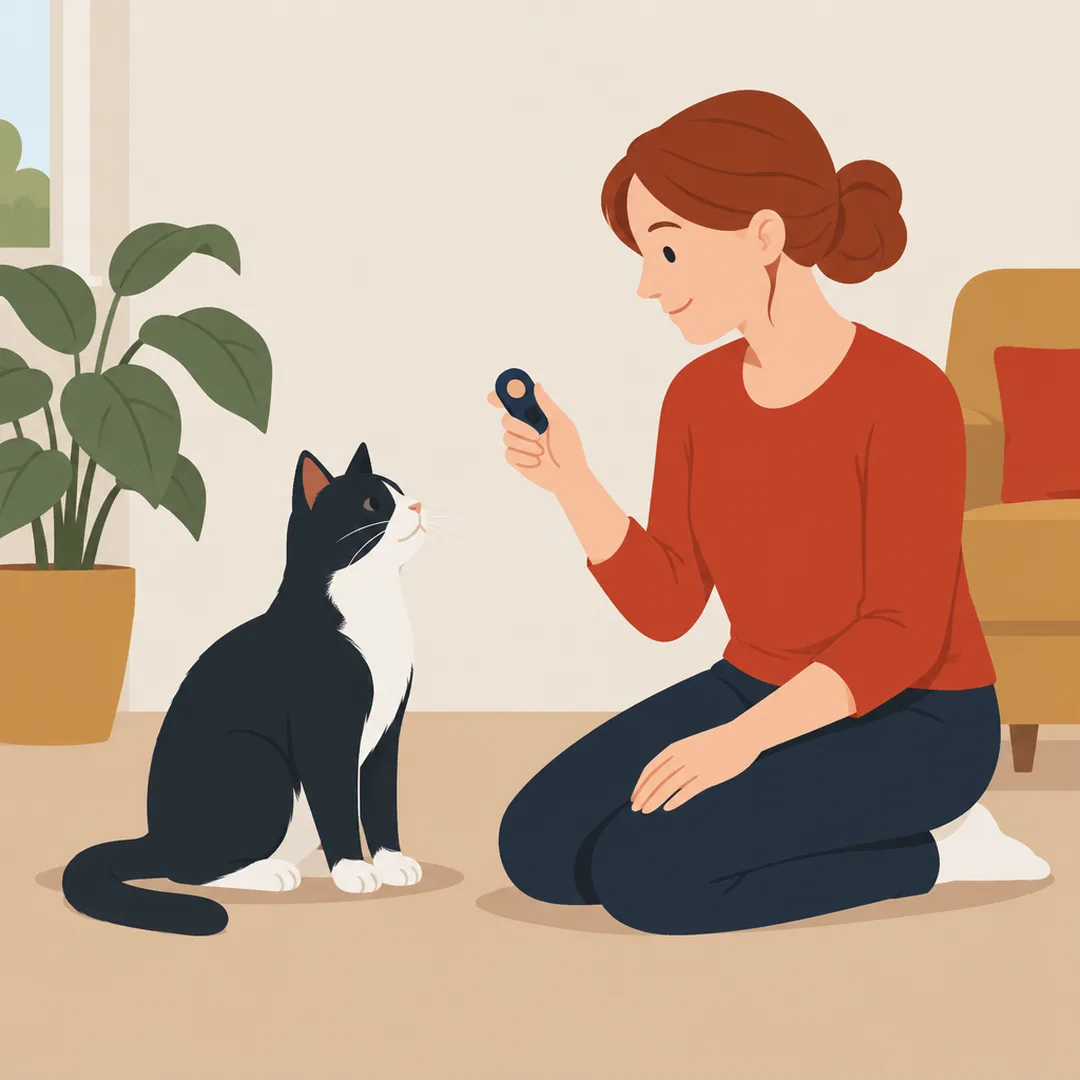
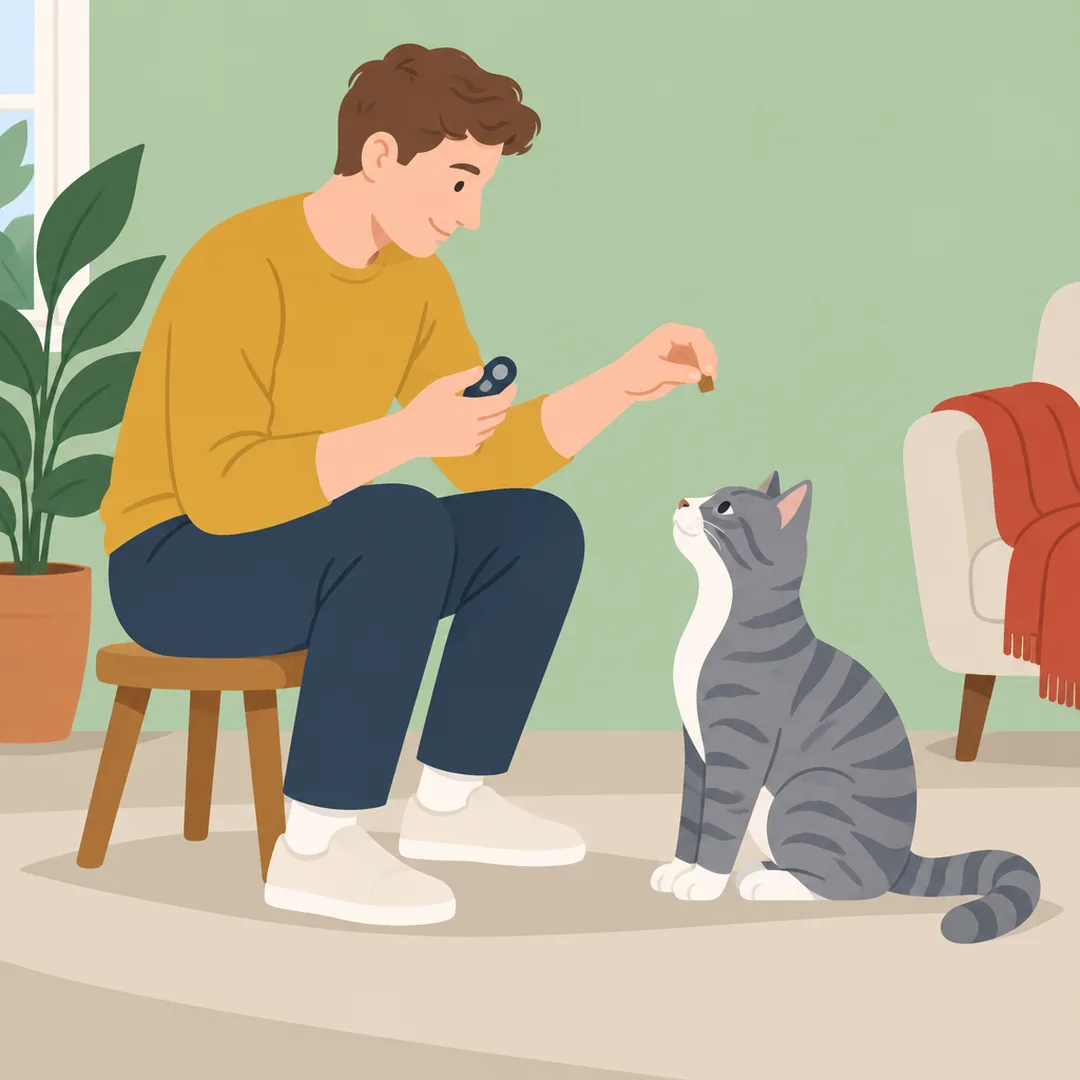
- A marker. A click, soft click or short word that means "yes, that exact thing earns a treat". It bridges the gap between the moment your cat does the right thing and the moment the treat arrives.
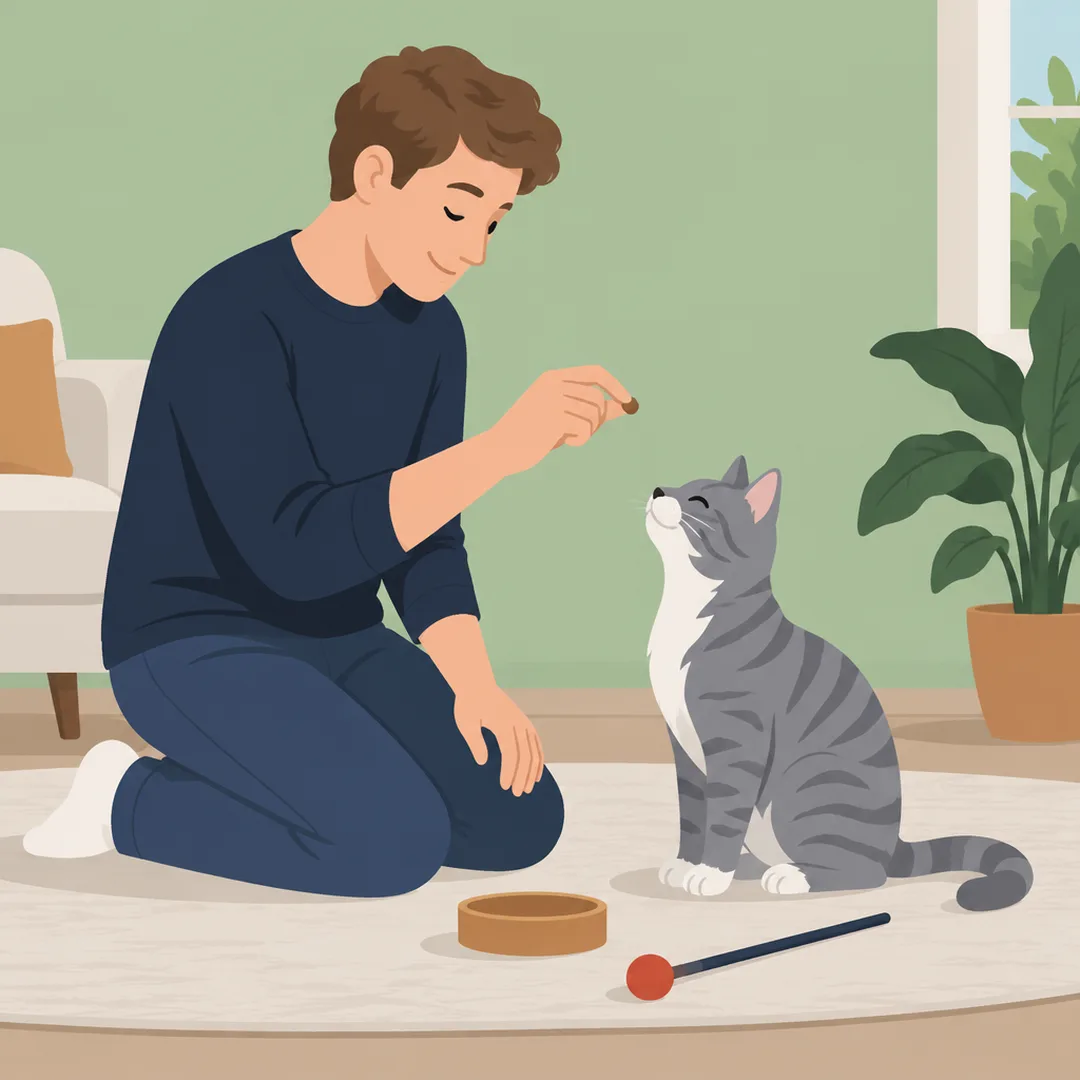
- Small, frequent rewards. Tiny pieces of food your cat loves, given fast.
Punishment does not work well with cats. A cat that is shouted at or sprayed with water learns to fear you and to do the behaviour when you are not looking. The AAFP and every major cat welfare group recommend reward-based methods only.
Myths about training cats
"Cats are too independent." Cats are not motivated by pleasing you in the way many dogs are. But they are very motivated by food, play and choice, and that works just as well.
"Only young cats can learn." Cats of any age can learn. Seniors often love training because it is gentle mental work.
"Training will change my cat's personality." Training does not make your cat less of a cat. It gives them more ways to communicate and more control.
"I don't have time." Sessions are three to five minutes. One session a day is enough to make progress.
What you can teach
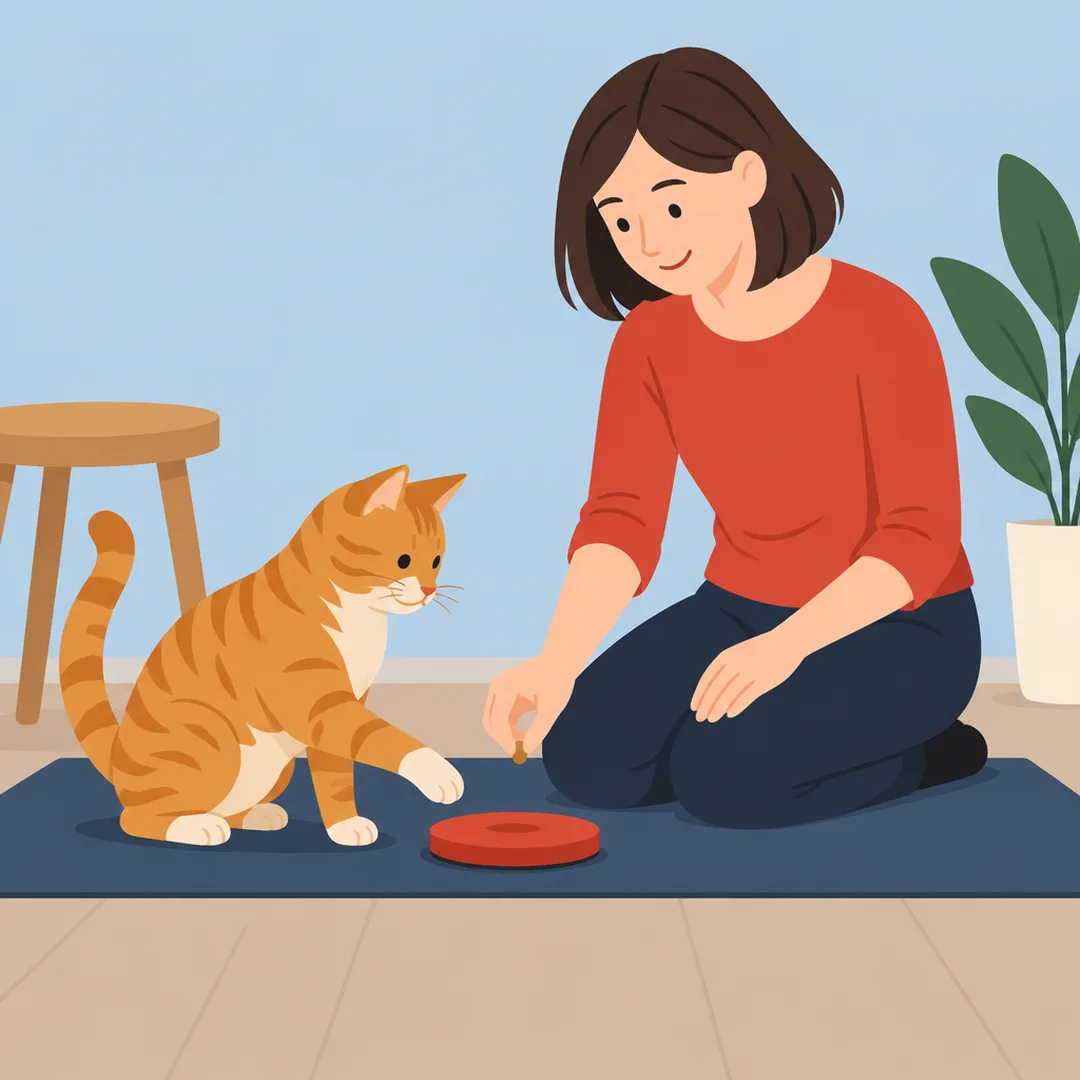
- Foundations: responding to a marker, nose-touch to a target, coming when called, sitting, going to a mat.
- Care skills: walking into a carrier, accepting paw handling for nail trims, having the mouth touched for tooth brushing, standing on a scale.
- Tricks: high five, spin, jump through a hoop, ring a bell. Tricks are just as valuable as "useful" skills: they build the same communication.
- Harness walking: for some confident cats, supervised time outside.
The Learn tab in Tumble walks you through each of these with step-by-step lessons.
Getting started
- Pick the right time. Train before a meal, when your cat is a little hungry, and after a short play session if they are very energetic.
- Find the right reward. Small soft treats, a lick of a paste treat, or pieces of cooked chicken. Some cats work for play or brushing too.
- Keep it short. Three to five minutes, then stop while your cat still wants more.
- Choose a quiet spot. A table or chair can help; many cats feel more comfortable at your eye level.
- Count treats into the daily food. Training treats add up. Reduce meals slightly to compensate.
- Read your cat. If they walk off, groom or flick their tail, the session is over. Make the next one easier.
Key points
- Cats learn constantly; training uses that learning on purpose with rewards.
- Training reduces stress at the vet and during home care, and gives indoor cats mental exercise.
- Use positive reinforcement only: a marker plus small, quick food rewards.
- Sessions of three to five minutes are enough; end before your cat loses interest.
- Cats of all ages can learn, and shy cats often gain the most.