The 3 Ds: duration, distance and distraction
A behaviour is only really learned when it holds up for longer, further away and with things going on. Learn how to build each D separately so your cat succeeds everywhere.
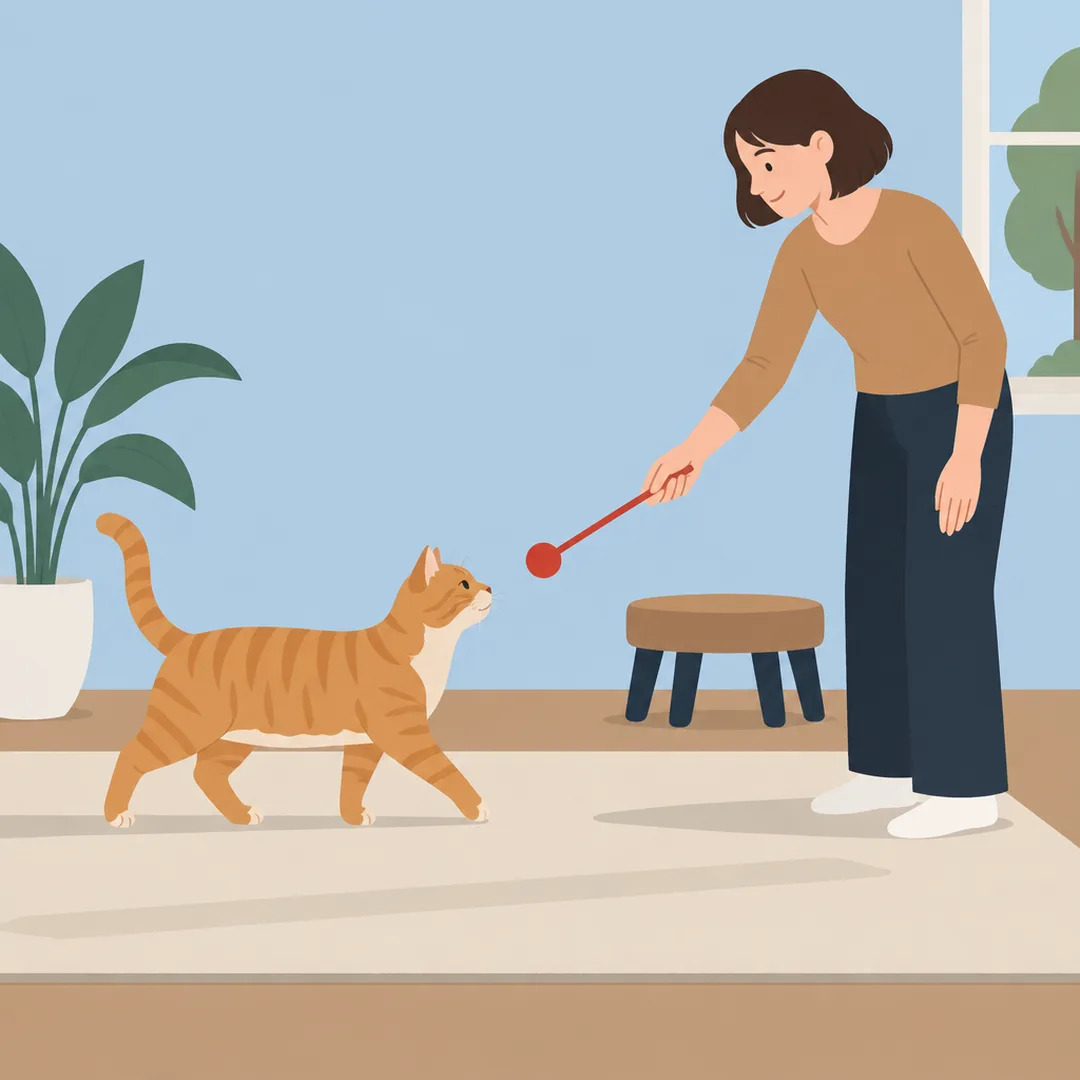
Your cat sits beautifully in the kitchen when you are standing right in front of them holding a treat. Ask for a sit in the living room while a visitor is there and you get a blank look. That is not stubbornness. Animals do not automatically transfer learning to new situations. The 3 Ds framework helps you build reliability step by step.
The three Ds
- Duration: how long your cat holds the behaviour. A one-second sit versus a ten-second sit.
- Distance: how far you are from your cat when you ask or while they hold the behaviour. Standing next to your cat versus across the room.
- Distraction: what else is going on. A quiet room versus toys, people, noises or other animals.
Some trainers add more Ds, such as different places and different people, which are really kinds of distraction. Tumble lessons count them under distraction and "mastery in three rooms".
One D at a time
The most important rule: raise one D at a time, and relax the others while you do.
If you are adding distance, go back to short duration and no distractions. If you are adding a distraction, stand close and ask for only a moment. When the new D is solid, you can start combining them slowly.
Raising two at once is the most common reason a behaviour "falls apart".
Building duration
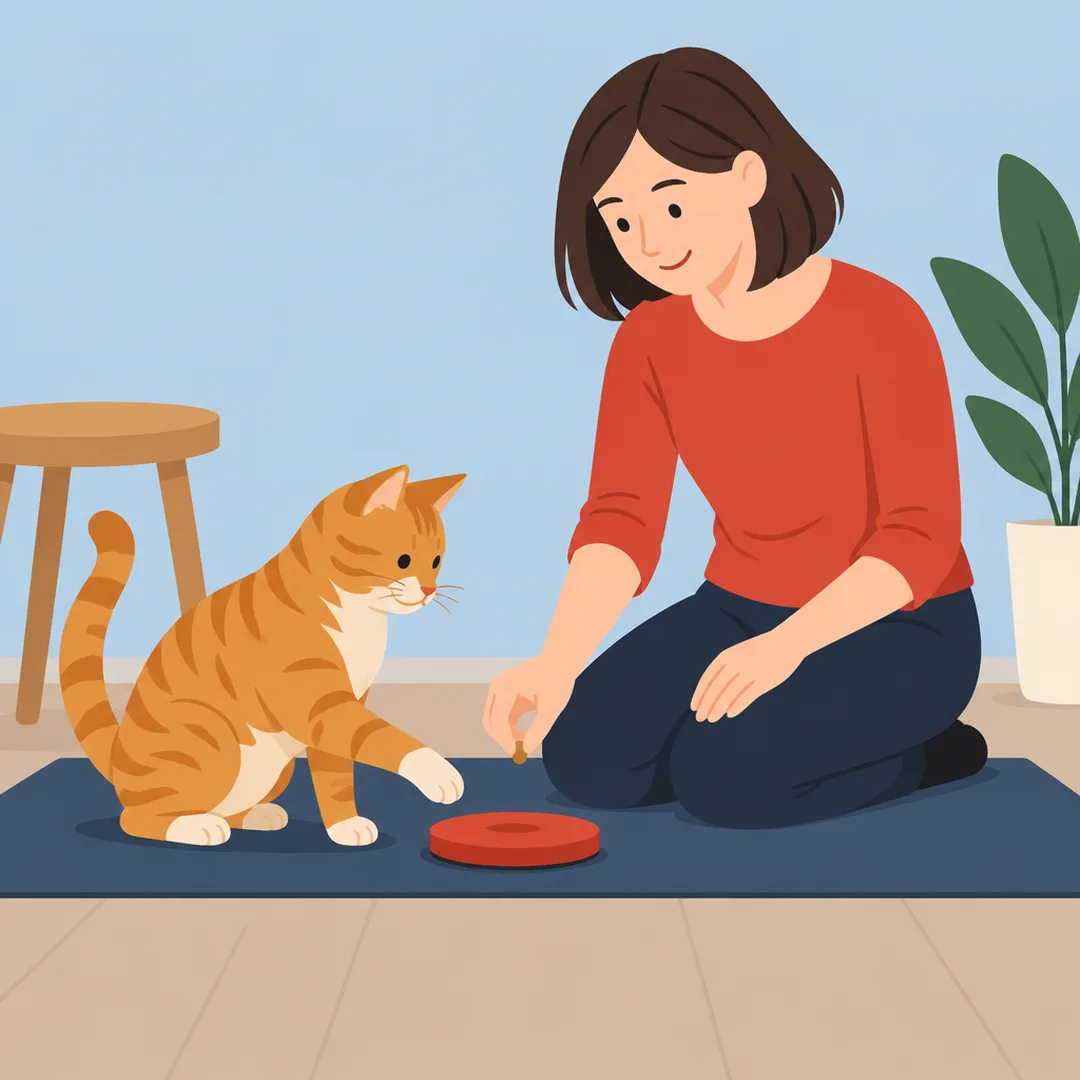
- Ask for the behaviour (for example, sit on a mat).
- Mark and treat after 1 second.
- Next tries: 2 seconds, 1 second, 3 seconds, 2 seconds, 4 seconds. Vary the time, sometimes easier, so it is not always getting harder.
- Deliver treats in position to reward staying.
- Add a release cue like "free" or "OK" to tell your cat when they can move. Toss a treat away after the release.
- If your cat breaks early, do not repeat the cue. Calmly reset and ask for a shorter time.
Cats rarely hold long stays like dogs. A few seconds of duration is already useful for vet checks, grooming and photos.
Building distance
- Start with duration back at 1 to 2 seconds.
- Take one small step back, then immediately return, mark and treat in position.
- Add a step at a time. Always return to your cat to deliver the treat at first.
- For behaviours that need distance to start (like "go to your mat"), stand a little further from the mat each time before giving the cue.
- Later, mark from a distance and toss the treat to your cat.
Building distraction
Make a list of distractions from mild to strong, and work up the ladder:
- You shifting in your chair.
- You standing up or turning around.
- A toy lying still on the floor nearby.
- A toy moving gently.
- Another person walking past.
- The doorbell or a knock.
- Another pet in the room.
At each new distraction, go back to short duration and no distance. Use your best treats. If your cat cannot focus, the distraction is too strong: make it smaller (further away, quieter, still instead of moving).
New places
Practise each skill in at least three different rooms before calling it learned. Then try different times of day, a different chair, a different person giving the cue. Each change is a small new distraction, so make the request easy at first.
Make it easier, not louder
When your cat does not respond:
- Do not repeat the cue louder or more often.
- Ask yourself which D you raised, and lower it.
- Give a few easy wins, then end the session on a success.
A cue that is repeated without results starts to mean "ignore me". A cue given once, at a level your cat can handle, stays strong.
Mastery check
A behaviour is solid when your cat does it on the first cue:
- in three or more rooms,
- with you a few steps away,
- with at least one mild distraction,
- four times out of five.
Tumble's mastery checks use this standard and suggest filming a short clip so you can see progress.
Key points
- Duration, distance and distraction each make a behaviour harder; build each one separately.
- When you raise one D, relax the other two.
- Vary difficulty: mix easy and hard tries so your cat keeps winning.
- Practise in several rooms and with different people before calling a skill learned.
- When it falls apart, make it easier, not louder.