Socialising your dog
Puppies have a short window when new experiences shape them for life. Here is how to use it safely, at your puppy's pace, and how to keep going once it closes.
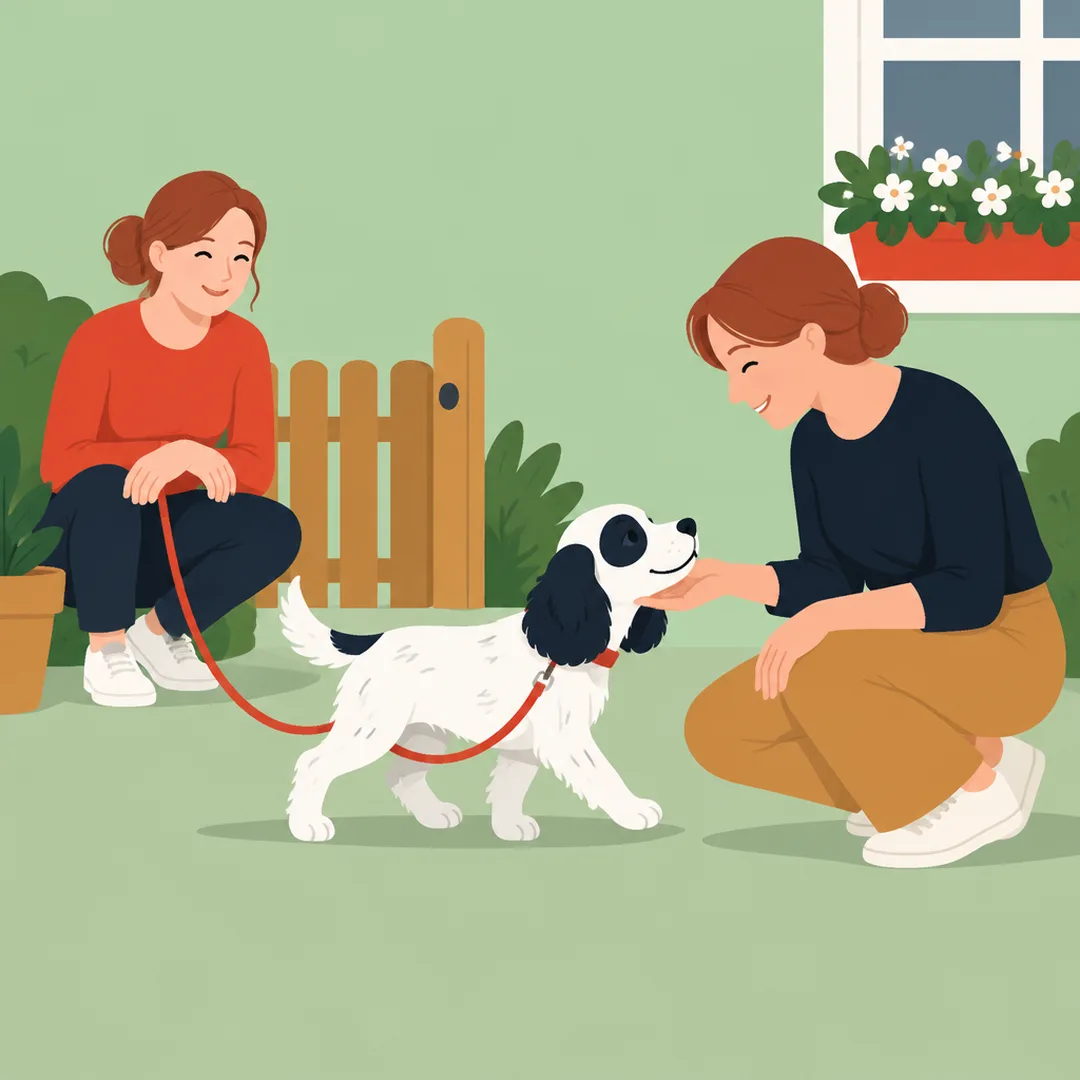
Socialising a dog is not about meeting every dog in the park. It is about helping your dog get used to everyday sights, sounds, people and animals, while still checking in with you. This guide covers the sensitive window, what to do during it, and how to carry on after it closes.
What socialisation means
Socialisation involves exposing an animal to a range of experiences to help them prepare for and cope with different situations, interactions, and environments. For a puppy that means new people, friendly dogs, sounds, surfaces, places and smells, met in amounts that do not frighten them. Socialisation means getting used to the world around them, whilst still listening to us, their owner. It is not a free run with every dog you meet.
The sensitive window
VCA gives the sensitive period as 3 to 16 weeks of age. The RSPCA calls 3 to 17 weeks the critical socialisation period and says a wide range of positive experiences then is essential. By the time your puppy has finished their vaccination series, the sensitive period for socialisation will be over. Ask your vet about disease risk where you live and follow their vaccination schedule, using low-risk outings. Avoid unvaccinated dogs and groups of unknown dogs, such as dog parks, until your vet says otherwise.
Go at your puppy's pace
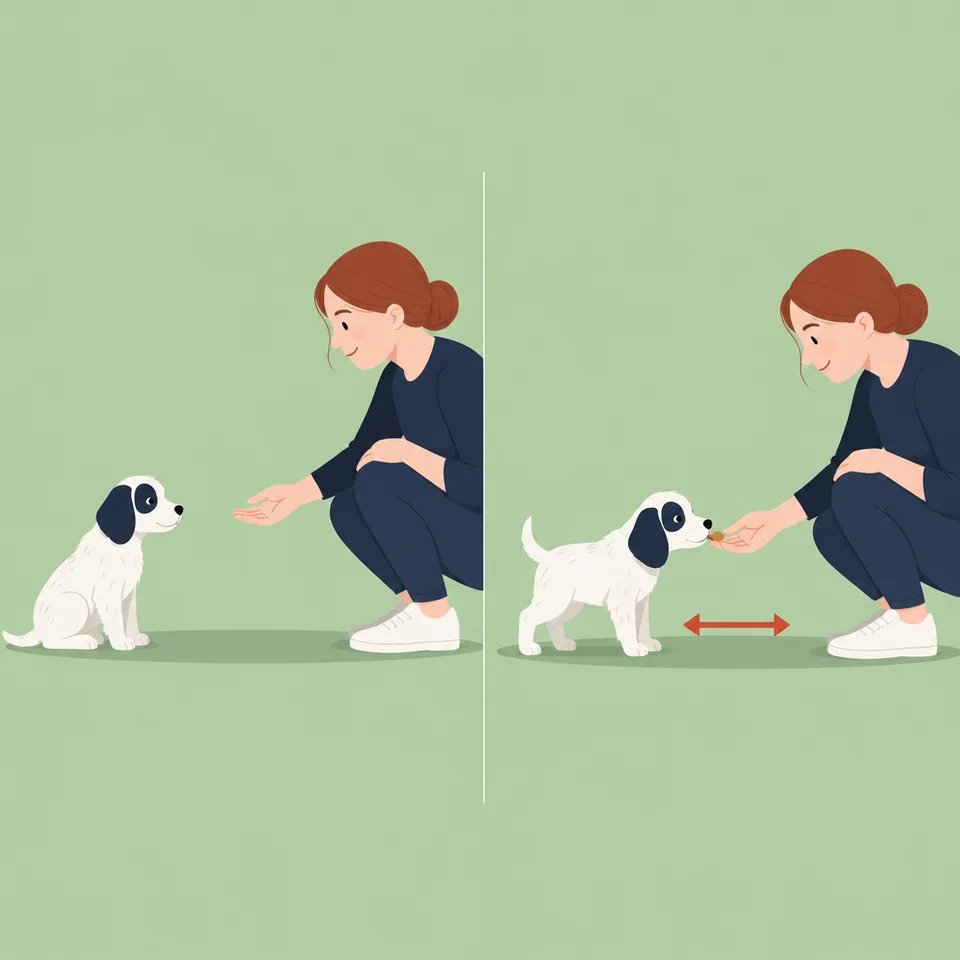
As a guideline, bring your puppy to new places at least twice weekly. Pack some tasty treats and some exciting toys. Start at a comfortable distance from anything that might worry your puppy. If they look calm and interested, move closer; if they look worried, add distance. Keep visits short and let your puppy set the pace.
Meeting people
Let your puppy meet all sorts of friendly people every week: different sizes, different ages and different colours, people in hats and with canes, and children old enough to be gentle. Strangers should avoid reaching for the puppy and allow the puppy to approach at their own pace. If someone is overbearing, step in, block their path and ask them to crouch down. Keep greetings short, then get your puppy's focus back with a game or a treat. Be careful about getting other people to feed or play with your puppy: they may end up running excitedly to everyone else looking for fun or food.
Other dogs and puppy classes
Make sure that other dogs and puppies are friendly, healthy, and up-to-date with their worming, vaccinations, and external parasite prevention. A reward-based puppy class is the best place to begin. Look for puppies who are vaccinated and free of intestinal parasites, who have been in their new home for at least 10 days and healthy since, a rule that sick puppies stay home, and a room that can easily be cleaned and disinfected. Ask your vet when dog parks are okay. Watch greetings closely: one bad lesson can turn a confident puppy fearful.
Sounds, places and habituation
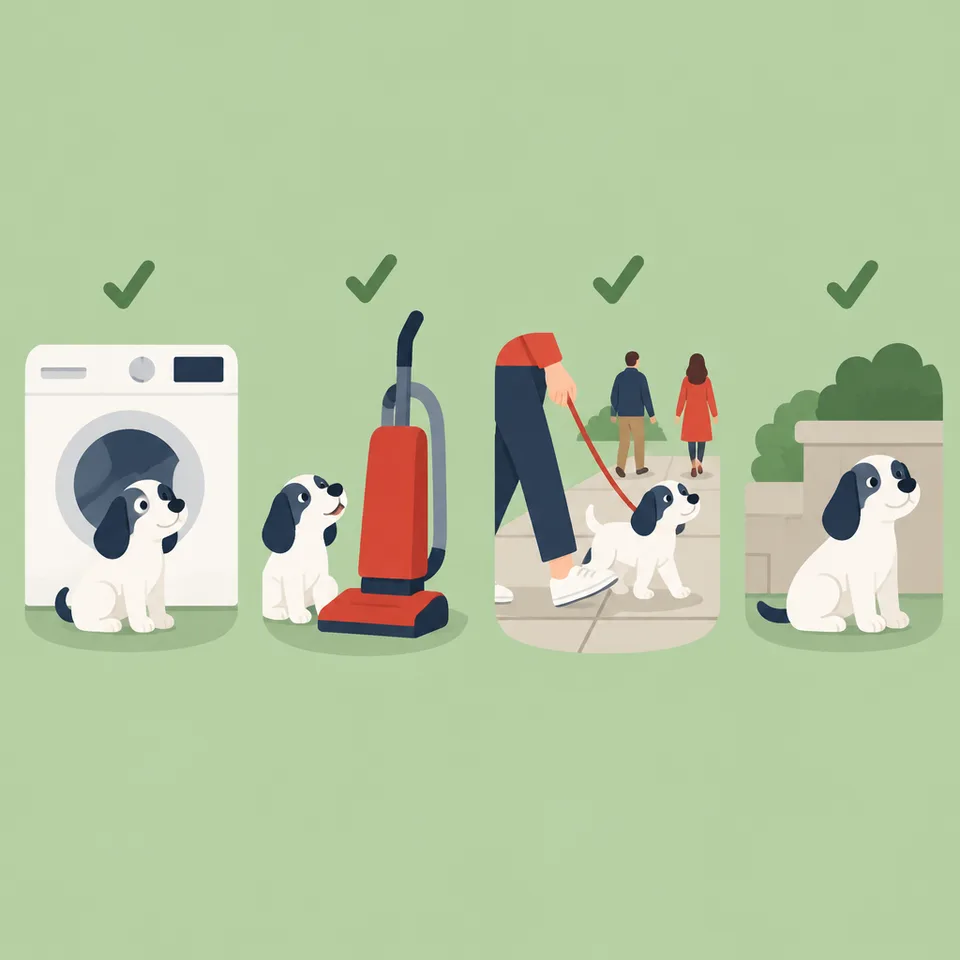
Habituation happens when a puppy grows accustomed to stimuli through repeated exposure at levels that do not produce fear. Add the washing machine, the vacuum, traffic and busy streets slowly, keeping the level low enough that your puppy can still eat, play and rest.
If your puppy is worried
Watch for trembling, refusing to play or take treats, or trying to escape or pull away. Take your puppy out of the situation and somewhere they feel safe. Never force a frightened puppy to face what scares them. Puppies that show fear need a customised plan and benefit from professional guidance. Desensitisation means exposing your puppy to a stimulus at such a low level that they are not frightened, then increasing it slightly once they are relaxed.
Keep going after the window
Even if your puppy is over 16 weeks and past the sensitive period, it is important to continue providing regular social interactions. Puppies can become fearful again around the onset of puberty, and that too needs handling sensitively.
Key points
- Socialisation is getting used to the world, not meeting every dog in it.
- The sensitive window is roughly 3 to 16 or 17 weeks, and by the time vaccinations are finished it will be over, so use low-risk outings.
- Aim for new places at least twice weekly, starting at a distance your puppy can cope with.
- Only friendly, healthy, vaccinated dogs, and a clean reward-based puppy class.
- Fear signs mean stop, give space and get help rather than pushing on.