Separation anxiety
Signs of separation-related distress, what to rule out first, and a step-by-step plan that builds alone time without pushing your dog over the edge.
Some dogs find being left alone hard, and the signs are easy to miss. This guide covers how to spot separation-related distress, what to rule out first, and how to build alone time in small, calm steps.
What it looks like
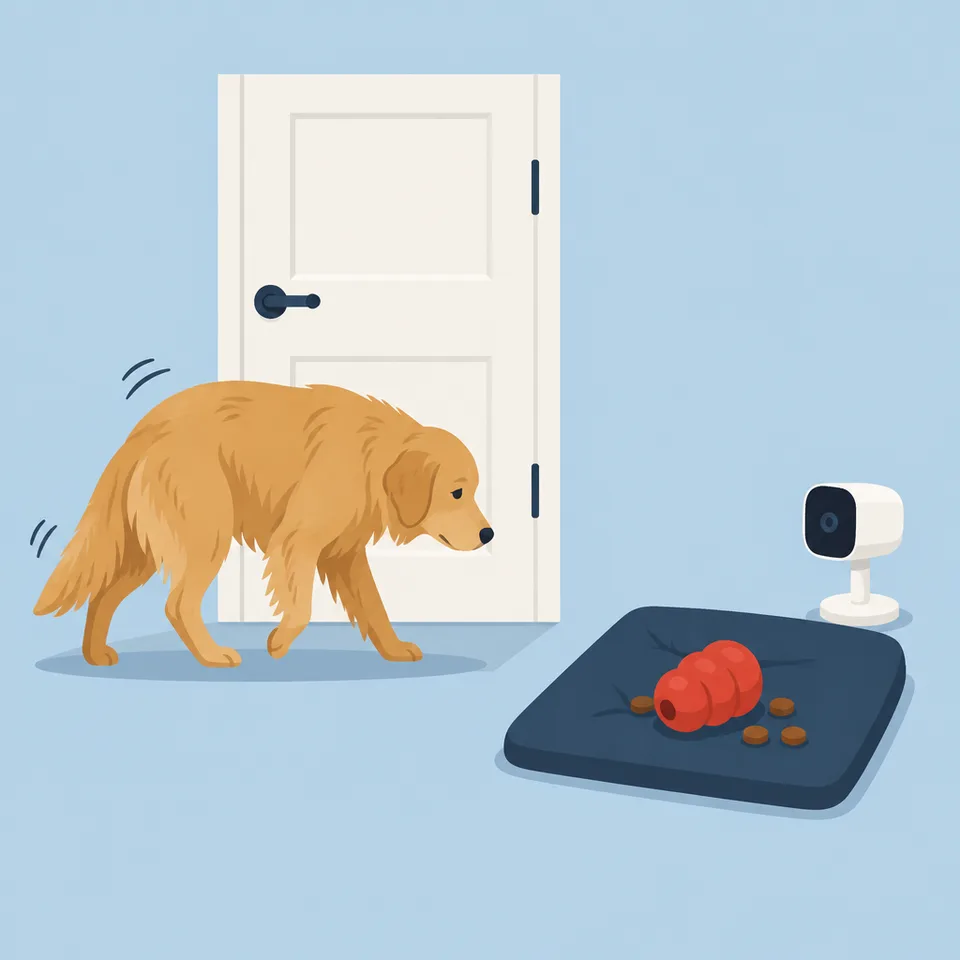
Signs usually start as you get ready to leave, or shortly after the door closes: howling, whining or barking, pacing, chewing doors and your belongings, drooling, vomiting, or peeing and pooping indoors. Many of these dogs follow you from room to room and rarely spend time outdoors alone. Film a short absence: some owners are unaware their dog has a problem when left alone.
Why some dogs struggle
Dogs are social animals, so being alone does not come naturally to every dog. A dog that has never been left alone, or one that was dropped at a shelter, may struggle the first time. Easily frustrated dogs bark or scratch, nothing happens, and they try harder. Changes at home, like someone going back to work, can trigger it.
Rule out other causes first
Check that being alone is the real problem:
- Pain or illness. Dogs in pain often do not settle well, and conditions that make them need the toilet urgently cause accidents.
- Senior dogs. Cognitive decline can bring anxiety and forgetting that being alone is safe.
- Confinement. If your dog chews at a crate or gate while you are home too, the barrier is the issue.
- Too long alone, or noise outside.
Before you start
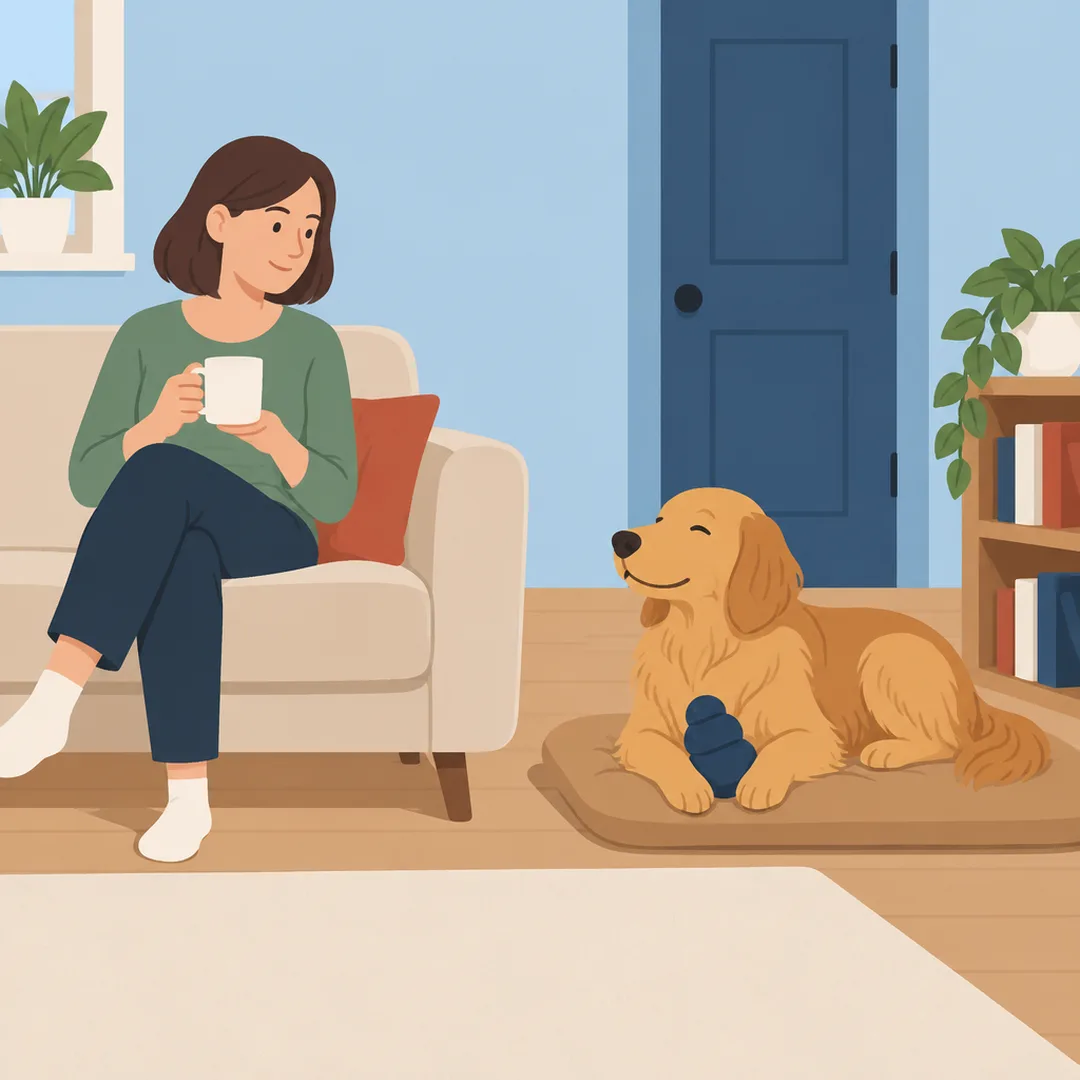
Set a predictable routine with fixed times for walks, food, play and rest. Meet your dog's needs for exercise, play and company while you are home. Set up a mat or bed as a calm spot and reward your dog for going there. Until your dog settles and relaxes while you are home, they are unlikely to settle when you leave.
Build alone time in small steps
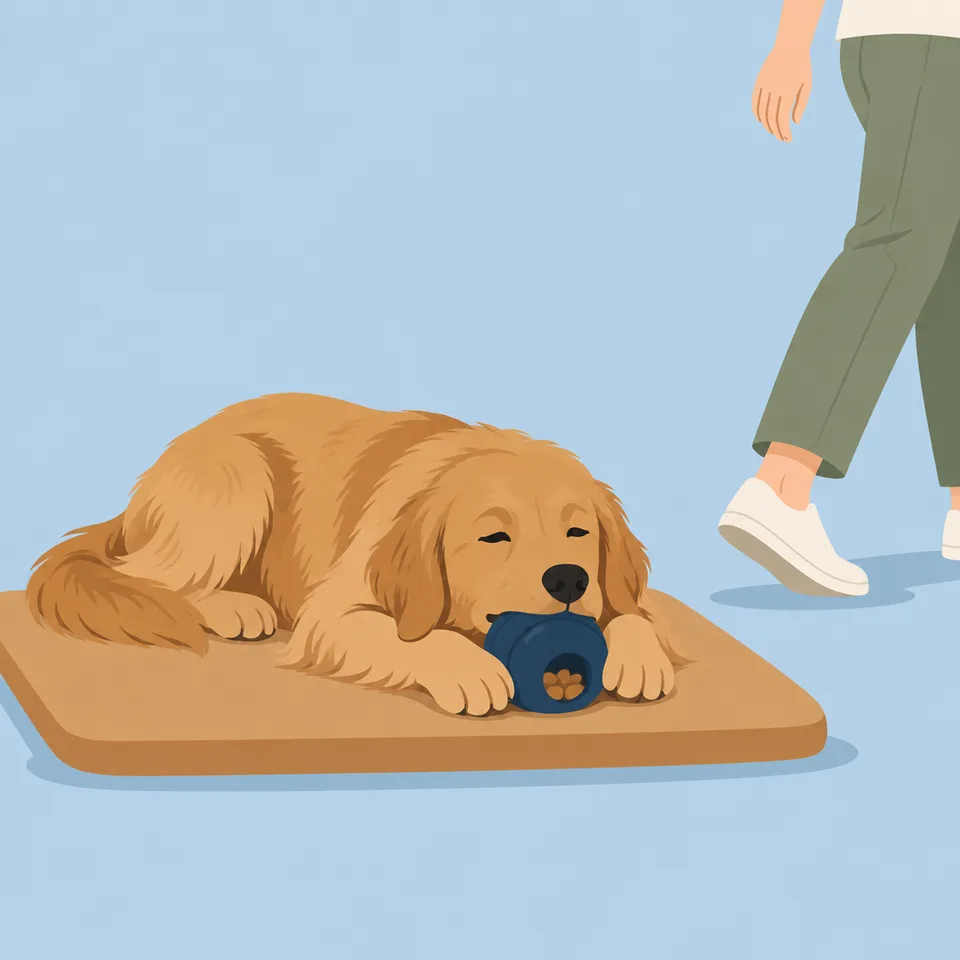
- Make the safe place good. Give a food-filled toy on the mat while you are nearby.
- Practise being apart at home. Stay busy nearby, step out of sight for a moment, and return before your dog worries. Wait a little longer each time.
- Practise short outings. Set up a camera, leave a long-lasting food toy, and go out for a few minutes. Return before any distress, then vary the length.
Crates need care: for dogs with separation anxiety they can trigger escape attempts, so only use one if your dog is already relaxed in it.
Keep departures and returns calm
Handle your keys, coat and bag at odd times so they stop predicting a departure, and only when your dog is calm. Get ready out of sight where you can. Skip the big goodbye and give a quiet hello on return, then sit down and let your dog settle. Never punish a dog who has chewed or soiled; clean up quietly.
If your dog cannot cope
Stop the exercises and get help. Some dogs get more distressed with each repetition instead of less, and pushing on makes it worse. Until a plan is in place, use a sitter, a friend or daycare so your dog is not left to panic. Ask your vet about a referral to a veterinary behaviourist.
Puppies and prevention
A recent RVC study with Dogs Trust found that puppies whose owners were advised to keep departures and reunions calm spent more time resting quietly when left alone. Gradual build-up helped too. Start early and keep it calm.
Medication
Medication is not instead of training. Your vet prescribes it, sometimes after tests, and it is used alongside changes to behaviour and environment. If your dog panics when left, ask your vet whether it is appropriate.
Key points
- Signs include howling, pacing, damage to doors, drooling, vomiting and toileting indoors, usually soon after you leave.
- Rule out pain, illness, cognitive decline, barrier frustration and noise first.
- Teach a settle spot and reward calm before you practise absences.
- Build from seconds out of sight to short outings, returning before distress.
- Keep departures and returns low-key, never punish, and stop if your dog is getting worse.
When to call the vet
Call your vet if the behaviour is sudden or new, if your dog seems painful or unwell, if a senior dog is becoming anxious or confused, or if your dog cannot be left without panic. Your vet can check for medical causes and discuss a treatment plan.