Resource guarding
A dog who growls over a bowl or a stolen sock is not being naughty, they are protecting something that matters to them. Here are the warning signs, the safety rules, and the reward-based steps that make people coming close feel safe.
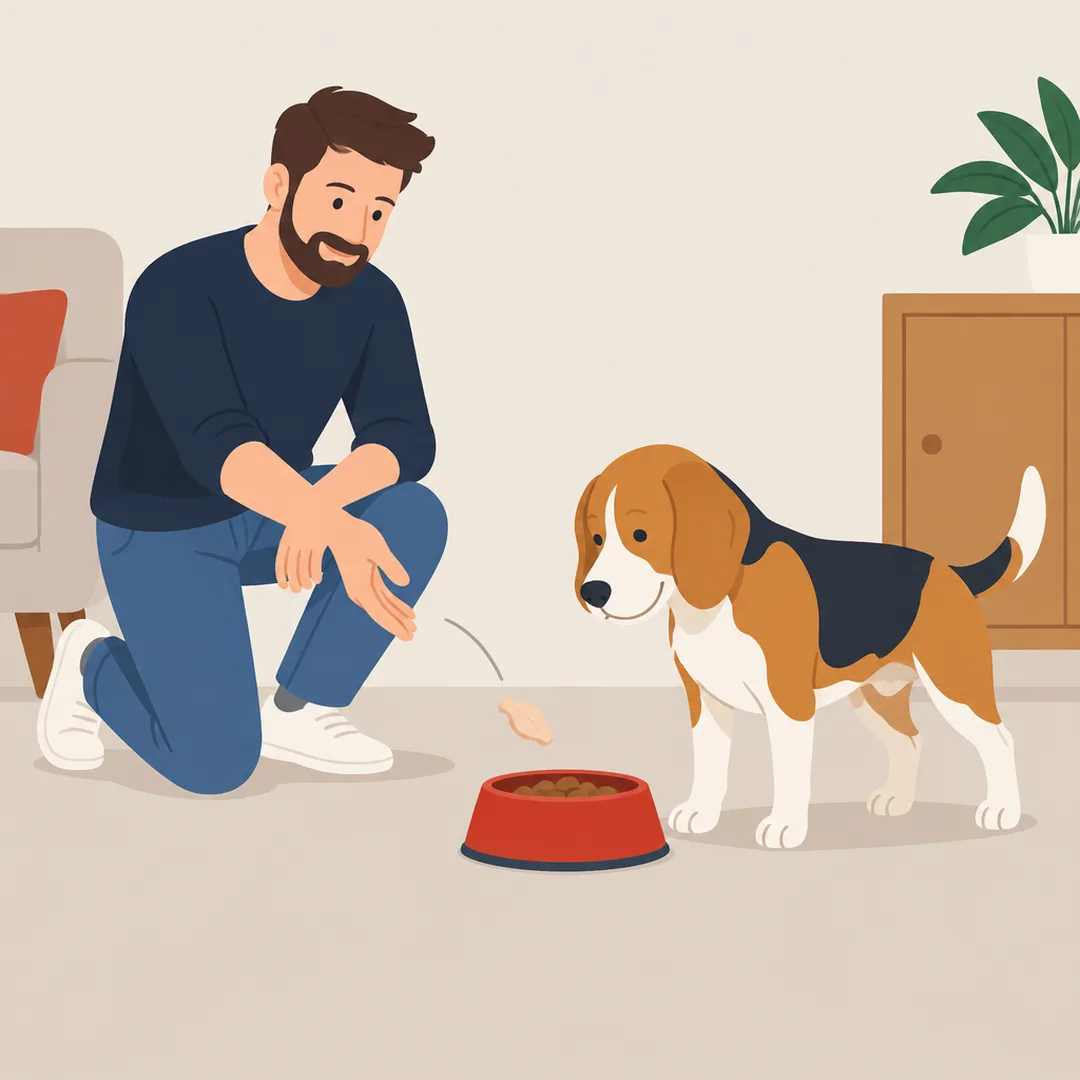
Resource guarding is when a dog growls, stiffens or snaps to keep something they value, from dinner to a stolen sock. Here are the warning signs, the safety rules, and the reward-based steps that make people coming close feel safe.
What resource guarding looks like
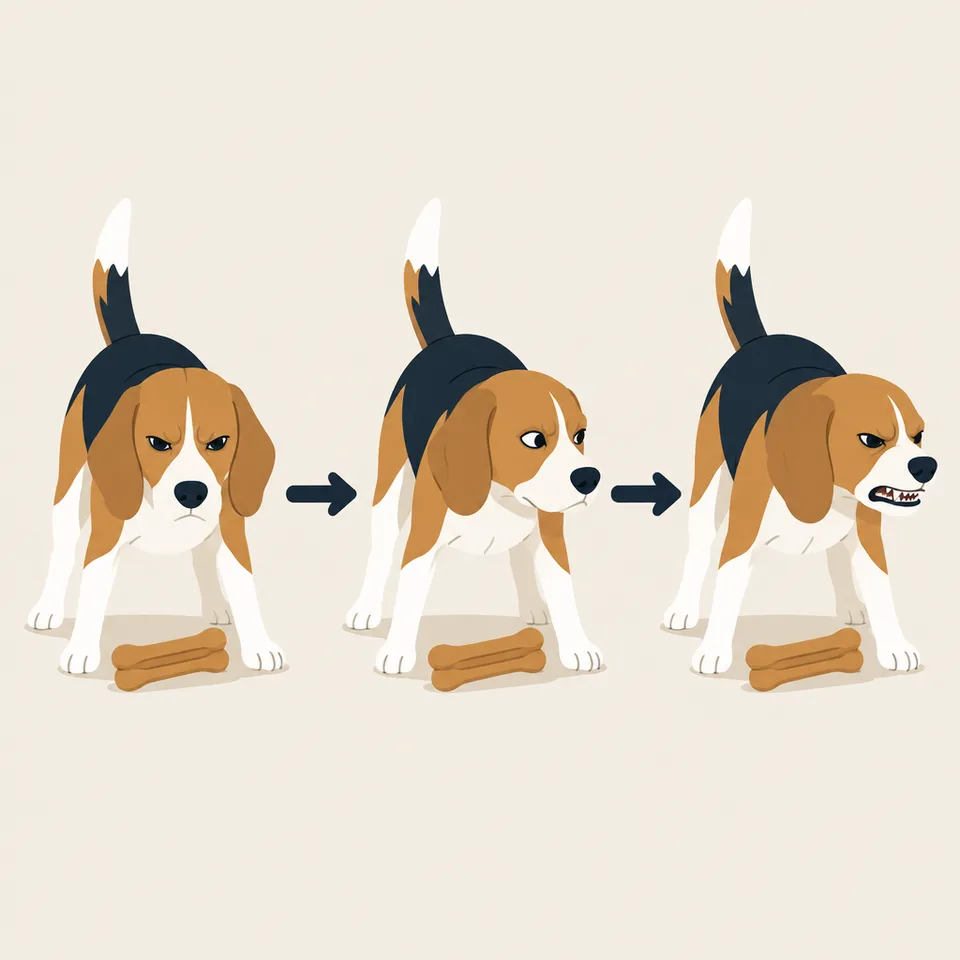
Resource guarding is aggression towards people or other animals who come near something the dog values. It is not only food: stolen tissues, favourite toys and chews can all set it off.
Watch for the early signs: a stiff body over the item, a hard stare, whale eye (the whites of the eyes showing), lips lifting, low growling, teeth bared.
A guarding dog reacts to what they think you might do, not what you are doing. Someone who is only walking past can feel like a thief.
Why some dogs guard
Guarding is a survival instinct in the wild and a problem in a home. Any dog can guard, whatever their background, and the environment a dog grows up in plays a part. A dog who suddenly starts guarding as an adult may be in pain or unwell, so a vet check comes first.
Safety first
Stopping bites comes before training:
- Confine or supervise the dog so they cannot pick up and guard things.
- Keep tempting items out of reach: sealed containers, closed doors, high shelves.
- Toys and treats your dog may protect are only for when they are alone in the crate or confinement room.
- Do not give the items they guard most, such as rawhide bones and chews, at all while you are training.
- Feed a dog who guards food in a separate room.
- Never punish: no shouting, no hitting. Punishment makes guarding worse.
- Everyone in the home, children included, follows the same rules.
If the dog shows aggression, such as growling, snarling, snapping, lunging or biting, leave the area and do not try to take the item. That needs a veterinary behaviourist.
Teach a trade
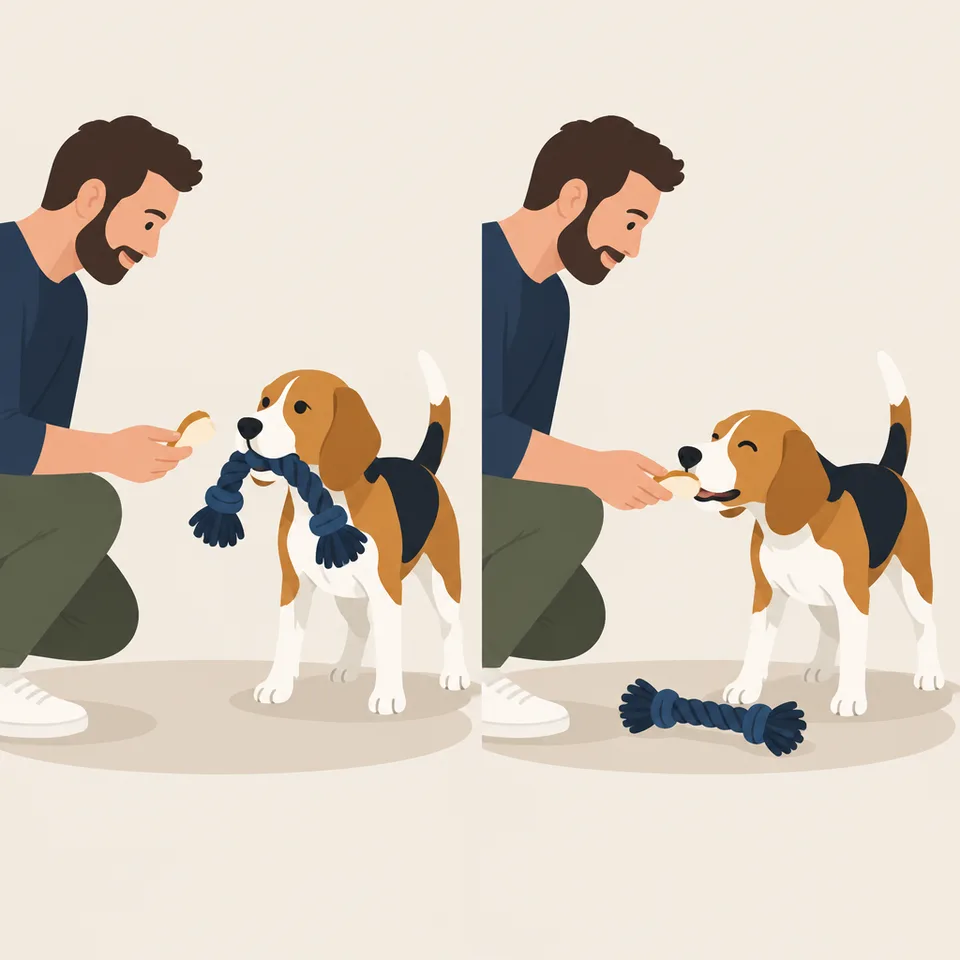
The aim is for your dog to learn that giving something up earns something better:
- Ask for 'drop it' with an object of low value, then pay with a reward of much higher value.
- Only ask for things your dog will give up, and build up to more valuable items slowly.
- Keep the trade worth it: the treat always beats the object in their mouth.
If your dog cannot sit, stay, come, or let you approach when they have nothing, work on those first.
If your dog already has something valuable
Sometimes an item must be retrieved, especially if it is dangerous. Only the adult with the most control over the dog should do this, never a child.
- When the dog has the stolen item, get a highly valued food reward that the dog reliably wants.
- Call your dog to come. When they leave the item, back away, call again, then ask for a sit.
- Repeat two or three times, without handing over the food, until the dog is at least 15 to 20 feet from the object, ideally in another room.
- Give the food, settle the dog in another room with the door closed, then go back for the item.
A diversion such as a walk or car trip can also get some dogs to leave an object. If you offer one, follow through.
Making your approach feel safe
For food guarding, work at a distance and pair your presence with food:
- Tether the dog to something heavy and durable.
- Stay 6 to 8 feet away and toss tasty food, such as chicken, towards the dog.
- Walk past and toss food without stopping.
- If the dog stiffens or lifts a lip, you are too close, so move back.
- When the dog looks up happily, expecting food, move a little closer.
Go slowly and do not rush. A professional trainer can guide you safely.
Start young
With a puppy, calmly approach and talk softly while they eat, dropping tasty treats into the bowl. Puppies who learn that hands near their things mean good news are less likely to guard later.
When to call the vet
- Book a vet visit for sudden guarding in an adult dog, or any change in behaviour, to rule out pain or illness.
- If your dog has bitten, or growls and snaps when you come close, call your vet and ask for a referral to a veterinary behaviourist now.
Key points
- Guarding is aggression towards anyone near something the dog values, and it is not always food.
- Early signs: a stiff body, hard stare, whale eye, lifted lip, low growl or bared teeth.
- Manage first: supervise, put valuables away, feed apart, never punish.
- Teach a trade, paying with something better than what the dog gave up.
- Never take an item from a dog who is showing aggression. Get professional help early.