Recall that works
A reliable recall is built, not demanded. Why dogs ignore 'come', how to make your recall worth running for, and how to practise safely with a long line.
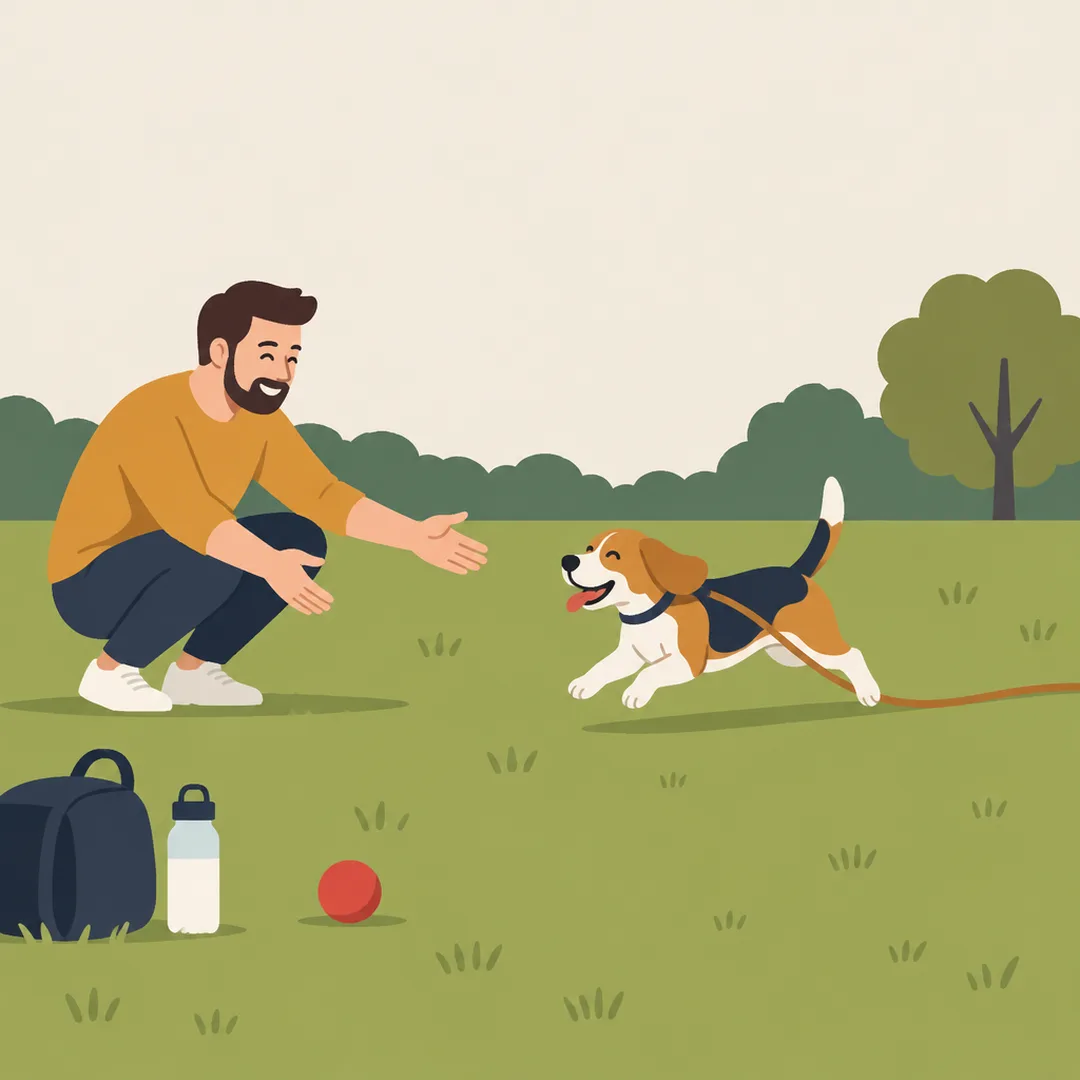
A dog who comes back when called gets more freedom, more fun and more safety. Yet recall is the cue most dogs ignore. That is not stubbornness. It is a simple sum: right now, the squirrel, the smell or the other dog is worth more than you. Good recall training changes that sum.
Why dogs do not come
- The cue has been "poisoned." If "come" has meant the end of fun, a bath, nail trims or being told off, your dog has good reason to hesitate.
- It was never really taught. We often use "come" before the dog knows it, then repeat it as they ignore us, so it becomes background noise.
- The reward is not worth it. A dry biscuit does not beat chasing a rabbit.
- Too hard, too soon. Calling a dog away from a busy park without practice in easier places.
Make coming back the best thing
- Choose a fresh cue if your old one is worn out: a new word or a whistle. Use it only when you are fairly sure your dog will come.
- Charge it. Say the cue, then give a top-value treat right away, even if your dog is next to you. Repeat 10 times over a few sessions.
- Start tiny. Indoors, from a few steps away, say the cue once in a happy voice and back away a step or two. Running away from your dog makes them want to follow.
- Pay big. When they arrive, give several small treats one after another, or a game of tug, and praise.
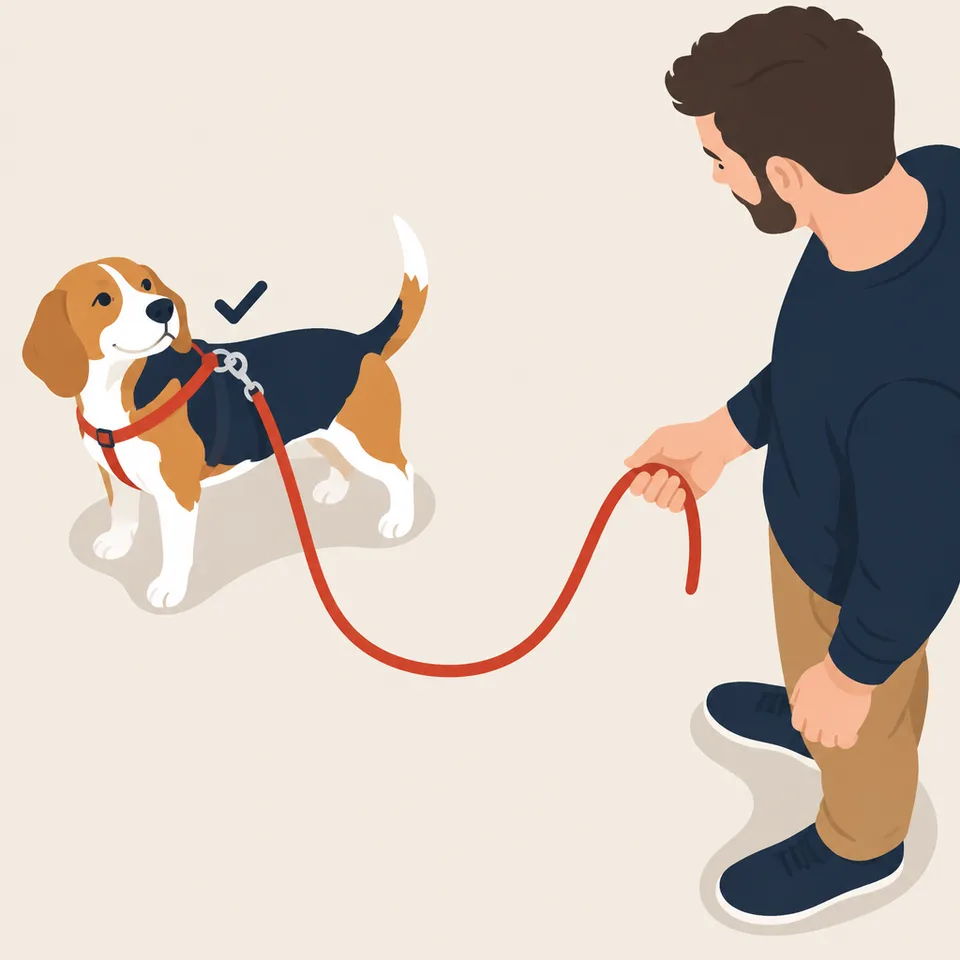
- Touch the harness. Gently hold the harness as they eat, so being caught is part of the happy routine.
- Release them again. Most recalls in practice should end with "go play," not the lead going on.
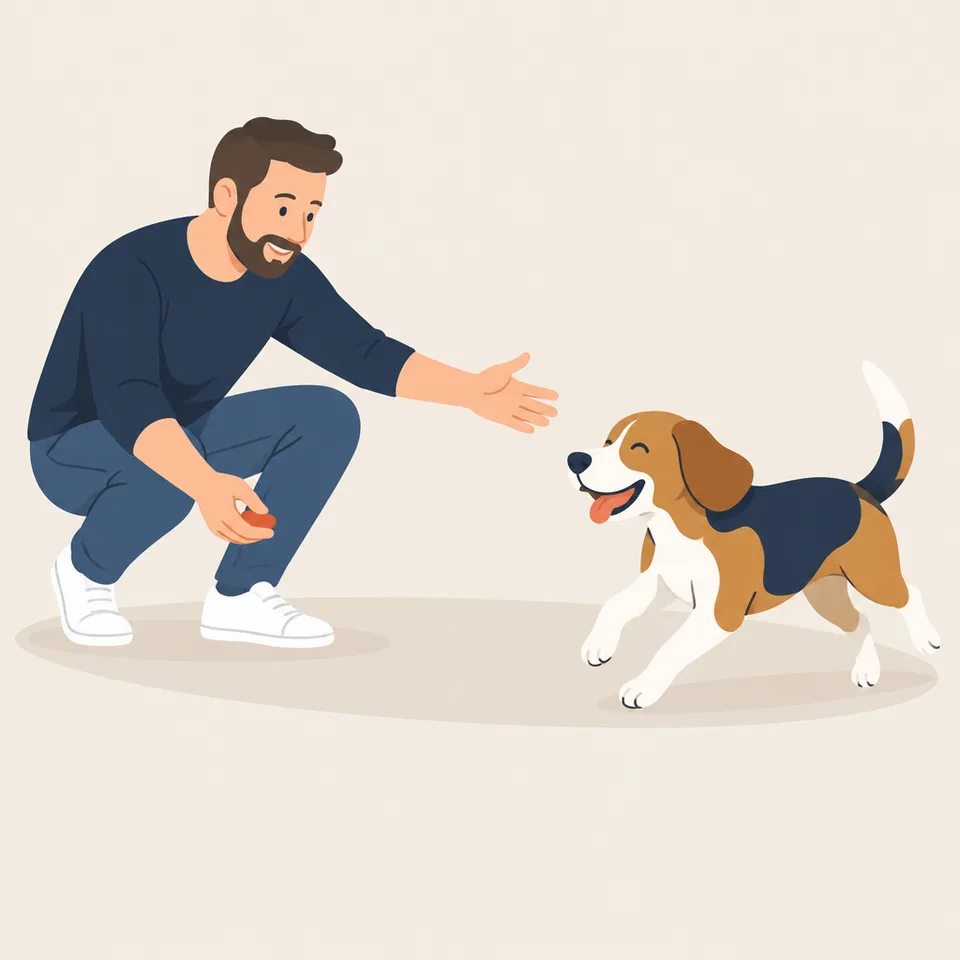
Say the cue once. If your dog does not come, do not repeat it louder. Go and get them calmly, then make the next attempt easier (closer, fewer distractions, better treat). Make it easier, not louder.
What counts as a great reward
Rank what your dog loves. For recall, use the top of the list: real chicken, cheese, sausage, squeeze tubes of soft food, a favourite toy, or the chance to go back to what they were doing. That last one, called the Premack principle, is powerful: call, reward, then release back to sniffing.
Use a long line
Until your dog's recall is strong, a long line (5 to 10 metres) gives them freedom while stopping them practising running off. Clip it to the back of a harness, never a collar, so a sudden stop does not jolt the neck. Let it trail or hold it loosely; do not wrap it round your hand or fingers.
Add difficulty slowly
Work through levels, and stay at each until your dog comes on the first cue about 8 times out of 10:
- Indoors, quiet room.
- Garden or quiet yard.
- Quiet park on a long line.
- Park with mild distractions (people far away).
- Off lead in a safe, enclosed area.
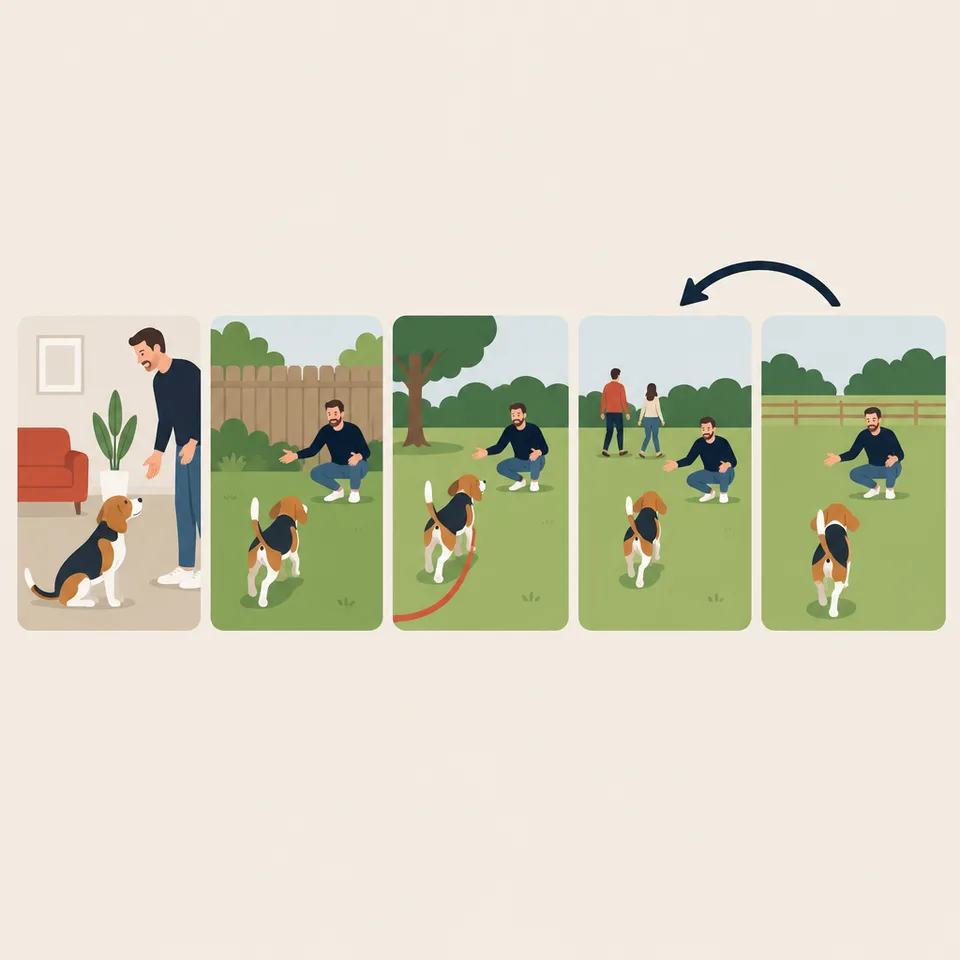
Change one thing at a time: distance, distraction or duration. If your dog fails twice, go back a step.
Daily habits that build recall
- Check-ins: reward your dog every time they look back at you on a walk.
- Hide and seek on walks: step behind a tree and reward when they find you.
- Call away from small temptations (a dropped toy, a sniff spot) and release them back to it.
- Never call to end the fun every time. Call, reward, release many times on each walk.
- Do not call for unpleasant things. For a bath or medicine, go and get your dog instead.
Emergency recall
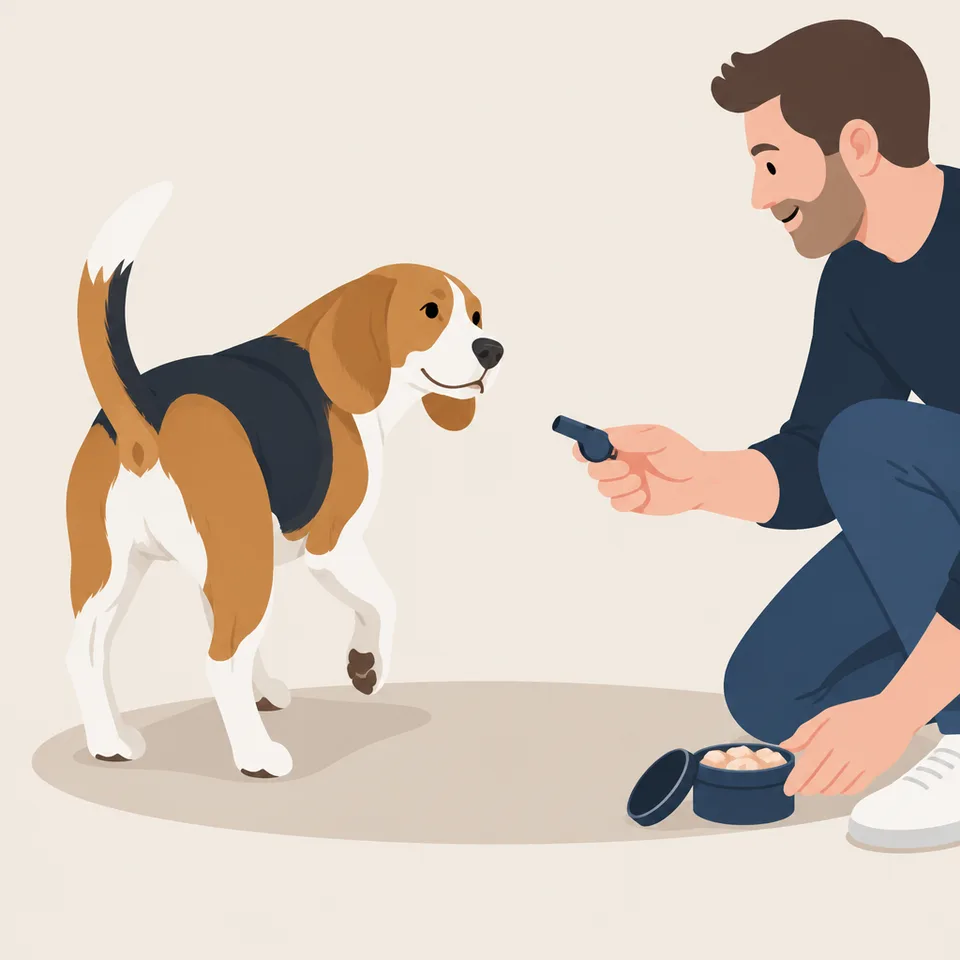
Many trainers teach a second, special cue for emergencies: a unique word or a whistle pattern followed every single time by a jackpot, such as 30 seconds of feeding chicken one piece at a time. Practise it only a few times a week so it stays special. Karen Pryor Academy trainers describe it as a cue that is "pre-loaded" with so much good that the dog turns before thinking.
Breed and age notes
- Sighthounds (Greyhounds, Whippets) and scent hounds (Beagles, Bloodhounds) were bred to chase or follow scent. Many can learn a decent recall, but it may never be safe near open roads or wildlife. Fenced areas and long lines are fine choices.
- Adolescent dogs (around 6 to 18 months) often seem to forget their recall. Go back to the long line for a while; it is a phase.
- Older dogs may not hear you as well. Teach a hand signal (both arms opening wide) and use a light vibration or visual signals if hearing fades.
Small and large dog notes
- Small dogs are often picked up when they come, which some dislike. Reward first, then pick up only sometimes.
- Large, strong dogs on a long line can pull you over. Wear gloves, let the line run through your hands rather than bracing, and practise in open space.
Key points
- Dogs come when coming back pays more than whatever else is going on.
- Say the cue once; if they do not come, make it easier, not louder.
- Use your best rewards and release your dog back to fun after most recalls.
- Practise on a long line clipped to a harness until recall is reliable.
- Never call your dog to something unpleasant or to punish them.