Play signals and healthy dog play
Good dog play looks rough but follows rules. Learn the play bow, the loose bouncy body and the role swaps that mean all is well, and when to step in.
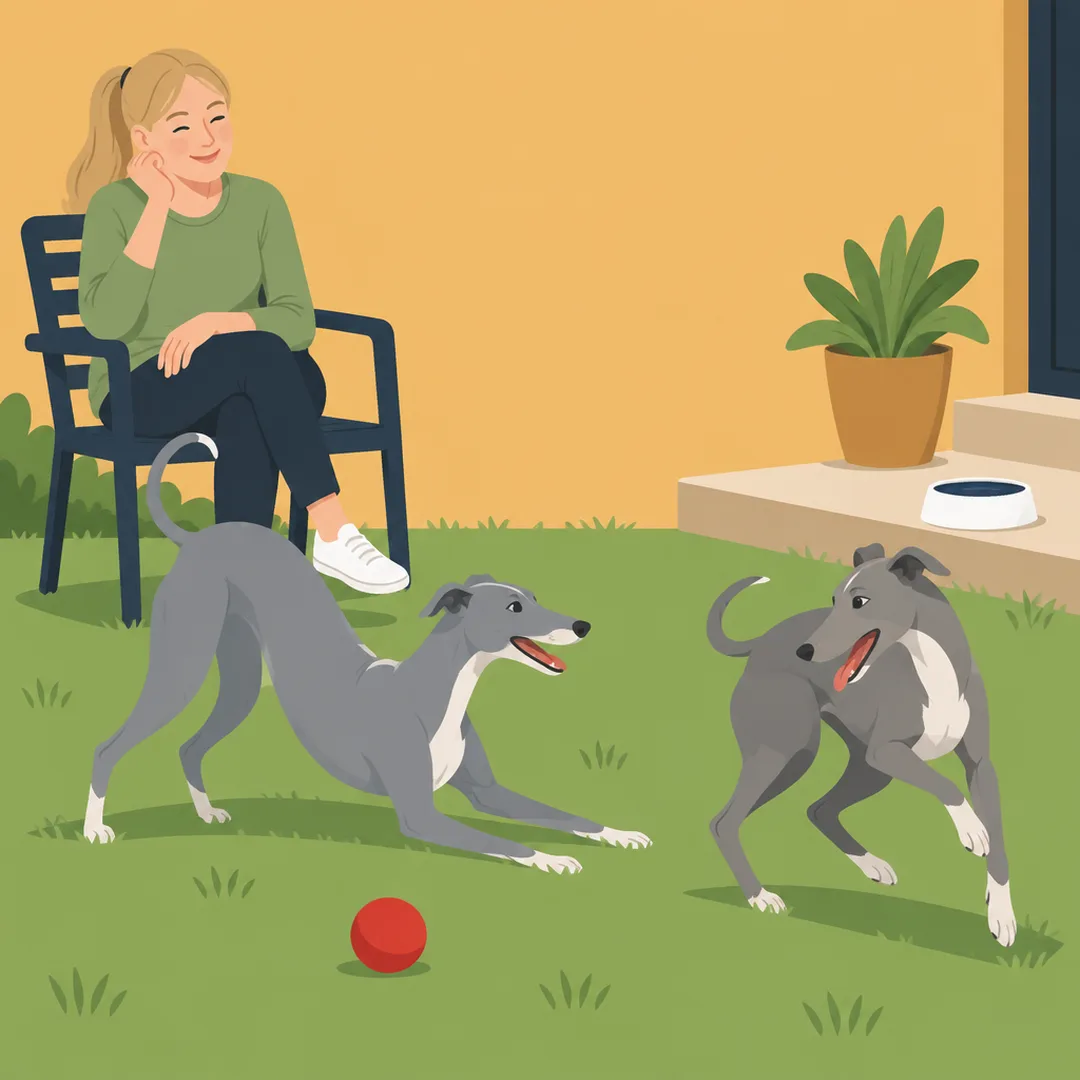
Watching two dogs play can be alarming. There is growling, wrestling, mouths on necks and chasing at full speed. Yet most of it is safe, because dogs use clear signals to say "this is a game." Learning those signals lets you relax when play is fine and step in when it is not.
The play bow
The classic invitation is the play bow: front end down on the elbows, rear end up, tail loose, face soft. Biologist Marc Bekoff studied play bows in dogs, wolves and coyotes. He found they often appear right before or after moves that could be misread, like a bite or a body slam. The bow works like punctuation: "what comes next is play."
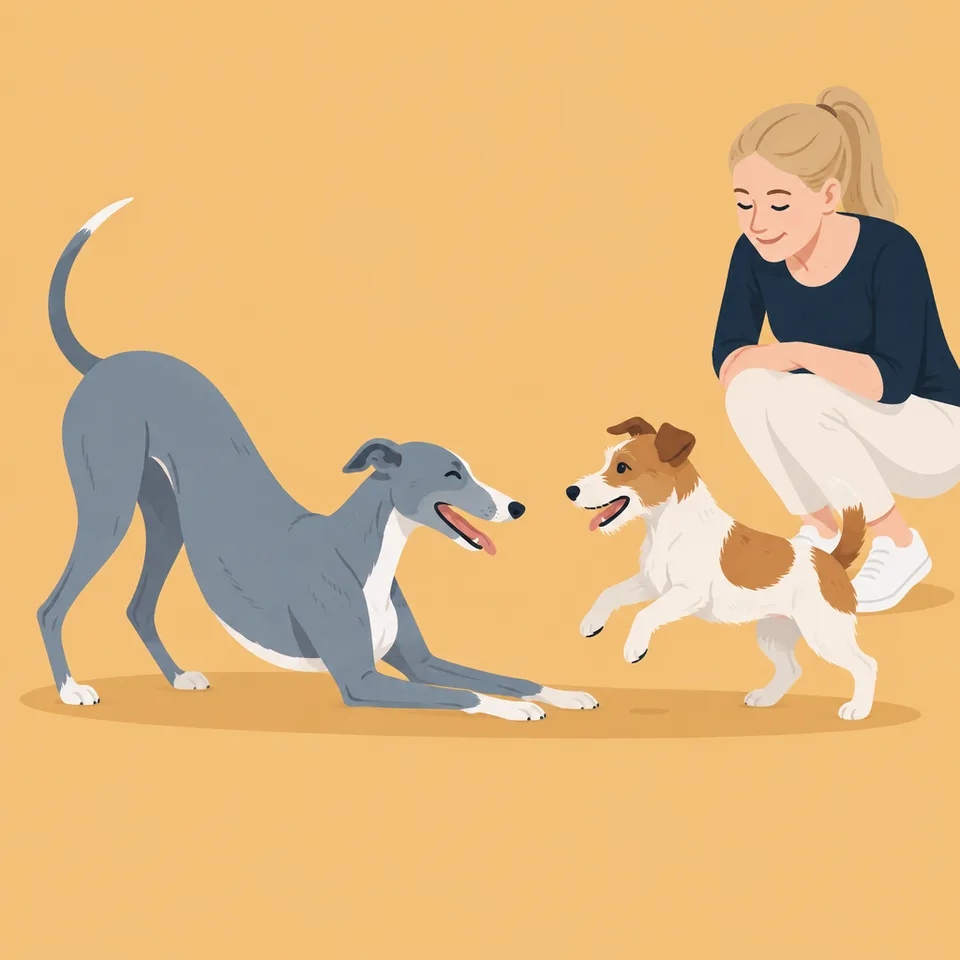
Other invitations include a bounce on the front feet, a quick spin, a nudge, pawing at the air or dropping a toy and backing off.
Signs play is going well
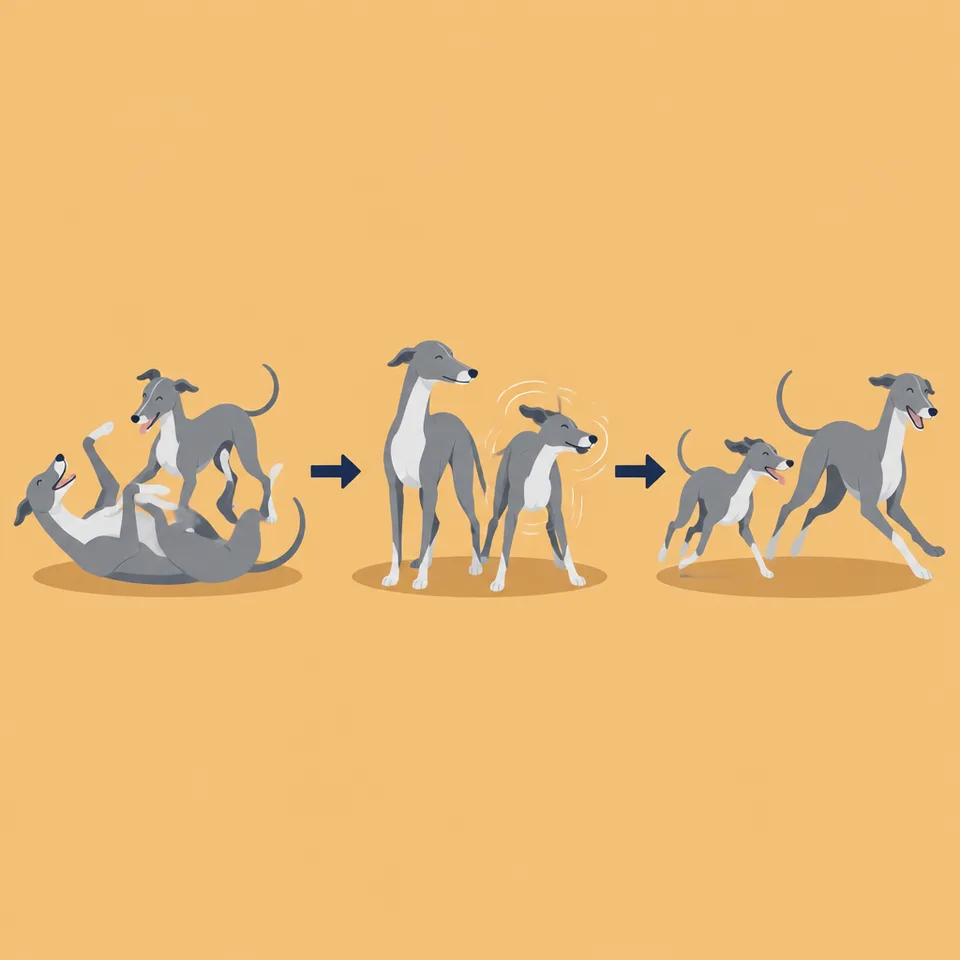
- Loose, bouncy, exaggerated movement. Play looks silly and inefficient. Real fighting is fast and tight.
- Open, relaxed mouth. Often a "play face" with the lips loose.
- Role swaps. The chaser becomes the chased; the one on top goes on the bottom.
- Self-handicapping. A big dog lies down or plays gently with a small one.
- Pauses. Short breaks every few seconds to shake off, sniff or stand still, then back in.
- Both dogs keep coming back.
- Noise without tension. Play growls are often higher and come with loose bodies.
Signs to step in
- One dog is always on top or always chasing, with no swapping.
- One dog tries to leave, hides under a bench or behind you, or tucks its tail, and the other keeps going.
- Bodies get stiff, movements get fast and short, and the noise gets lower and harder.
- Pinning that lasts more than a moment, or repeated neck grabs with shaking.
- Several dogs gang up on one.
- Play keeps escalating without pauses.
The consent test
Not sure? Ask the dogs. Gently hold or call away the dog who seems to be "winning." Let the other dog choose. If they run straight back in to play, all is well. If they use the break to walk off, sniff or hide behind you, they were done.
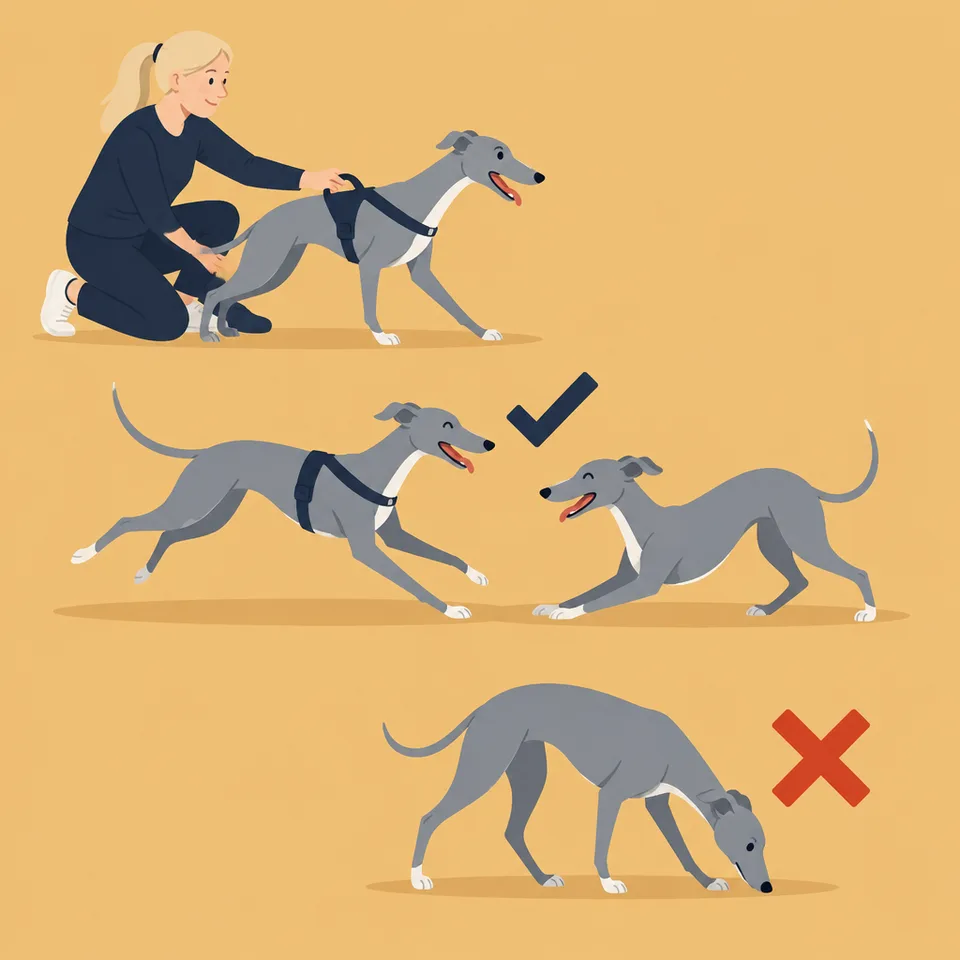
How to interrupt kindly
- Call your dog in a happy voice and reward with a treat or a short game with you.
- Walk away and make a sound to draw them after you.
- If needed, step calmly between them with your body, or gently take a harness, not a collar.
- Give a short break, then let them go back if both are keen.
Practise calling your dog out of play when things are calm, then let them go back. That way recall does not always mean the fun ends.
Small and large dog notes
- Size gaps raise the risk. Even friendly play from a big dog can injure a small one, and a running small dog can trigger chasing in larger dogs. Many parks have separate areas for this reason.
- Small dogs often play best with dogs of similar size and style.
- Large, strong puppies need to learn to play gently. Pair them with tolerant adult dogs who will set polite limits.
Play styles differ
Some dogs love body slams and wrestling (many retrievers and bull breeds). Others prefer chasing (herding breeds and sighthounds) or gentle sniffing and parallel play. A good match is about style, not just size. Older dogs often prefer short, gentle play and should be allowed to opt out.
Playing with people
Dogs use the same signals with us. A play bow or a toy dropped at your feet is an invitation. Bow back, crouch or shuffle backwards and most dogs will join in. Keep games with people rule-based too: tug ends if teeth touch skin, and short pauses keep excitement from boiling over. If your dog's body goes stiff or their mouth closes tight, take a break.
Key points
- Play bows, bouncy loose bodies and open mouths say "this is a game."
- Healthy play has role swaps, self-handicapping and frequent pauses.
- Step in when one dog tries to leave, play gets stiff and fast, or it is always one-sided.
- Use the consent test: separate briefly and see who wants to go back.
- Match dogs by size and play style, and let older dogs opt out.