Zoomies and the midnight crazies
Sudden bursts of racing around are usually normal energy release. Learn what drives the zoomies, how to channel them before bedtime, and the rare signs that point to a health problem.
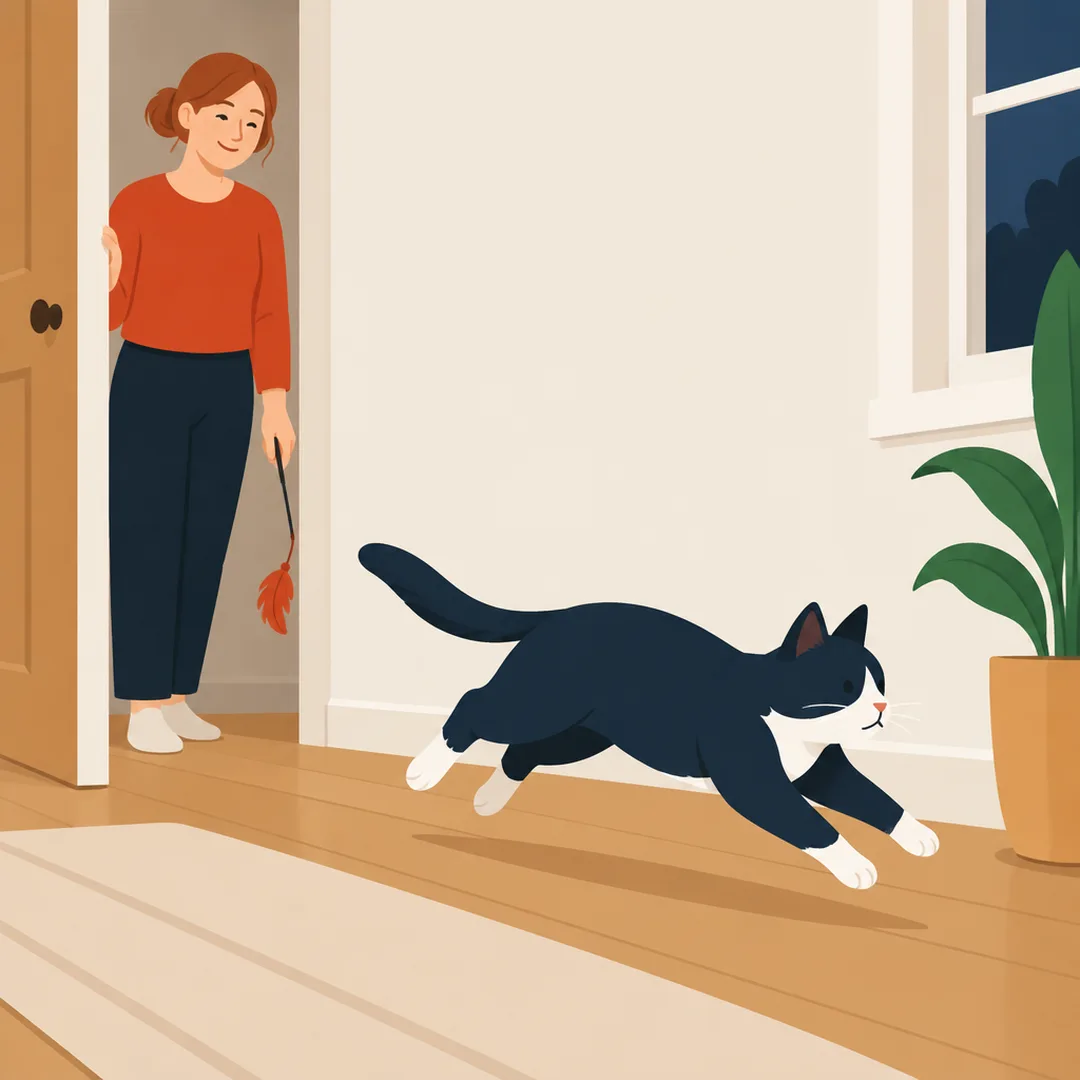
One moment your cat is asleep. The next they are thundering down the hallway, bouncing off the sofa and skidding round corners, eyes wide, tail puffed. Then they stop, sit down and lick a paw as if nothing happened. These bursts are often called the zoomies. In most cats they are perfectly normal.
What the zoomies look like
- Racing from room to room, often along the same route.
- Leaping onto furniture and off again, climbing curtains or cat trees.
- Wide pupils, ears flicking, tail up or puffed.
- Pouncing on nothing, or ambushing feet and other pets.
- Sometimes a burst of vocalising.
Most episodes last a few minutes. Kittens and young adults have them most.
Why cats get the zoomies
Built-up energy. Cats are designed to hunt many times a day in short, intense bursts. An indoor cat that spends the day sleeping has energy stored for those hunts. If there is no outlet, it comes out all at once.
Crepuscular rhythm. Cats are naturally most active around dawn and dusk, when their usual prey is out. That is why so many zoomies happen in the early morning and late evening, often just when you want to sleep.
After the litter box. Some cats sprint after using the tray. Nobody knows exactly why. Theories include relief, moving away from the scent of waste (as a wild cat would) or simply feeling lighter. If your cat seems to be running away in distress, or strains or cries, check for constipation or a urinary problem.
Play that never finished. A cat that chased a laser but never caught anything may still be wound up and look for something to finish the hunt.
Fun. Young cats often play-chase and zoom with each other or alone simply because it feels good.
Make room for zooming
- Clear runways. Move breakable items off the most common route.
- Climb space. A sturdy cat tree or wall shelves give zooming cats somewhere to go up instead of across the kitchen counter.
- Safe landing. Rugs on slippery floors help cats grip and reduce slides into walls.
Bedtime routine to calm the night zoomies
You can shift a lot of your cat's energy to the evening with a simple routine based on the hunting sequence:
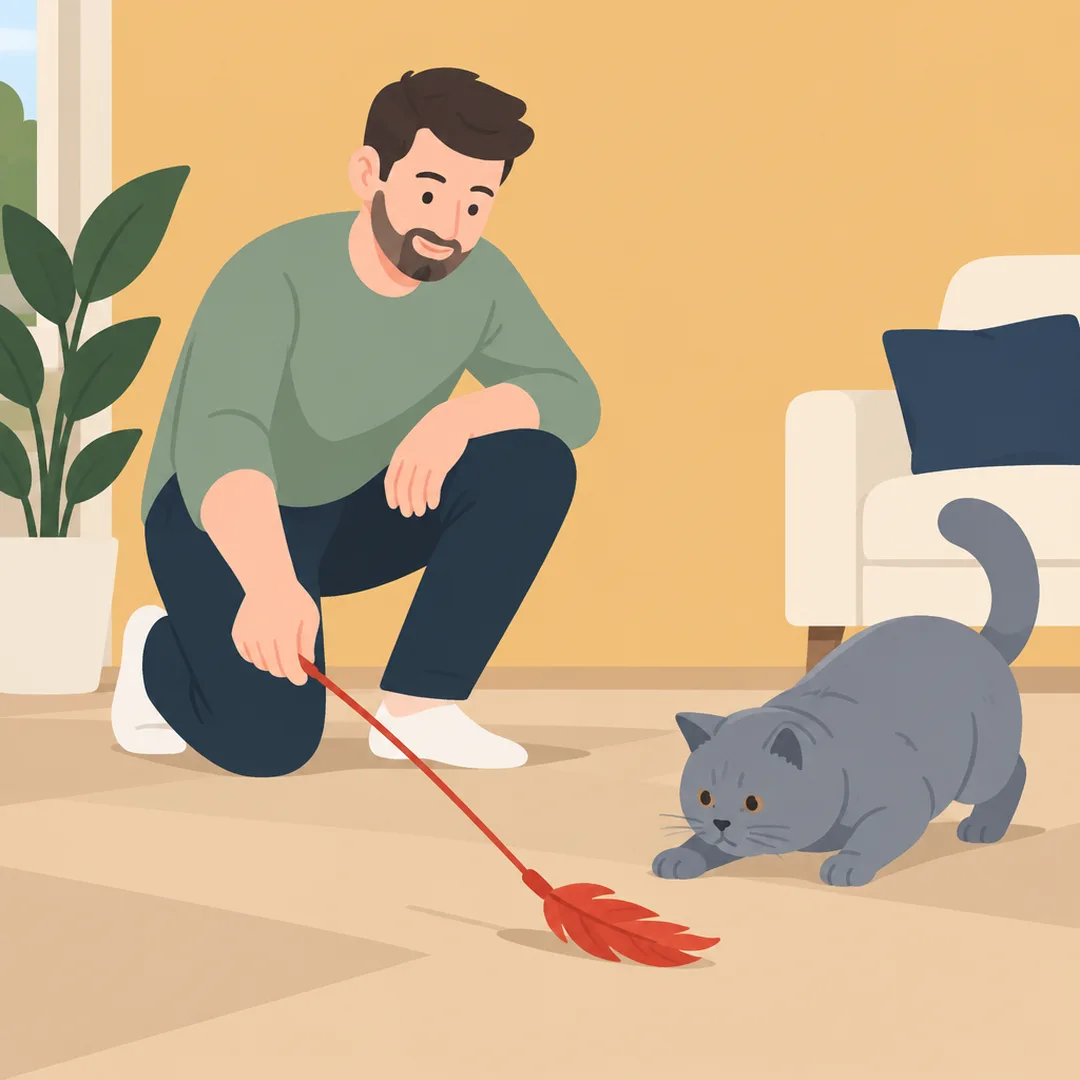
- Play hard about an hour before bed. 10 to 15 minutes of wand-toy hunting with lots of stalking, chasing and pouncing.
- Let your cat catch the toy at the end.
- Feed the last meal right after play. Hunt, eat, groom, sleep is the natural order.
- Keep the room dim and calm.
- Morning plan. If dawn zoomies wake you, a timed feeder set for a little before your alarm moves the "hunt" away from your face. Avoid getting up to feed a cat who is pouncing on you, or you reward the behaviour.
Do this every night for two weeks before deciding whether it works. Cats love routine and adjust gradually.
Add daytime enrichment
- Two or more short play sessions in the day.
- Food puzzles instead of bowls for at least part of the food, so your cat has to work a little.
- A window perch near a bird feeder.
- Short clicker training sessions: three to five minutes of mental work tires cats more than you might expect.
Zoomies that may not be normal
Call your vet if zoomies are new, sudden or come with any of these:
- A senior cat suddenly much more active, restless or vocal at night, especially with weight loss and a big appetite. This can be a sign of hyperthyroidism, which is common in older cats.
- Rippling skin along the back, sudden attacks on their own tail, frantic licking and dashing away as if bitten. This can be feline hyperaesthesia syndrome, which may be linked to pain, skin disease or neurological problems.
- Running from the litter box with crying, straining or blood in urine.
- Collapsing, wobbling, twitching, drooling or staring blankly during or after an episode. These need a vet the same day.
- Panting or open-mouth breathing after a burst of activity. Cats should not pant after short play.
Key points
- Zoomies are usually normal bursts of stored hunting energy, especially in young cats.
- Cats are most active at dawn and dusk; plan play to match.
- Play, catch, then feed about an hour before bed to calm night-time zoomies.
- Clear runways and add climbing space so zooming is safe.
- New zoomies in a senior cat, or zoomies with skin rippling, crying or panting, need a vet.
When to call the vet
- Call your vet now if your cat collapses, has a seizure, pants or breathes with an open mouth, or cries while straining in the litter box.
- Book a visit if an older cat suddenly becomes hyperactive or loses weight, or if episodes come with skin rippling or self-biting.