The hunting sequence and how to play right
Every cat is a hunter. Learn the hunt-catch-kill-eat-groom-sleep sequence and use it to plan play sessions that actually tire your cat out and settle them.
Your cat may sleep on a cushion and eat from a bowl, but the brain inside is a solitary hunter's brain. Wild and free-roaming cats eat many small meals a day, and each one starts with a hunt. Many of those hunts fail. Play is how an indoor cat gets to use all of that wiring. Done well, it burns energy, builds confidence, reduces stress and can cut down on night-time chaos and play-biting.
The hunting sequence
Behaviourists describe a predictable chain:
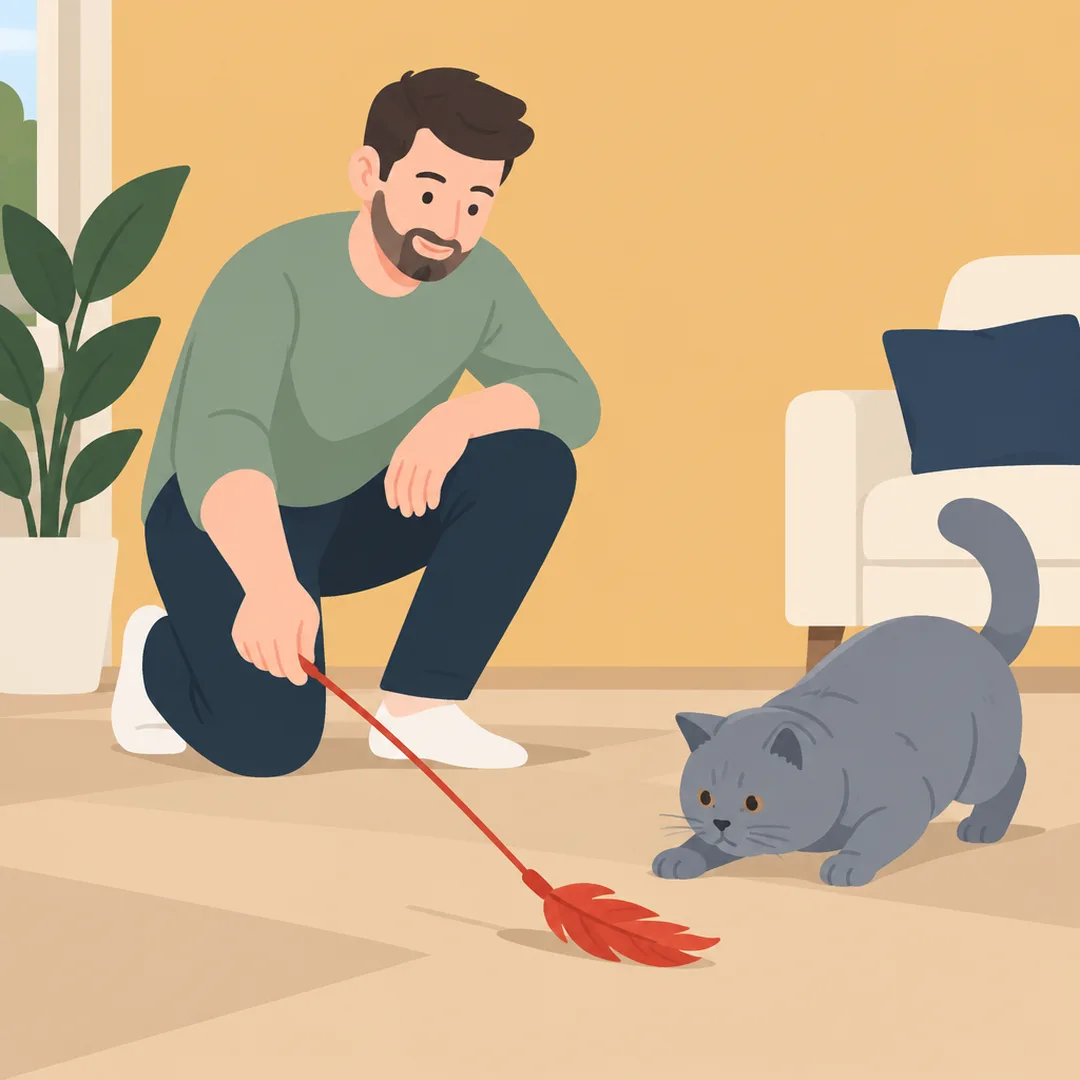
- Watch and stalk. Eyes locked, body low, creeping closer.
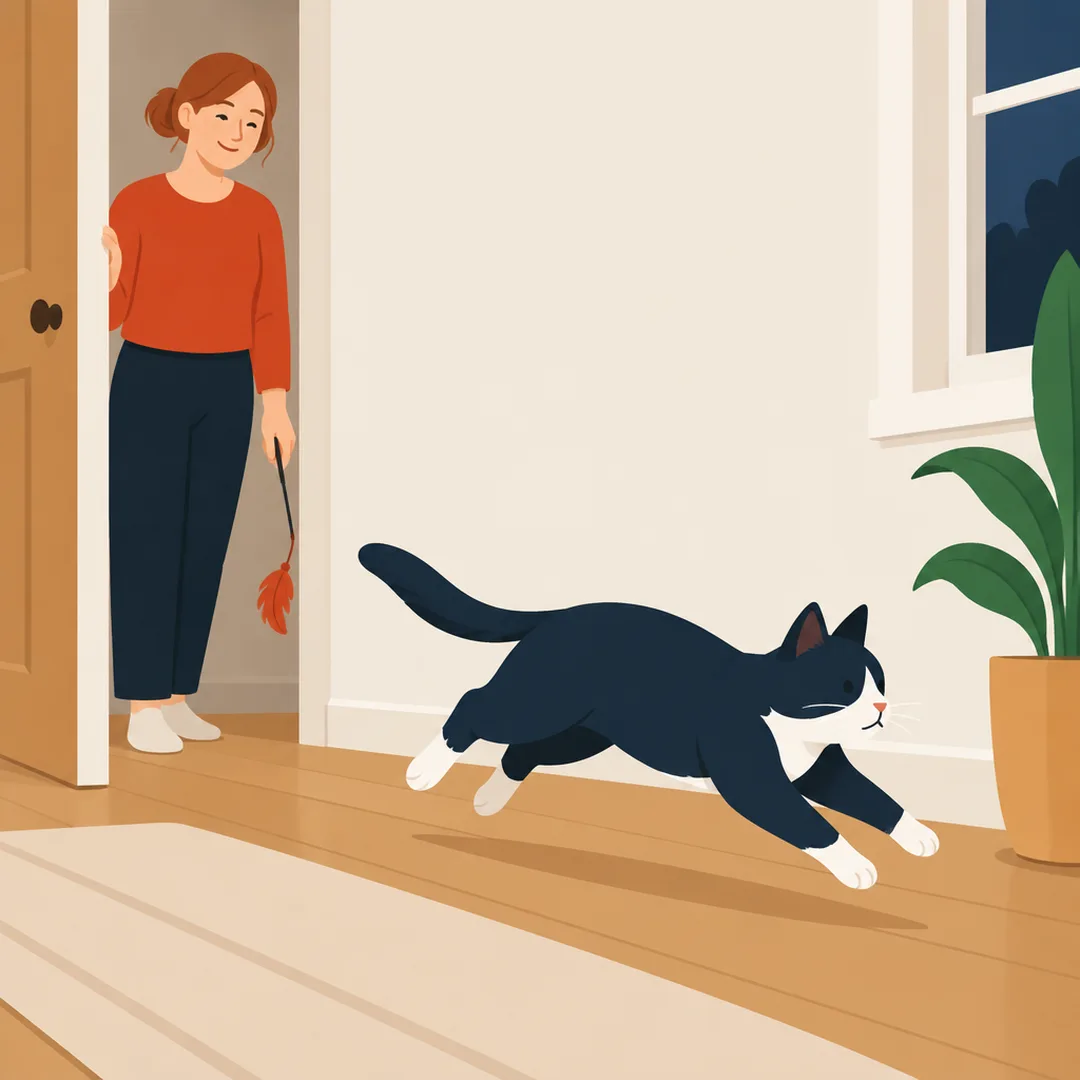
- Chase. A short burst of speed.
- Pounce. Back-end wiggle, then a leap with front paws out.
- Catch and "kill". Grab, bite, sometimes bunny-kick with the back legs.
- Eat.
- Groom.
- Sleep.
If play stops in the middle, for example a laser dot that can never be caught, the cat can be left wound up and frustrated. If the sequence finishes, cats tend to settle and nap. Your play sessions should copy the whole chain.
Move the toy like prey
The biggest mistake people make is waving a toy in the cat's face. Real prey never runs at a cat. It runs away, hides, freezes, and moves again.
- Move the toy away from and across your cat's line of sight, never toward the face.
- Use hiding places: drag the toy behind a chair leg, under a blanket edge, round a door frame.
- Pause. Let the toy go still. Stillness builds tension; the stalk is half the fun.
- Vary speed. Slow creeping, then a quick dash.
- Let your cat win. Every few pounces, let the toy be caught and held for a moment.
- Use sound: a toy rustling under paper is irresistible to many cats.
Find your cat's prey preference
Many cats prefer one type of "prey". The Ohio State Indoor Pet Initiative suggests watching which toys spark the most interest:
- Bird hunters love feather wands moved through the air and jumping high.
- Mouse hunters prefer furry toys dragged along the floor and in and out of cover.
- Bug hunters go for small, fast, erratic toys and light movements near the floor.
- Snake or worm hunters like ribbons or long thin toys slithering on the ground.
Try each for a few sessions and record which one wins. The app can track this in your cat's play log.
A good play session, step by step
- Warm up (2 minutes). Slow movements at a distance to catch your cat's attention.
- Active hunt (5 to 10 minutes). Chases, pounces, hides. Watch breathing: stop if your cat pants or lies down and stays down. Panting in cats is not normal after short play.
- Cool down (2 minutes). Slow the toy, make it "tired", let your cat catch it and hold it.
- Catch and keep. End with the toy firmly caught. Do not yank it away.
- Eat. Offer a meal or a small treat portion right after. This completes the sequence.
- Put wand toys away. Strings and ribbons can be swallowed. Store them out of reach.
Most adult cats do well with two or more short sessions a day. Kittens and young cats may need more; seniors may enjoy shorter, gentler sessions on the floor.
What about laser pointers?
Lasers get cats running, but the dot can never be caught. If you use one, finish by landing the dot on a real toy or a treat so your cat has something to grab. Never shine a laser in eyes.
Play for outdoor cats too
A 2021 UK study found that just 5 to 10 minutes of daily object play (a toy on a wand plus a toy mouse to catch at the end) reduced the number of animals outdoor cats brought home by about a quarter. Feeding a grain-free, high-meat food reduced it by about a third. Play is good for wildlife as well as for your cat.
Signs your cat is enjoying play
- Ears forward, whiskers pushed forward, eyes bright.
- Bottom wiggle before pouncing.
- Bringing the toy back or following you to the toy cupboard.
Signs to stop
- Ears flattening, hissing, or turning from the toy to your hands.
- Panting, open-mouth breathing or flopping down and staying down.
- Leaving the area.
Hands are never toys
Do not let kittens chase or bite fingers and toes. It is cute at eight weeks and painful at eight months. Always put a toy between your hand and your cat. If your cat grabs you, go still, then redirect to a kicker toy.
Key points
- Indoor cats need regular hunting play: watch, stalk, chase, pounce, catch, eat.
- Move toys away from your cat and behind cover, with pauses and speed changes.
- Let your cat catch the toy, and finish with food so they can settle.
- Find out whether your cat prefers bird, mouse, bug or snake-style toys.
- Short daily play even reduces wildlife hunting in outdoor cats.
Sources
- Ohio State Indoor Pet Initiative: Identifying prey preference
- Ohio State Indoor Pet Initiative: Toys and play
- AAFP/ISFM Feline Environmental Needs Guidelines
- Battersea: Playing with your cat
- Cecchetti et al. (2021) Provision of high meat content food and object play reduce predation by domestic cats. Current Biology
- Cats Protection: How to encourage your cat to play