Marker training
A marker pinpoints the exact moment your dog gets it right. How to charge a clicker or a marker word, time it, and keep it working.
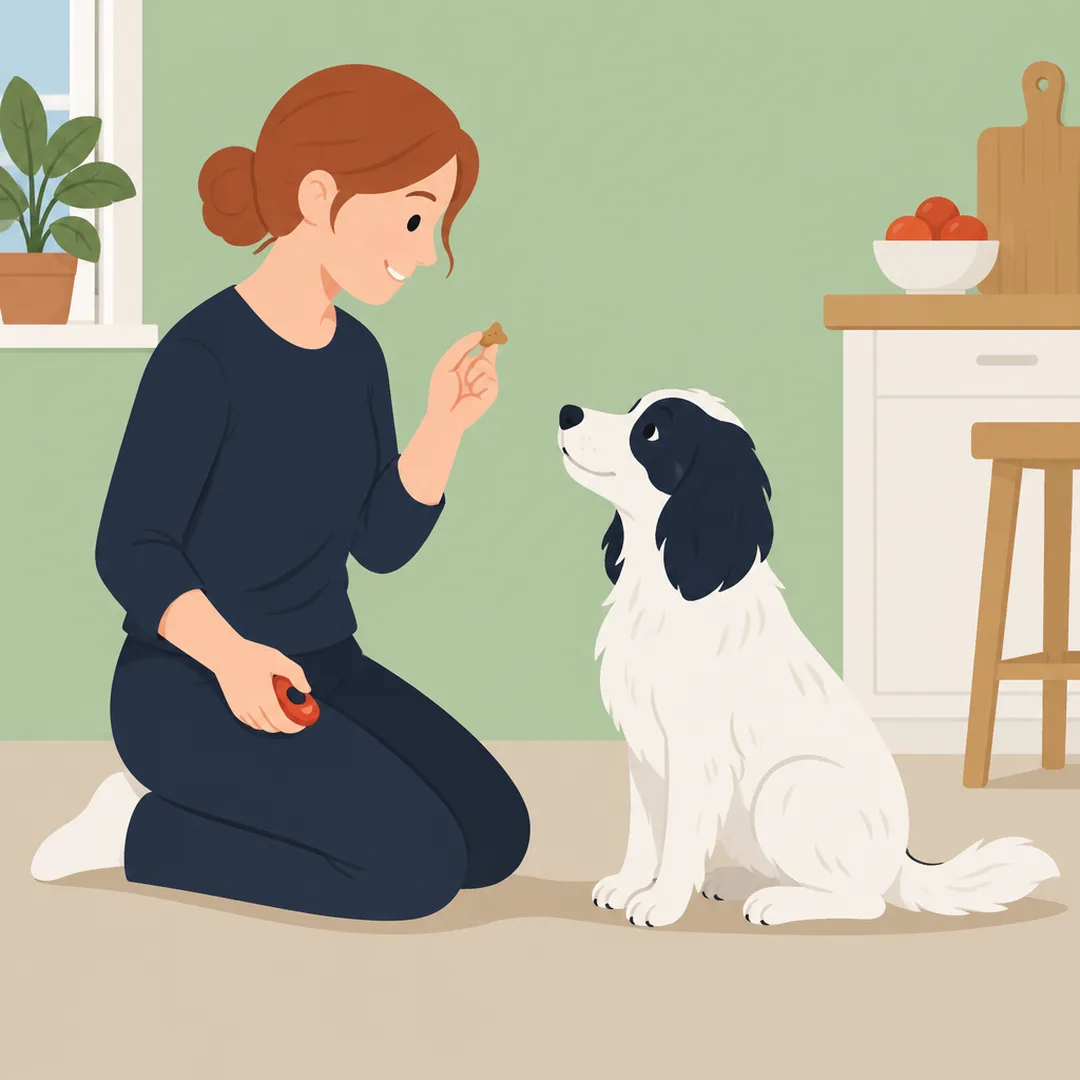
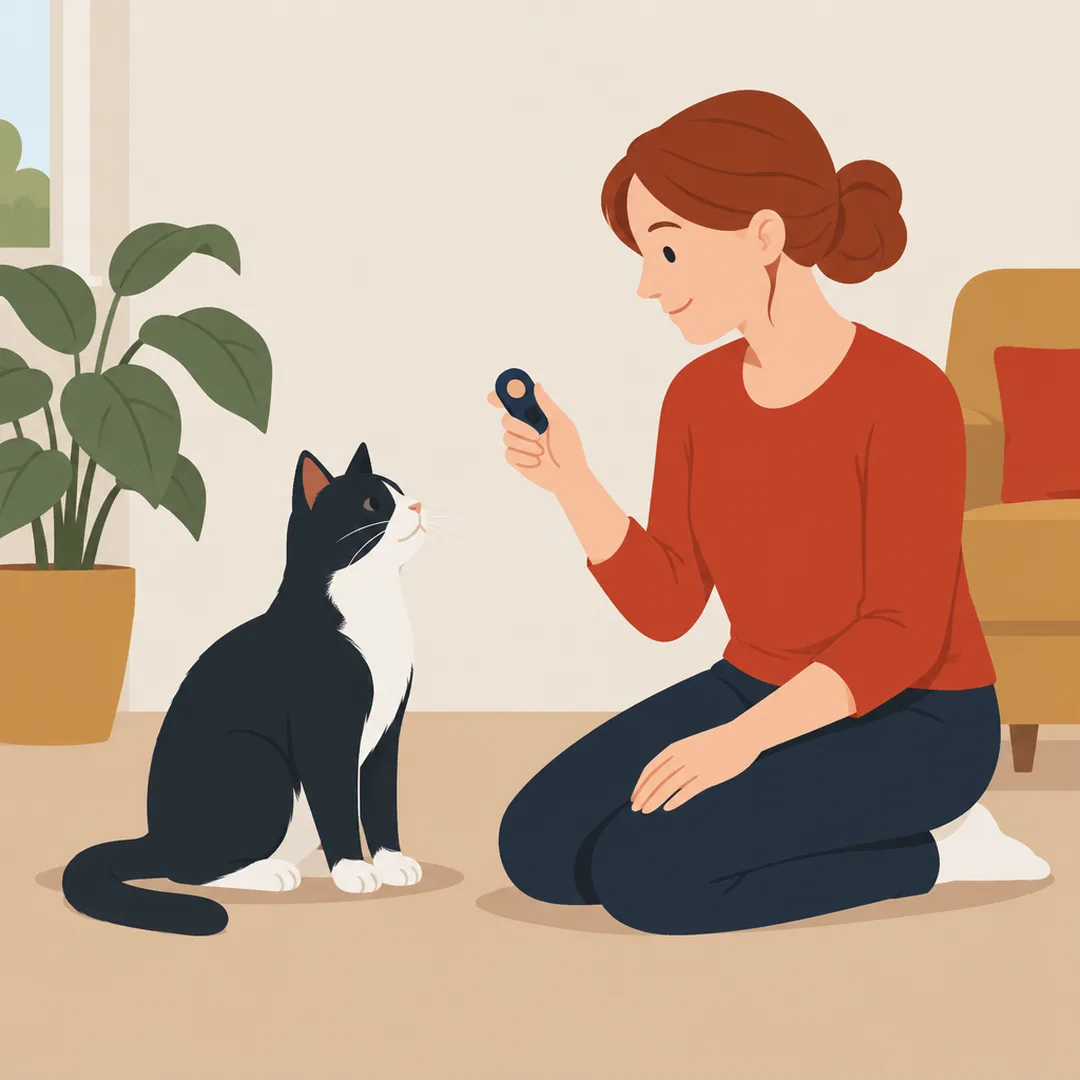
A marker (often a clicker) tells your dog the exact moment they got something right, and a reward follows. This guide covers what a marker is, how to charge it, and how to time it.
What a marker does
A marker is a short, sharp signal - a click or a word - that pinpoints the moment your dog does what you want. It is not a reward itself; it simply indicates a reward is on the way.
Rewards alone can be slow. By the time you reach for a treat your dog may have stood up, and may think the treat was for that. The marker marks the right moment and bridges the gap until the reward arrives.
Choose your marker
Any short, distinct signal can work:
- A clicker, a whistle or a finger snap.
- A marker word such as "Yes" or "Good".
- For a hearing-impaired dog, a gesture, a light or a gentle tap on the shoulder.
Keep your marker for training only. Do not click to get your dog's attention or to tell them off, or the sound loses its meaning.
Charge the marker first
- Go somewhere quiet with a high-value reward.
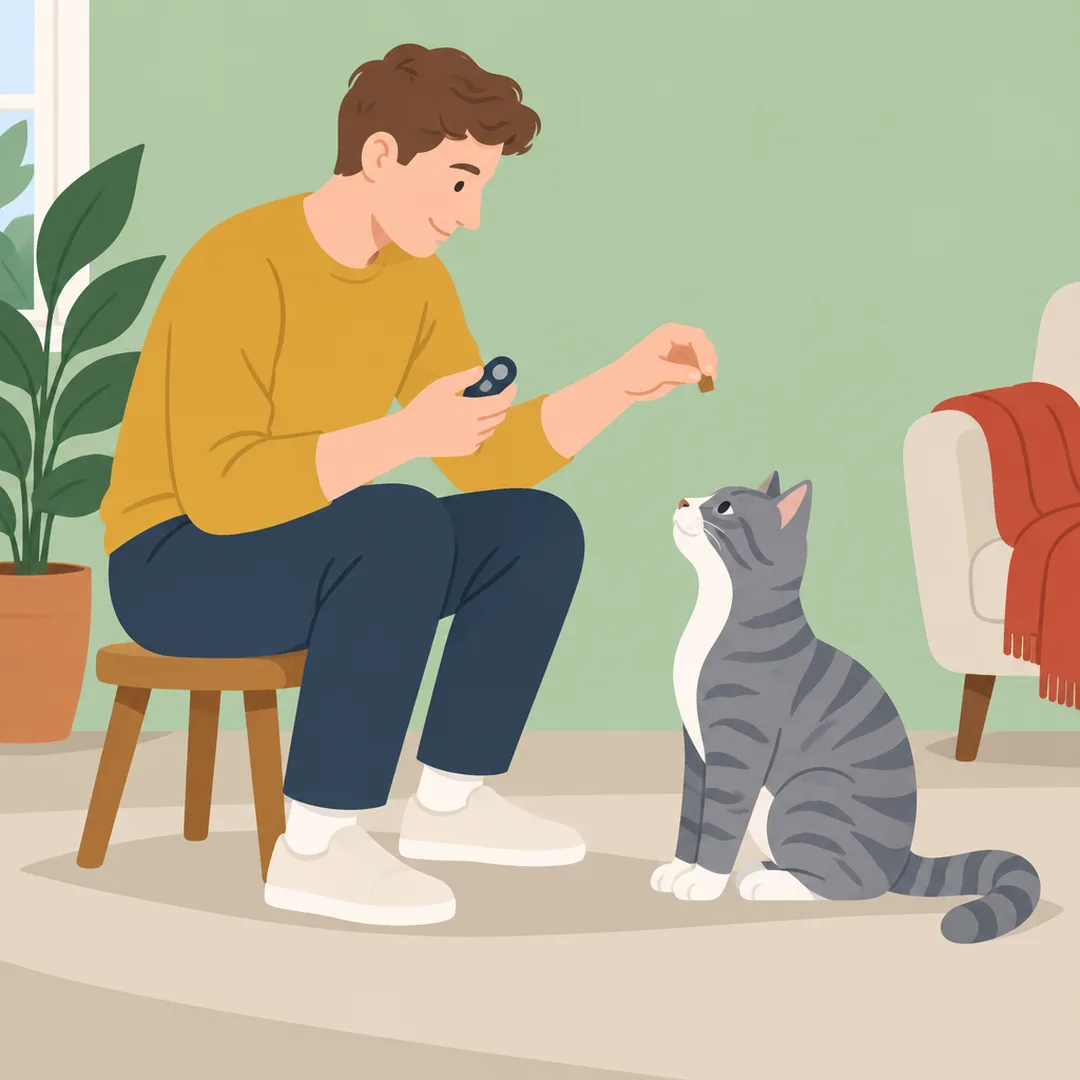
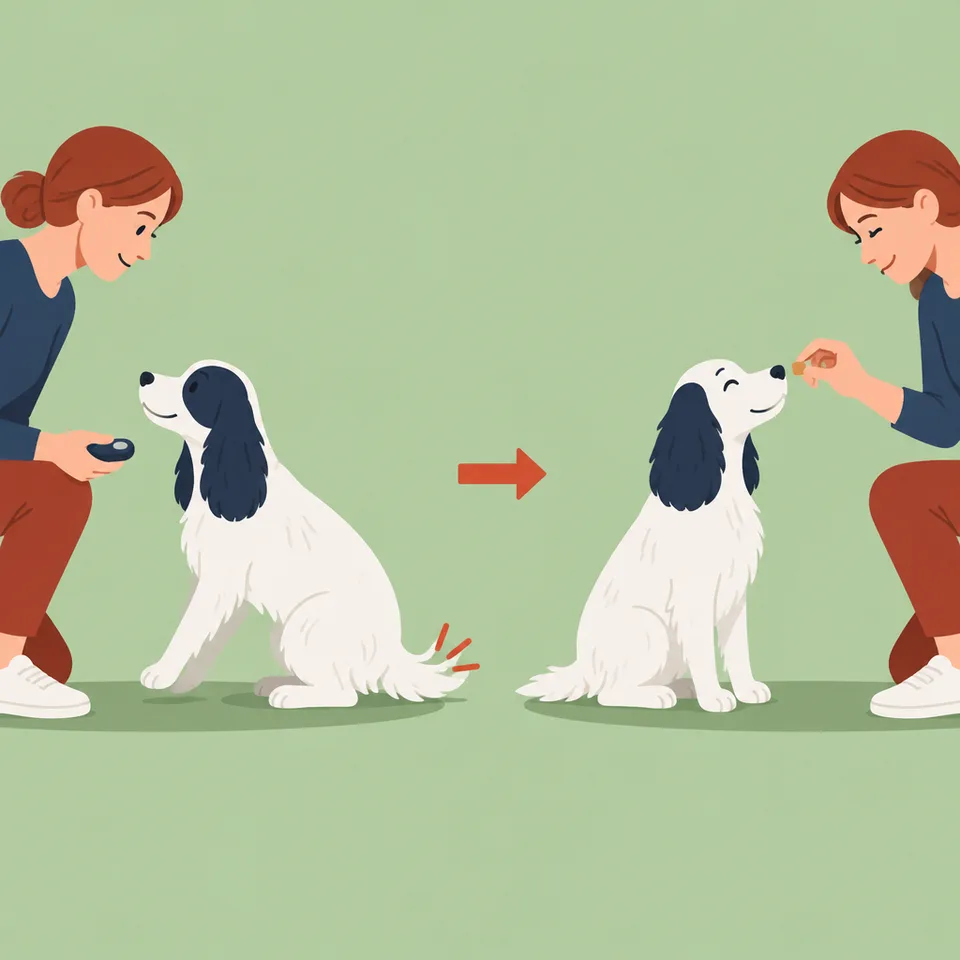
- Click once, then give the treat straight away.
- Repeat several times in each session, for around 2 minutes a few times a day.
After about 10 to 20 repetitions your dog should alert to the sound and look at you, expecting a treat. If you use food, cut down their daily food allowance.
Timing is everything
Click the instant the behaviour happens - for a sit, the moment your dog's bottom touches the floor.
A useful trick: imagine holding a camera and wanting a photo of that exact moment. Watch the part of the body that tells you it is happening, and press the shutter (click) as it does.
Click first, then move your hand to the treat. A late click will not ruin training, but it tells your dog the wrong thing about what earned the reward.
Rules that keep the marker working
- Every click gets a reward in the early stages, even an accidental one.
- Keep the clicker by your side or behind your back; do not point it at your dog.
- Deliver the treat within about 1 to 2 seconds of the click.
- Once a behaviour is learned you can drop the marker and reward with a treat or praise instead. But if you do click, follow it with something your dog values.
Capture good moments
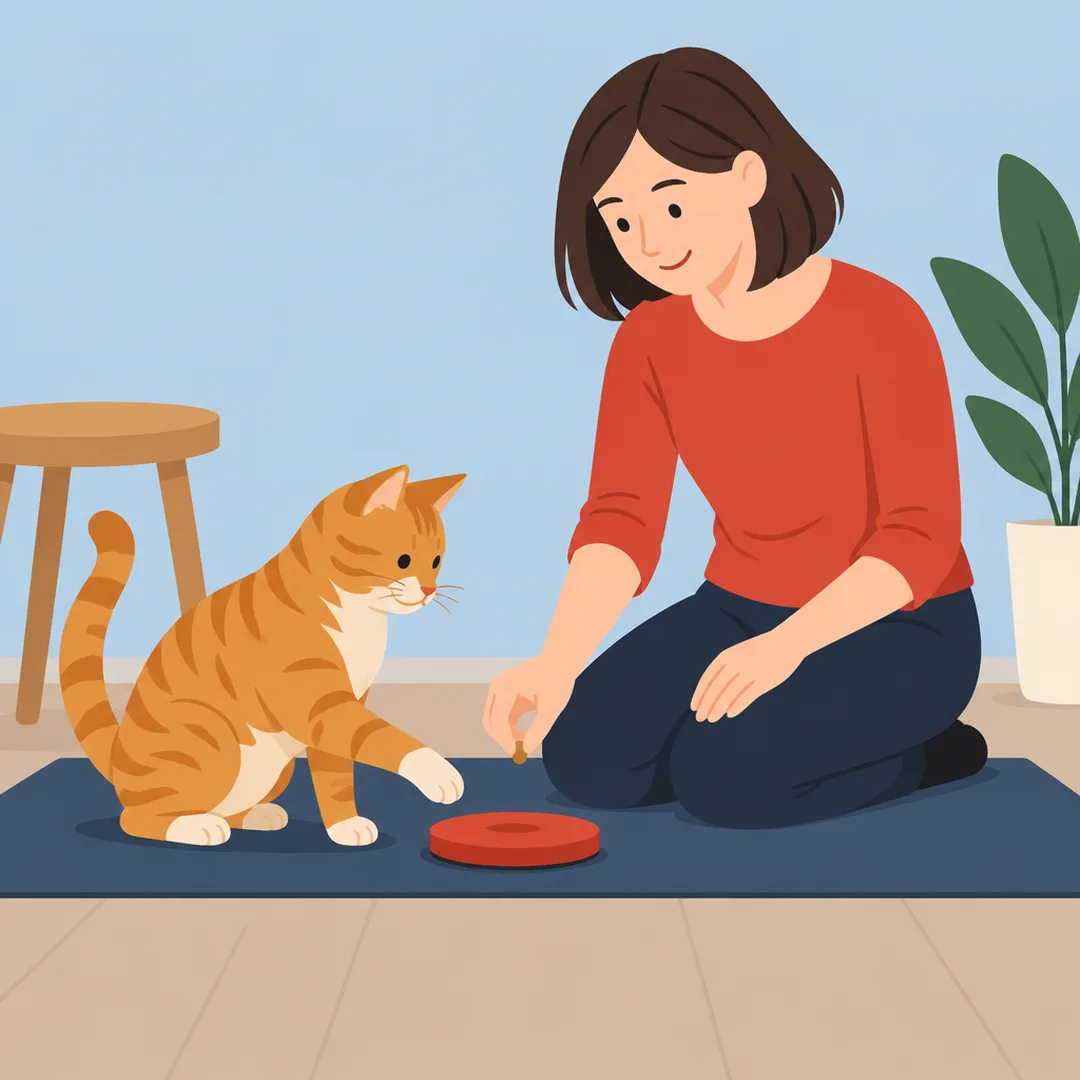
Capturing means waiting for your dog to do something on their own, then marking it as it happens: a sit, four paws on the floor when the doorbell rings, or lying quietly on a mat. Click the moment you see it, then treat.
Shape a behaviour in small steps
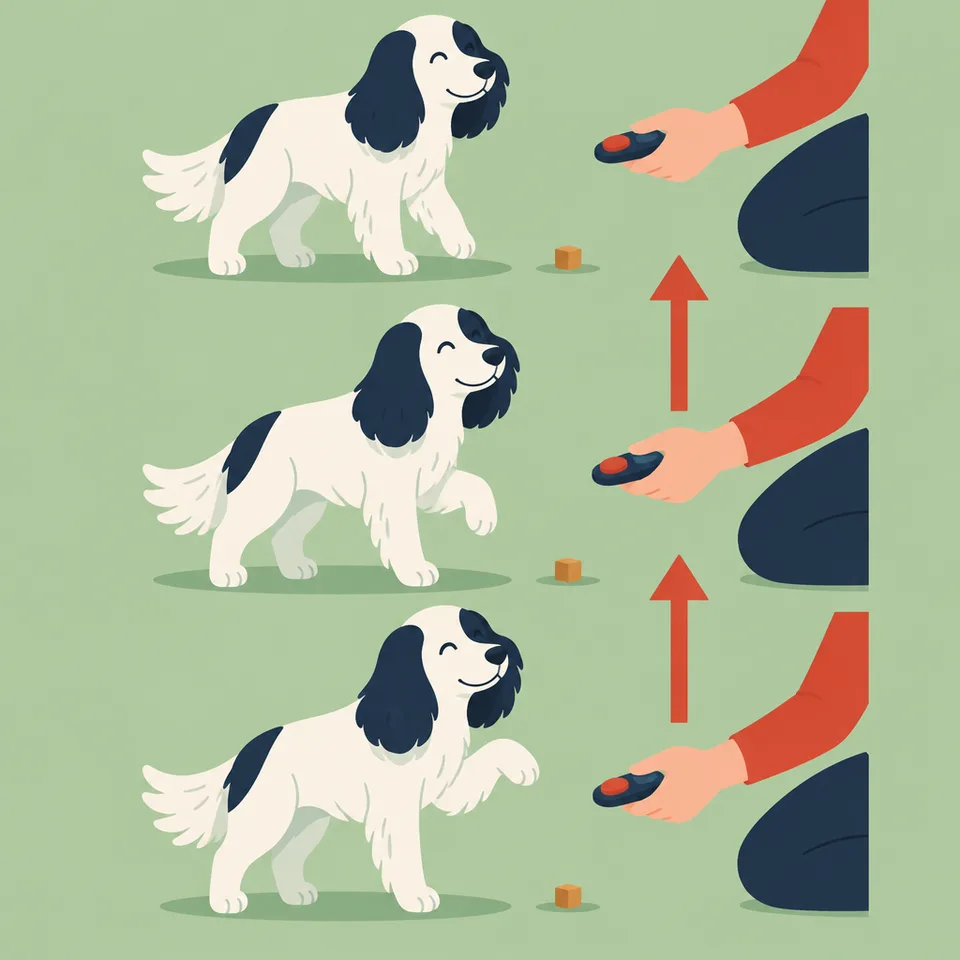
Shaping builds a bigger behaviour from small pieces: reward a rough version, then only reward closer versions. For a high five, click and treat any paw lift, then only lifts an inch off the floor, then the full raised paw.
- Move up a step only when your dog offers the current one reliably, around 8 to 10 times in a row.
- If your dog gets stuck, drop back a step.
- Keep sessions short and end on a success.
Add the word last
Once the behaviour is reliable, put it on cue. Say the word just as your dog is about to do it, then click and treat.
Teach one or two new cues at a time, and never force your dog into a position.
How long to train
Keep sessions to around 10 to 15 minutes at most, though you can repeat them a few times a day. Puppies may need even shorter sessions, and shaping sessions should be shorter too, as your dog can get frustrated if they cannot figure out the next step.
Key points
- A marker is a short, clear signal that marks the exact moment your dog got it right.
- Charge it first: click, then treat, until your dog alerts to the sound.
- Click at the instant the behaviour happens, then move your hand to the treat.
- In the early stages, every click gets a reward, every time.
- Capture what your dog offers and shape bigger behaviours in small steps.