Reading your dog's body language and calming signals
Dogs tell you how they feel long before they growl. Learn the small signals of worry, the signs of a relaxed dog, and how to read the whole body in context.
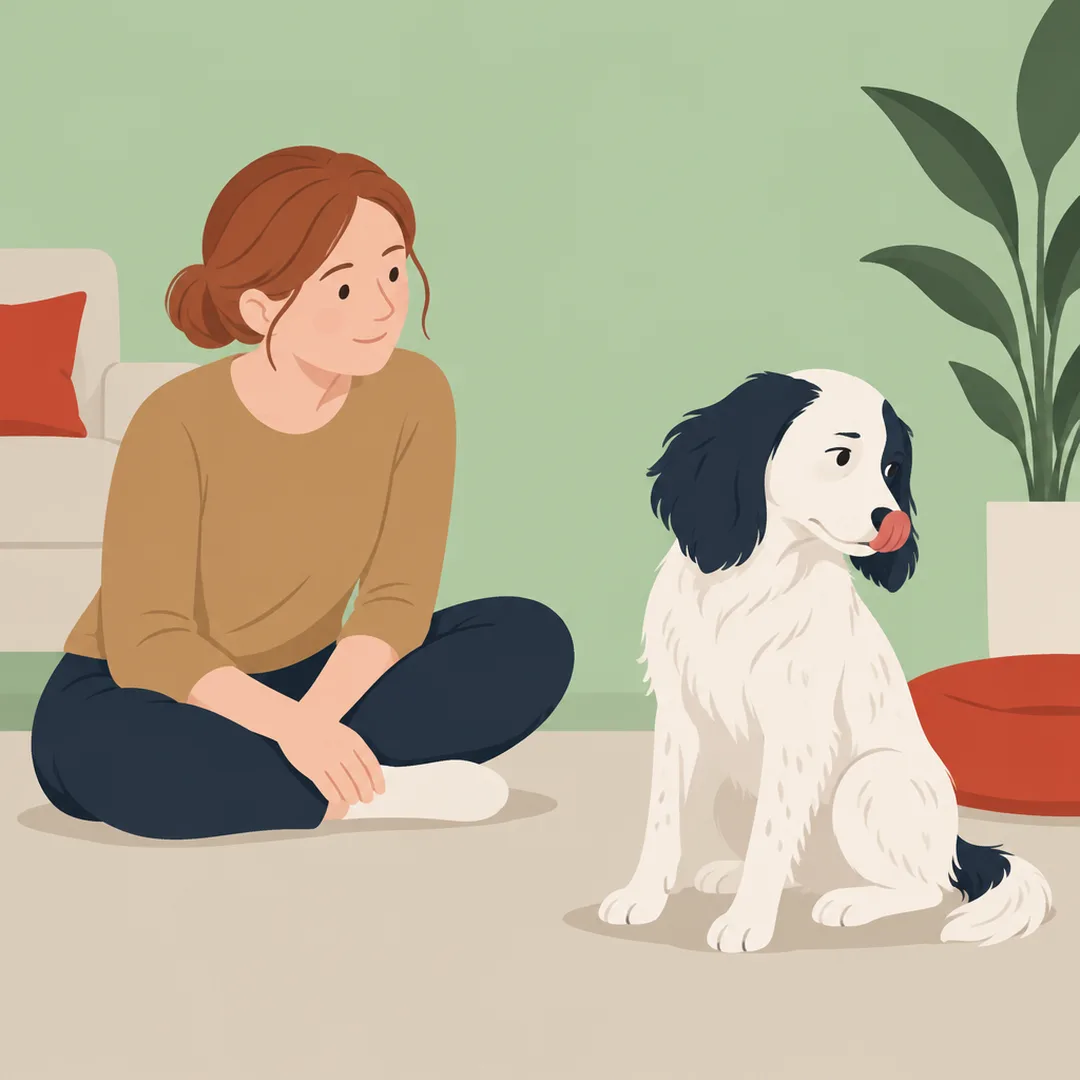
Dogs talk all the time. Most of it is quiet: a lick of the lips, a turn of the head, weight shifting back by an inch. If you learn to see these small signals, you can step in while your dog is only a little uneasy, long before they feel they need to growl or snap.
A Dogs Trust survey found that most owners missed early warning signs. Two thirds did not know that yawning can mean a dog is worried. Three quarters did not realise that a dog rolling over can mean "give me space" rather than "rub my belly."
Start with the whole dog
No single signal tells the full story. A wagging tail can belong to a happy dog or a tense one. Read the whole body, then add the situation.
Look at these in order:
- Weight. Is your dog leaning forward, centred, or shifted back?
- Body. Loose and wiggly, or stiff and still?
- Mouth. Soft and slightly open, or clamped shut with tight lips?
- Eyes. Soft and blinking, or wide and hard, with white showing?
- Ears. Relaxed, pricked forward, or pinned back?
- Tail. Loose and swinging at its natural height, or tucked, or high and stiff?
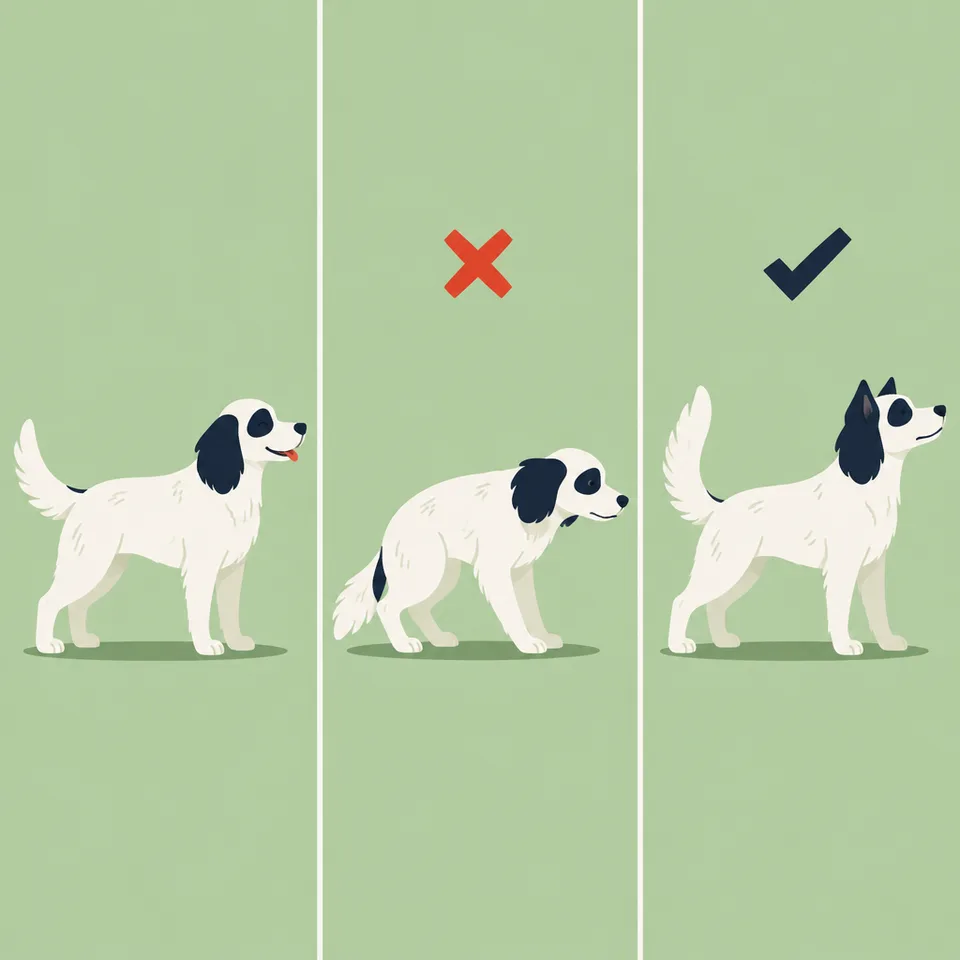
A relaxed dog looks soft. The face is smooth, the mouth may hang open a little, and the body moves in easy curves. A worried dog gets smaller and lower. An alert or aroused dog gets taller, stiller and leans in.
Small signals that mean "I'm uneasy"
Norwegian trainer Turid Rugaas called many of these "calming signals." Researchers still debate how much each one is aimed at others, but a 2017 study by Mariti and colleagues found dogs often use them when meeting other dogs, and that they tend to lower tension. For you, the practical point is simple: these signals often show up when a dog is a bit stressed.
- Lip or nose lick: a quick flick of the tongue when no food is around.
- Yawn: outside of bedtime, often during handling, at the vet or when hugged.
- Whale eye: the head turns away but the eyes stay on something, so the white shows in a half moon.
- Head turn or looking away: avoiding a stare.
- Paw lift: one front paw raised, body still.
- Sniffing the ground suddenly: in the middle of a greeting or a training session.
- Shake off: like shaking off water, but dry. Often comes right after something tense ends.
- Freezing: going still, sometimes for only a second. Take this one seriously.
- Moving slowly or curving away: approaching another dog in an arc, not head on.
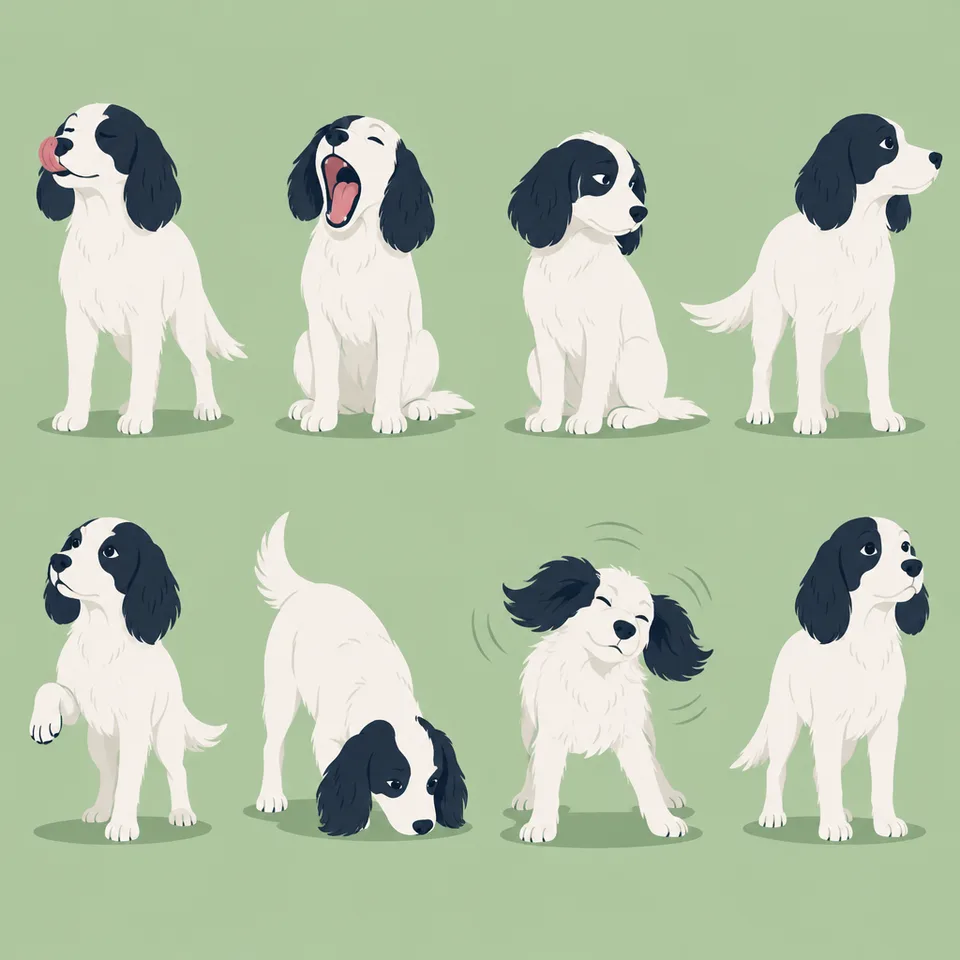
One lip lick is not a crisis. Look for clusters. Lip lick, look away and a paw lift together means your dog is asking for a break.
Tails and ears are not the whole story
A wag only means a dog is aroused, ready to interact. A loose, wide wag with a wiggly bottom is friendly. A high, stiff, fast flick of the tail tip can mean tension. A low or tucked tail shows worry.
Breed changes the baseline. A Greyhound's natural tail sits low; a Beagle's sits high; a Pug's curls over the back. Learn what neutral looks like on your own dog first.
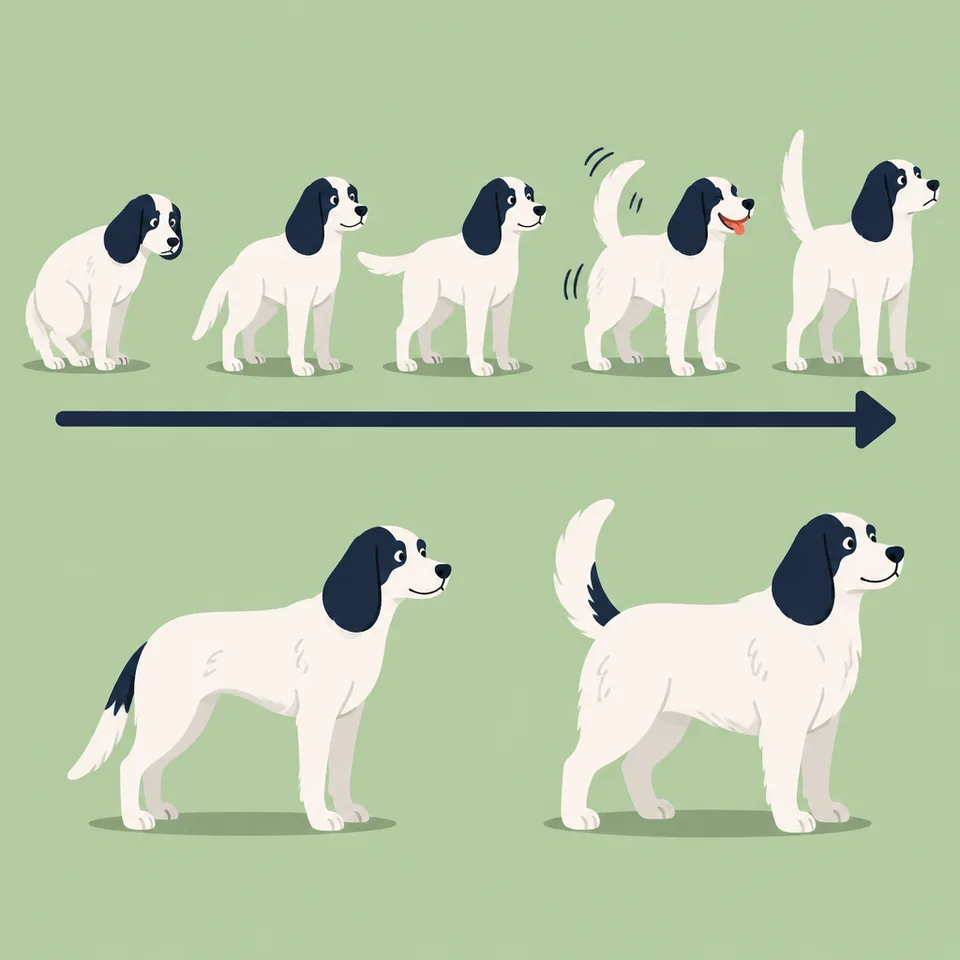
Ears also vary. Floppy ears move less, so look at the base of the ear: is it pulled back and flat against the head, or relaxed?
Small and large dog notes
- Small dogs are often picked up, leaned over and handled more. Many learn to show stress quickly and loudly because quiet signals were ignored. Kneel to their level and let them come to you.
- Large and giant dogs can look calm because they move slowly. Watch the face and the weight shift closely; a big dog that freezes is giving a clear warning.
- Flat-faced breeds (Pugs, Bulldogs, French Bulldogs) have fewer visible facial signals, and some pant or snort a lot, so watch their body and tail instead.
- Fluffy or curly coats hide raised hackles and body tension. Watch posture and movement.
What to do when you see stress
- Give space. Step back, turn sideways, stop reaching.
- Remove the trigger or move your dog further from it.
- Do not punish a growl or a stress signal. Those signals are warnings. If you suppress them, the dog may skip straight to biting next time.
- Note what happened. Who, where, how close? Patterns help you plan.
During handling, a "consent test" helps: stroke for three seconds, then stop. If your dog leans in or nudges you, carry on. If they move away, shake off or look away, they have had enough.
Practice makes it easy
Watch your dog for five minutes a day when nothing much is happening. Then watch during a vet visit, a bath or a busy street. You will start to see the shift from soft to tense. Filming short clips and replaying them slowly is one of the best ways to learn.
Key points
- Read the whole dog (weight, body, mouth, eyes, ears, tail) plus the situation, never one signal alone.
- Lip licks, yawns, whale eye, head turns, paw lifts and freezing often mean "I'm uneasy."
- A wagging tail means arousal, not always happiness.
- Never punish a growl or warning signal; give space and change the situation.
- Know your own dog's neutral face and tail first; breed and coat change what you can see.
Sources
- AKC: How to read dog body language
- AKC: Dog body language
- MRCVS: Dogs Trust survey finds owners miss early bite warning signs
- Mariti et al. (2017), Analysis of the intraspecific visual communication in the domestic dog: a pilot study on calming signals, Journal of Veterinary Behavior
- AVMA: Dog bite prevention