What your cat's sounds mean
Meows, trills, chirps, growls, hisses and yowls each carry a different message. Learn what they mean and when a change in voice is worth a vet visit.
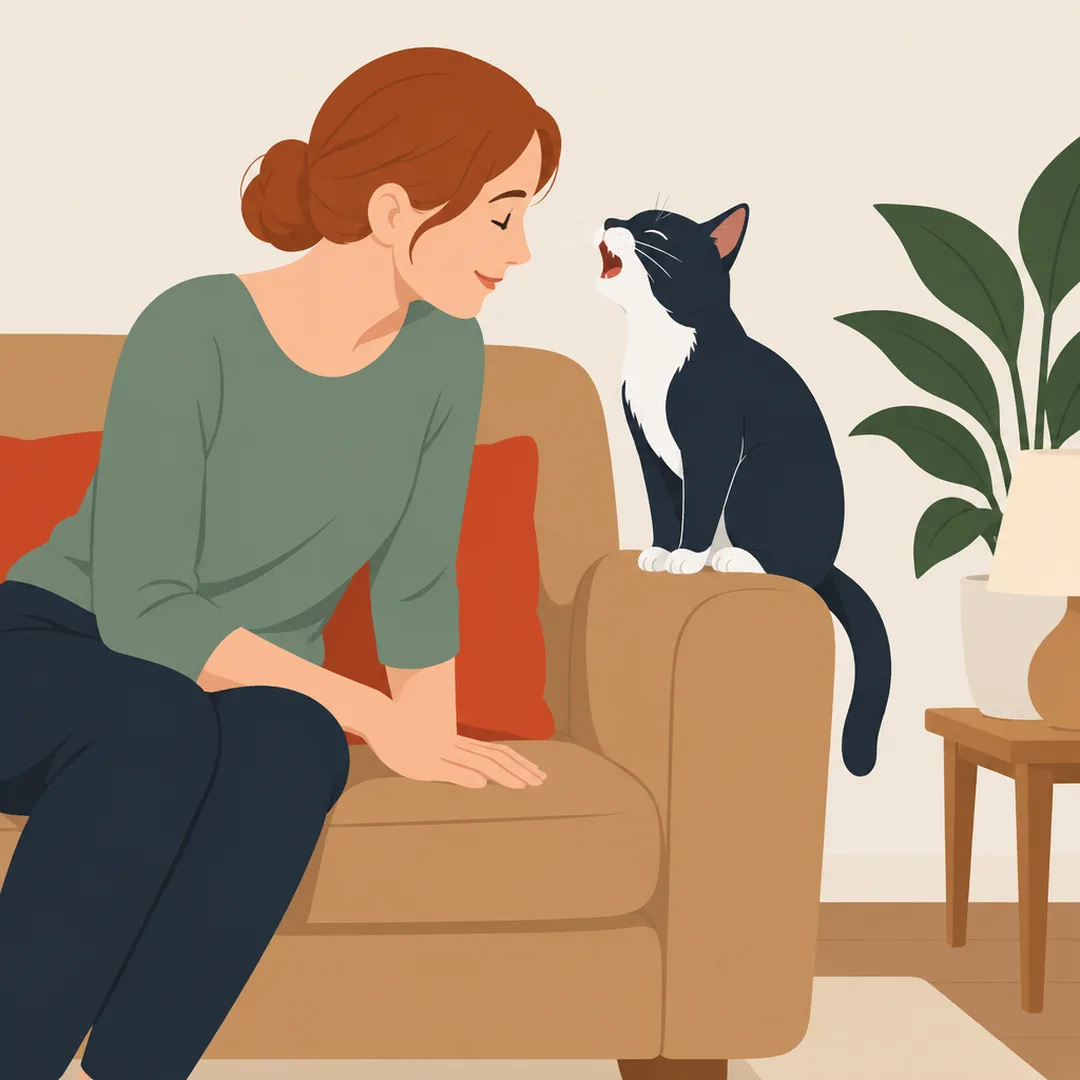
Adult cats rarely meow at each other. Between cats, communication is mostly scent, posture and the odd hiss or growl. The meow is largely a sound cats develop for people, refined by what gets results in each home. That is why every cat's "voice" is a little different, and why your cat may have a special meow just for breakfast.
Friendly sounds
- Meow. A general call for attention: "let me in", "feed me", "look at me". Kittens meow to their mother; most adults keep the habit only for humans. A short, bright meow is often a greeting. A long, drawn-out one is usually a demand.
- Trill or chirrup. A rolling, closed-mouth "brrrp" that rises at the end. Mother cats use it to call kittens. Adult cats use it to greet you or to ask you to follow them, often to the food bowl.
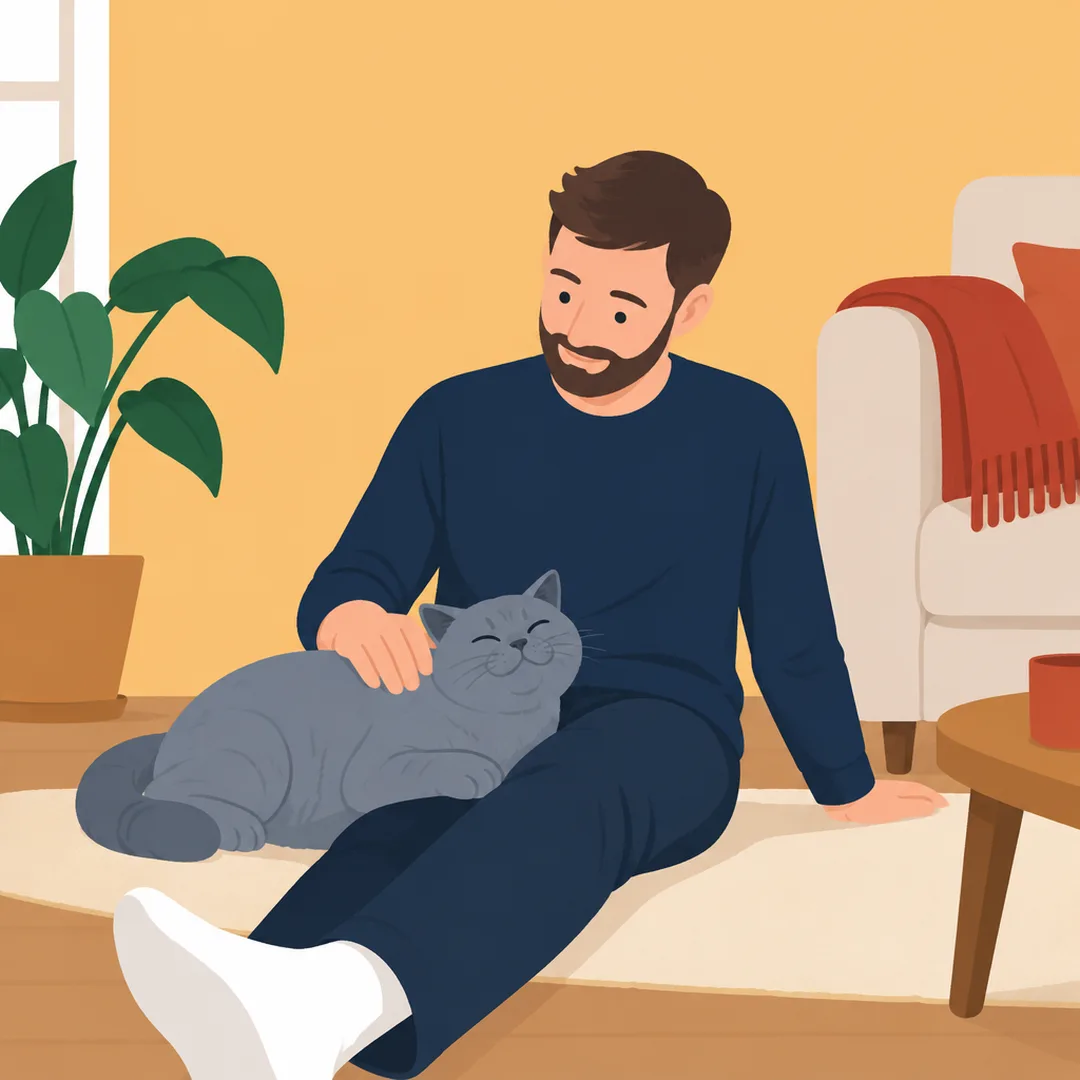
- Purr. Usually contentment, but cats also purr when stressed, in pain, giving birth or close to death. Some cats use a "solicitation purr" at mealtimes with a higher, cry-like sound mixed in. Researchers found people rate this purr as more urgent and less pleasant, which is the point.
- Name response. A Japanese study showed household cats can tell their own name apart from similar words, even when spoken by a stranger. Many respond with an ear flick or tail twitch rather than a sound.
Hunting sounds
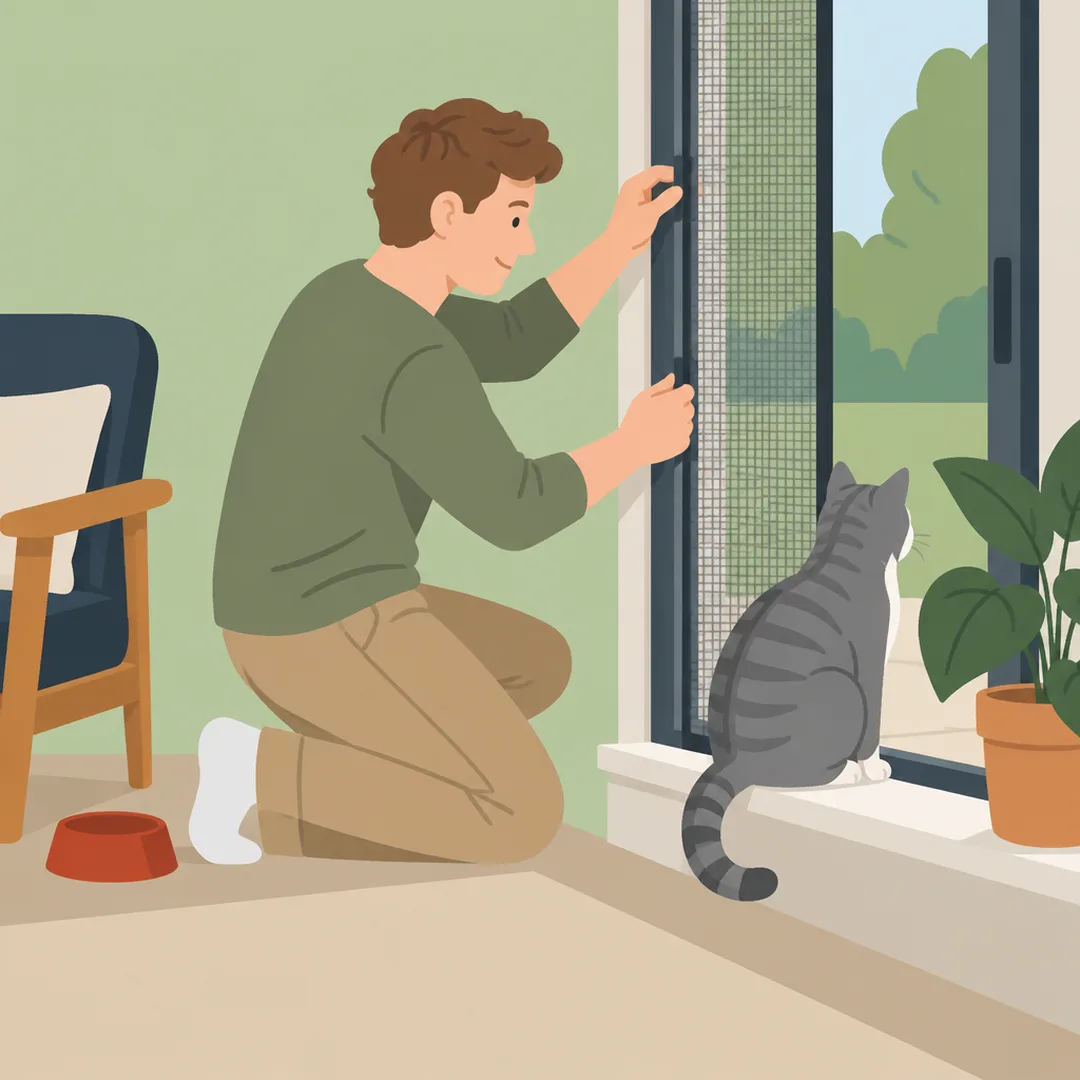
- Chattering or chirping at the window. A rapid jaw quiver while watching birds or insects out of reach. It is linked to excitement and frustration at prey the cat cannot get to. Give your cat a wand-toy "hunt" afterward so the sequence can finish.
- Quiet "prrt" when carrying a toy. Some cats call while bringing a toy (or prey) to you or to a favourite spot.
Warning sounds
These sounds mean the cat feels threatened. Back off, do not reach in, and give the cat a way to leave.
- Hiss. Mouth open, air pushed out. A defensive "stay back". It is not spite and not dominance. A hissing cat is a scared cat.
- Spit. A short, explosive burst, often with a paw slap. Closer to action than a hiss.
- Growl. Low and rumbling. A clear warning. Often heard over food, at another cat, or when a cat is cornered.
- Snarl or scream. Usually during a fight. Separate cats safely by blocking line of sight with a cushion or board, never with your hands.
Loud and long sounds
- Yowl or caterwaul. A long, wailing call. Unspayed females in heat yowl to attract mates; unneutered males yowl at rivals. Spaying and neutering usually stops it.
- Night-time yowling in older cats. This can be a sign of hearing loss, high blood pressure, an overactive thyroid, pain or cognitive decline (feline dementia). It is worth a vet check rather than something to put up with.
- Crying in the litter box. Always take seriously, especially in a male cat. See "When to call the vet" below.
Why some cats are chattier than others
- Breed. Siamese, Oriental and some other Asian-origin breeds are known for loud, frequent vocalising.
- Learning. If meowing at 5 a.m. gets breakfast, the cat learns to meow at 5 a.m. Every reward strengthens the habit.
- Age and health. Older cats often get louder, and sudden changes in voice can signal illness.
- Boredom. An under-stimulated indoor cat may meow to start something happening.
Handling demand meowing without punishment
You cannot scold a cat out of meowing; it only adds stress. Instead:
- Meet the need before it is demanded. Play and feed on a predictable schedule so the cat does not need to ask. An automatic feeder can take you out of the early-morning picture.
- Reward quiet. Wait for a pause of a few seconds, then give attention or the meal. Over time, quiet becomes the thing that works.
- Do not reward the loudest meow. If you give in after ten minutes of yowling, you teach the cat to keep going. Be consistent across everyone in the home.
- Add enrichment. Food puzzles, window perches and short training sessions give a busy brain something to do.
- Expect a short "burst". When a meow stops working, it often gets louder for a few days before fading. Stay calm and consistent.
Key points
- Adult cats mostly meow to people, not to other cats; each cat's meows are shaped by what works at home.
- Trills and slow purrs are friendly; hisses, spits and growls are fear-based warnings to give space.
- Chattering at the window is excitement at unreachable prey; follow it with a play session.
- Reward quiet moments and meet needs on a schedule instead of scolding.
- A sudden change in voice, night yowling in a senior cat, or crying in the litter box needs a vet.
When to call the vet
- Call your vet now if your cat cries or strains in the litter box and passes little or no urine. In male cats this can be a urinary blockage, which is life-threatening within hours.
- Book a visit if your cat's voice becomes hoarse, weak or disappears, or if your cat starts yowling at night, especially if older.
- Book a visit for any sudden increase in vocalising along with changes in appetite, thirst, weight or litter habits.
Sources
- International Cat Care: Cat communication
- Cornell Feline Health Center: Feline behavior problems (vocalization)
- Saito et al. (2019) Domestic cats discriminate their names from other words. Scientific Reports
- McComb et al. (2009) The cry embedded within the purr. Current Biology
- ASPCA: Meowing and yowling