Scratching: why cats do it and how to save your sofa
Scratching is normal, healthy cat behaviour. Choose the right posts, put them in the right places and reward your cat for using them.
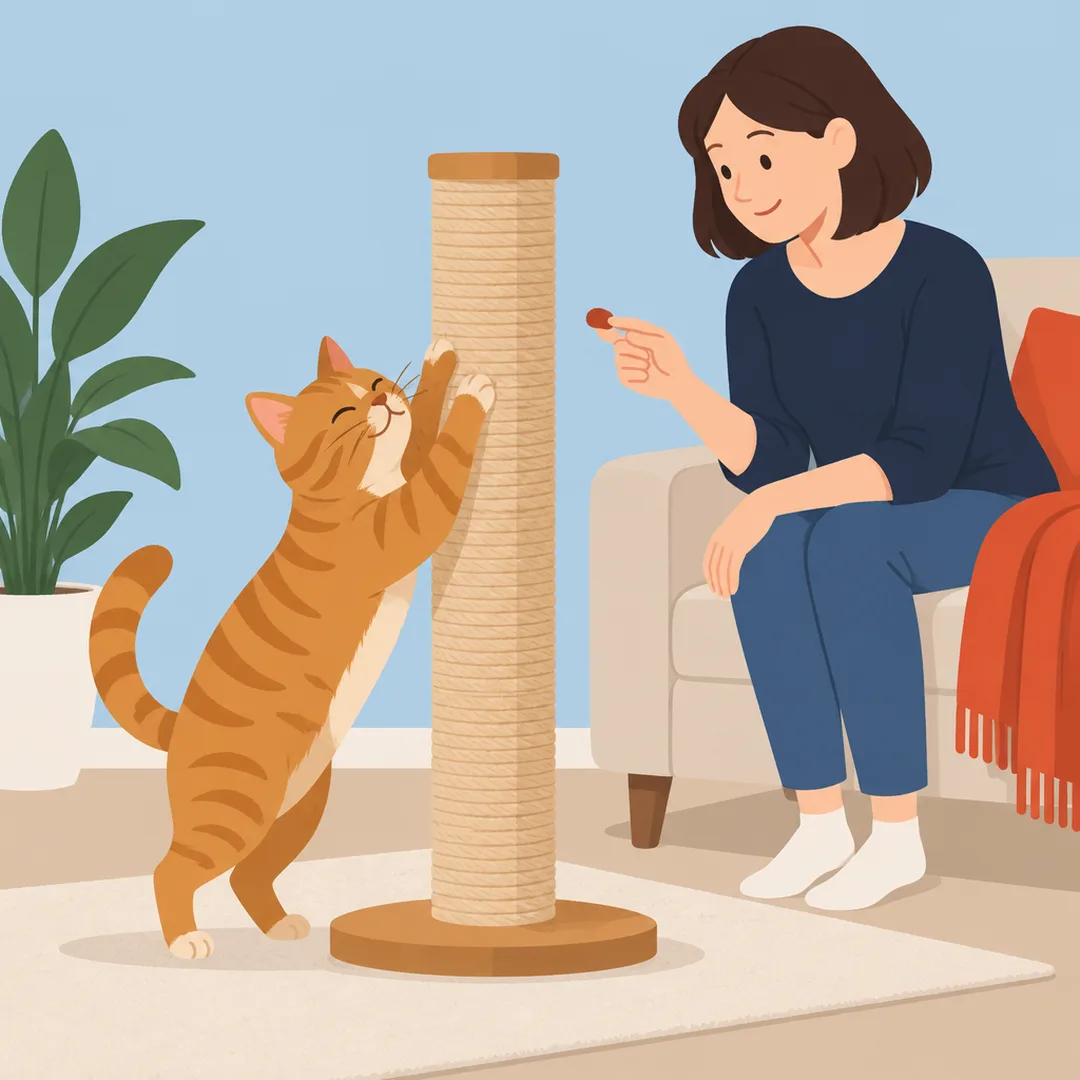
Scratching is not bad behaviour. It is a basic need, as natural to a cat as grooming. You cannot stop a healthy cat from scratching, and you should not try. What you can do is decide where it happens.
Why cats scratch
- Scent marking. Glands between the toes leave a scent that tells other cats "this is my place". Scratching often happens near entrances, sleeping spots and in the middle of rooms the cat cares about.
- Visual marking. The shredded marks are a signal too.
- Claw care. Scratching pulls off the worn outer sheath of each front claw to reveal the sharp new claw beneath. You may find these husks near the post.
- Stretching. A long scratch works the muscles of the back, shoulders and legs.
- Emotion. Cats often scratch when excited, when you come home, or after waking up. It can also be a way of releasing frustration.
Choosing a scratcher
Most "my cat ignores the post" problems come from the post itself. Look for:
- Height. Tall enough for your cat to stretch fully, front legs up and body long. For most adults that means at least 80 cm (about 30 in).
- Stability. A post that wobbles once will not be used again. Choose a heavy, wide base, or fix the post to a wall.
- Texture. Most cats like rough materials they can shred. Sisal rope or sisal fabric and corrugated cardboard are popular. A US study of in-home cats found cats preferred posts with two posts and a top platform, and that cats used posts with sisal rope more.
- Direction. Some cats scratch vertically, some horizontally, some both. Watch where your cat scratches now: the sofa arm (vertical) or the rug (horizontal)? Offer the same direction.
Avoid carpet-covered posts if you have carpet you want to protect; it is confusing to teach "this carpet yes, that carpet no".
Placement matters
A good post in the wrong place is a wasted post.
- Put a scratcher right next to anything your cat already scratches. Directly in front of the sofa corner, not across the room.
- Place scratchers near sleeping spots. Cats like to stretch and scratch on waking.
- Put one near the main entrance or the room where everyone gathers. Scratching is a social signal, so hiding the post in a spare room will not work.
- More than one cat? Provide several scratchers in different areas so no cat has to pass another to use one.
Once your cat reliably uses the new scratcher, you can move it slowly, a few centimetres a day, to where you would prefer it.
Redirecting from furniture
- Make the new spot attractive. Rub a little catnip or silvervine on the post, or use a synthetic scratching pheromone product. Drag a wand toy up and down it so claws catch the surface.
- Reward use. When your cat scratches the post, calmly praise and toss a treat. Clicker-trained cats can be marked and rewarded.
- Make the furniture less appealing for a while. Cover the scratched area with a throw, double-sided tape or a smooth plastic protector. Do this alongside a post placed right there, never on its own.
- Interrupt gently. If you catch your cat on the sofa, make a light sound, then lure them to the post with a toy. Do not shout, spray water or pick them up roughly. That teaches your cat to fear you, not where to scratch.
- Be patient. Give it two to four weeks.
Trim nails to reduce damage
Regular nail trims every two to four weeks blunt the tips and reduce damage to fabric and skin. See the nail trims article for a step-by-step, stress-free method.
Soft plastic nail caps glued over claws are an option for some cats, but they need replacing every few weeks and some cats dislike them. Ask your vet first.
Why declawing is not the answer
Declawing (onychectomy) is the surgical amputation of the last bone of each toe. It is not a nail trim. The AAFP strongly opposes declawing as an elective procedure, and it is banned or restricted in many countries and in several US states and cities. Possible effects include long-term pain, lameness, litter box avoidance and an increase in biting. Scratching posts, nail trims and training solve the problem without harm.
Scratching that seems excessive
A sudden increase in scratching, especially near doors and windows, can be a sign your cat feels threatened, for example by a new cat outside. Look at what has changed. Block the view of outdoor cats if needed, and add more scratchers near the stress point.
Key points
- Scratching is a normal need for scent marking, claw care and stretching. Plan for it, do not fight it.
- Choose tall, heavy, rough scratchers in the direction your cat prefers.
- Place them right next to the furniture your cat already uses, and near sleeping spots and entrances.
- Reward use; make furniture less appealing only while offering a better option right there.
- Declawing is an amputation, not a solution. Trim nails instead.
Sources
- AAFP: Scratching and declawing position statement
- International Cat Care: Scratching
- Zhang & McGlone (2020) Scratcher preferences of adult in-home cats and effects of olfactory supplements. Applied Animal Behaviour Science
- Ohio State Indoor Pet Initiative: Scratching
- AAFP/ISFM Feline Environmental Needs Guidelines