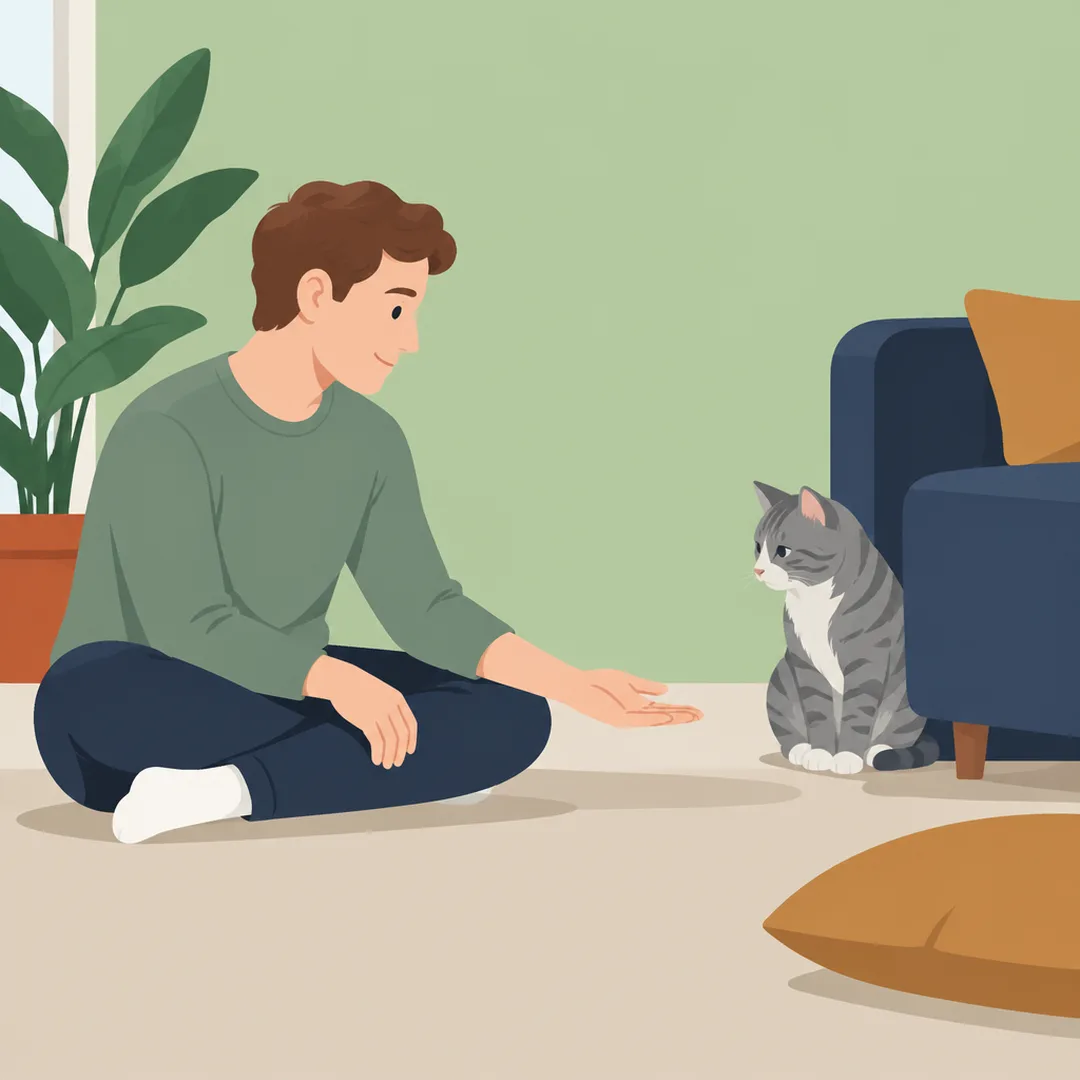
Safe outdoor time
Catios, harness and lead walks, and supervised garden time all give your cat fresh air and new smells. Here is how to set each up safely, what to check first, and when to stop.
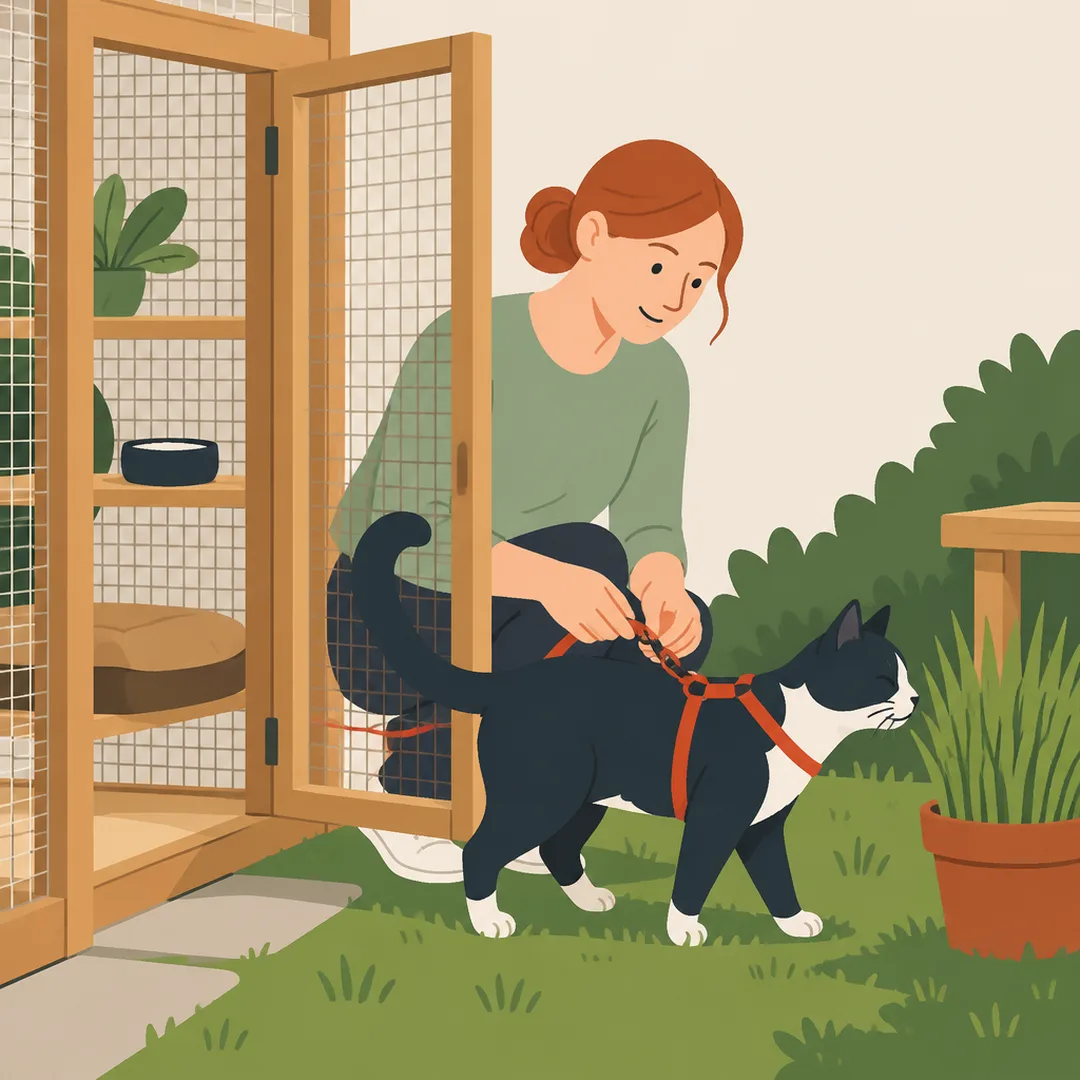
Controlled outdoor access can mean a catio, a harness and lead walk, or supervised time in a secure garden. This guide covers the main setups, the checks to do before you start, and the signs to stop.
Why outdoor time matters
Outdoor enrichment can boost your cat's mental stimulation, natural behaviours and well-being. With secure spaces, supervision and proper identification, your cat can enjoy fresh air with fewer risks to themselves and to local wildlife.
If your cat can go outside on their own
If your cat can go outside safely on their own, let them. Both PDSA and Cats Protection say it is much better for a cat to explore outdoors on their own than to be walked on a lead, and there are precautions you can take to help them do it safely.
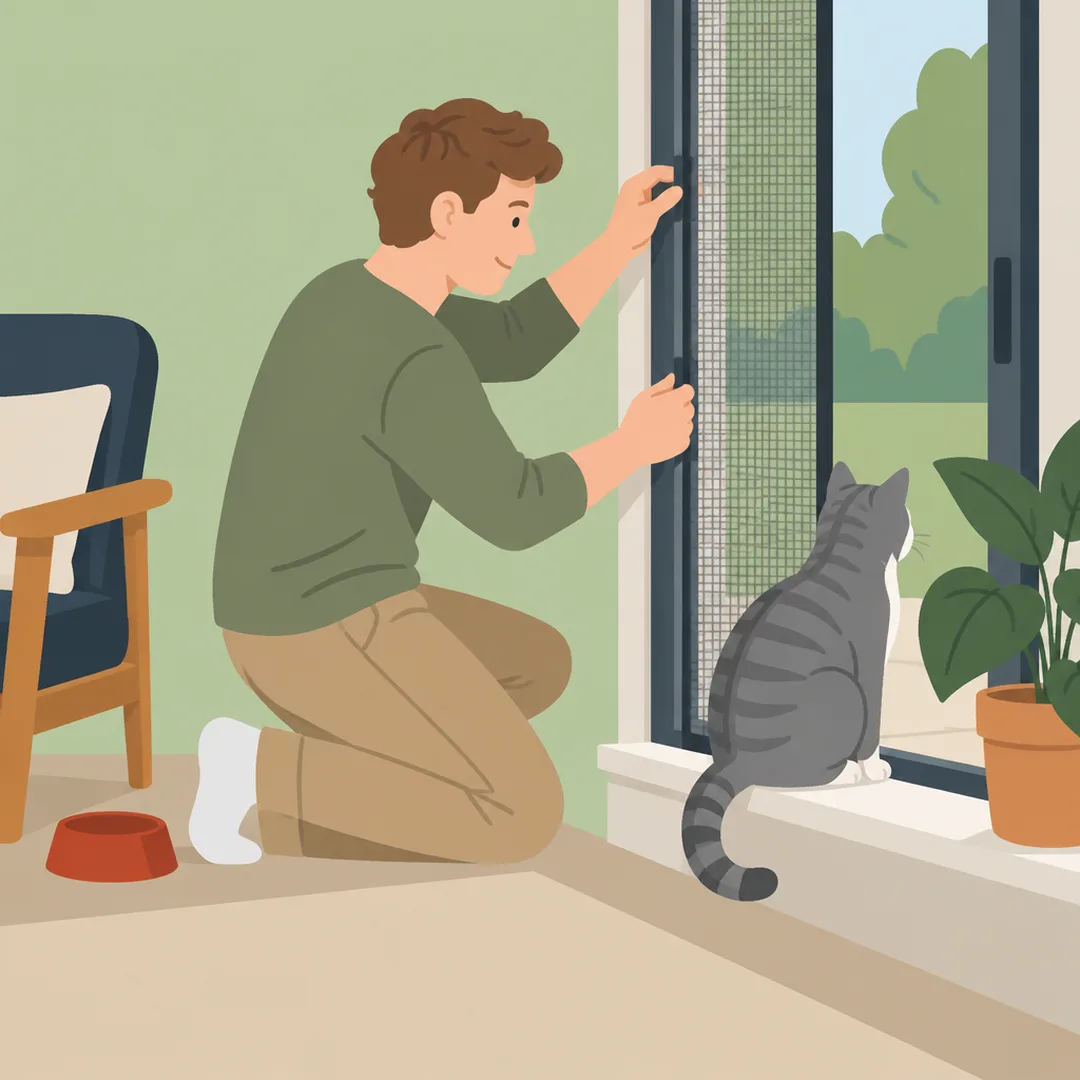
A catio is a good option for a cat who cannot venture outside.
Choose the right setup
Catio or enclosed run. The easiest way to offer outdoor access without escape risks. It can attach to a window, patio or yard, and it suits a cat who must stay in an enclosed space.
Supervised garden. Best for a yard with cat-proof fencing or inward-tilting toppers. You stay outside with your cat the whole time.
Harness and lead. Some cats learn to walk on a harness and lead, but it is not right for every cat. Read the harness section before you buy one.
Before your cat goes out
Arrange a vet check before outdoor time starts. Ask about vaccinations, parasite prevention and any region-specific risks, and keep them up to date.
Make sure your cat is microchipped and their details are current. Fit a breakaway collar with an ID tag, in case your cat slips out.
Check the weather. Avoid peak heat, and have shade, fresh water and cool surfaces ready.
Setting up a catio or enclosed garden
For a catio or run:
- Use strong mesh and secure latches.
- Include vertical space, shelves, sisal posts and shade.
- Place water, a litter area and weather protection.
For a secure garden:
- Use cat-proof fencing or inward-tilting toppers.
- Inspect for gaps, toxic plants and standing water.
- Supervise at all times, and provide shaded rest areas.
Harness and lead: only for some cats
Some cats learn to walk on a harness and lead with training. But PDSA and Cats Protection do not recommend lead walks for most cats. A lead limits a cat's choice, and a cat who feels frightened cannot run away or hide. Cats are also territorial and feel safest in familiar places.
If you try it, attach the lead to a cat harness, never a collar. A collar can come off, and pulling on it could choke your cat. Use a lightweight flat lead, not a retractable one. If your cat seems uncomfortable at any point, go back a step.
Teaching harness and lead skills
- Leave the harness and lead where your cat can sniff them. Reward any interest.
- When your cat is relaxed with the harness nearby, place it on them. If your cat stays calm, reward them.
- Put the harness on for a few minutes, then take it off and reward. Build up the time slowly.
- Once your cat moves easily in the harness, attach the lead indoors while you watch.
- Follow your cat around the house without pulling. Toss a treat to guide them.
- Open a quiet door and let your cat choose whether to step out. Keep early walks to five to 10 minutes.
End each session with play or food. If your cat crouches, hides or flattens their ears, go back inside.
Supervised garden time
Stay with your cat for the whole session. Use gentle recall cues and high-value treats. Let your cat set the pace. If your cat decides to go back to the house, let them return.
Watch your cat's body language
Crouching, hiding and flattened ears all mean your cat is not comfortable. Slow down or go back inside. A sudden loud noise, such as a car going past or a dog barking, can frighten your cat, so watch for a change and act early.
When to call the vet
If your cat is hurt in an encounter with another animal, they will need emergency vet care. Call your vet now.
While your cat is outside, watch for signs of overheating, and end the session if you see them.
Key points
- Outdoor enrichment can boost your cat's mental stimulation, natural behaviours and well-being, when the space is secure and you supervise.
- If your cat can go outside safely on their own, the sources say that is better for them than a lead walk.
- A catio or enclosed run is the easiest escape-proof option for a cat who cannot go out.
- Before you start, check vaccinations, parasite prevention, microchip details and ID.
- Train harness and lead skills slowly indoors, and stop if your cat shows signs of stress.