Reading your cat's body language
Cats talk mostly with their ears, eyes, tail and posture. Learn to read the whole cat so you know when to approach, when to play and when to give space.
Cats are quiet communicators. Most of what your cat says to you is said with the body, not the voice. Once you learn the main signals you will see fewer scratches, better play sessions and a calmer cat, because you will know when to come closer and when to back off.
The most important rule: read the whole cat, not one part. A tail on its own can mislead you. Ears, eyes, whiskers, posture and what is happening around the cat all add up to the message.
The tail
The tail is the easiest signal to spot from across a room.
- Straight up, tip slightly hooked. A friendly greeting. Cats raise their tails when approaching cats and people they like. Research on free-living cats found that a cat with its tail up is more likely to be approached and rubbed by others, so it works like a social "hello".
- Low and level, or held loosely behind. Relaxed and going somewhere, or a little unsure.
- Tucked under the body or wrapped tight round the feet. Fear or discomfort. The cat is making itself small.
- Puffed up like a bottle brush. A sudden fright. Often paired with an arched back so the cat looks bigger.
- Swishing, thumping or lashing. Rising irritation or excitement. A twitching tip during play is fine. A whole tail thumping while you stroke means "stop soon".
Ears
Cat ears have more than 30 muscles each and swivel independently, so they change by the second.
- Upright, facing forward: alert and interested.
- Turned sideways, flat like aeroplane wings: worried, irritated or unsure.
- Pressed flat back against the head: frightened or ready to defend. Give space.
- One ear swivelling back: the cat is listening to something behind it. Not a mood on its own.
Eyes and the slow blink
- Soft, half-closed eyes mean a relaxed cat that feels safe near you.
- Wide, round pupils can mean fear, excitement or play. Light matters too: pupils widen in dim rooms. Check the rest of the body before deciding.
- Narrow, slit pupils in normal light with a hard stare can mean the cat is tense or about to act.
- A long, direct stare between cats is a challenge. With people it often makes a shy cat uneasy. Look slightly away.
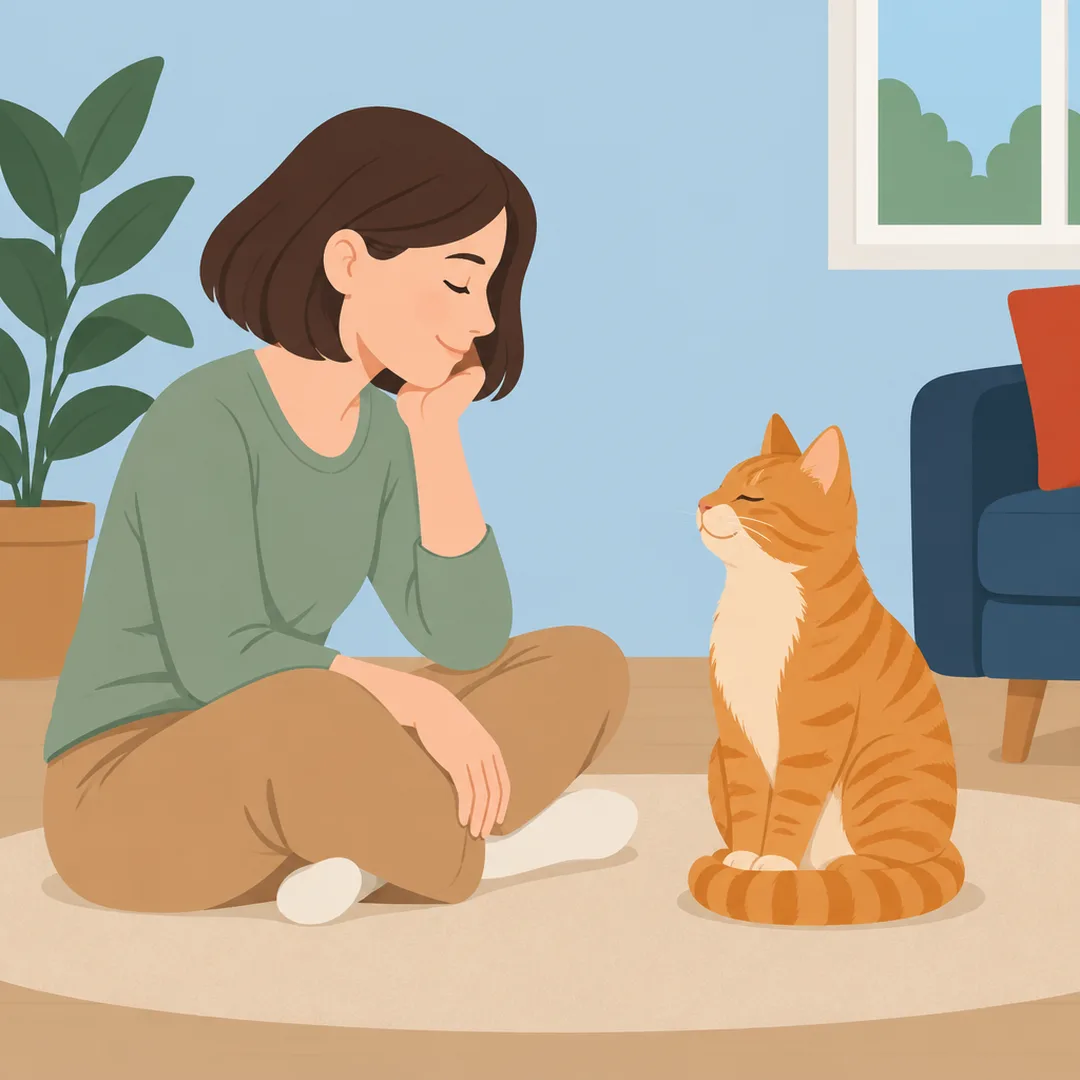
The slow blink is the closest thing cats have to a smile. A study from the University of Portsmouth found cats were more likely to slow blink back at a person who slow blinked at them, and more likely to approach a stranger who did so. Try it: sit side-on, look at your cat softly, close your eyes slowly for a second or two, then open them and look away.
Whiskers and face
- Whiskers relaxed and out to the side: calm.
- Whiskers pushed forward: interested, hunting or checking something out.
- Whiskers pulled back flat against the cheeks: fear or stress.
- Licking lips or nose, quick grooming of one spot, yawning in a tense moment: often signs of mild stress, a way of coping.
Posture
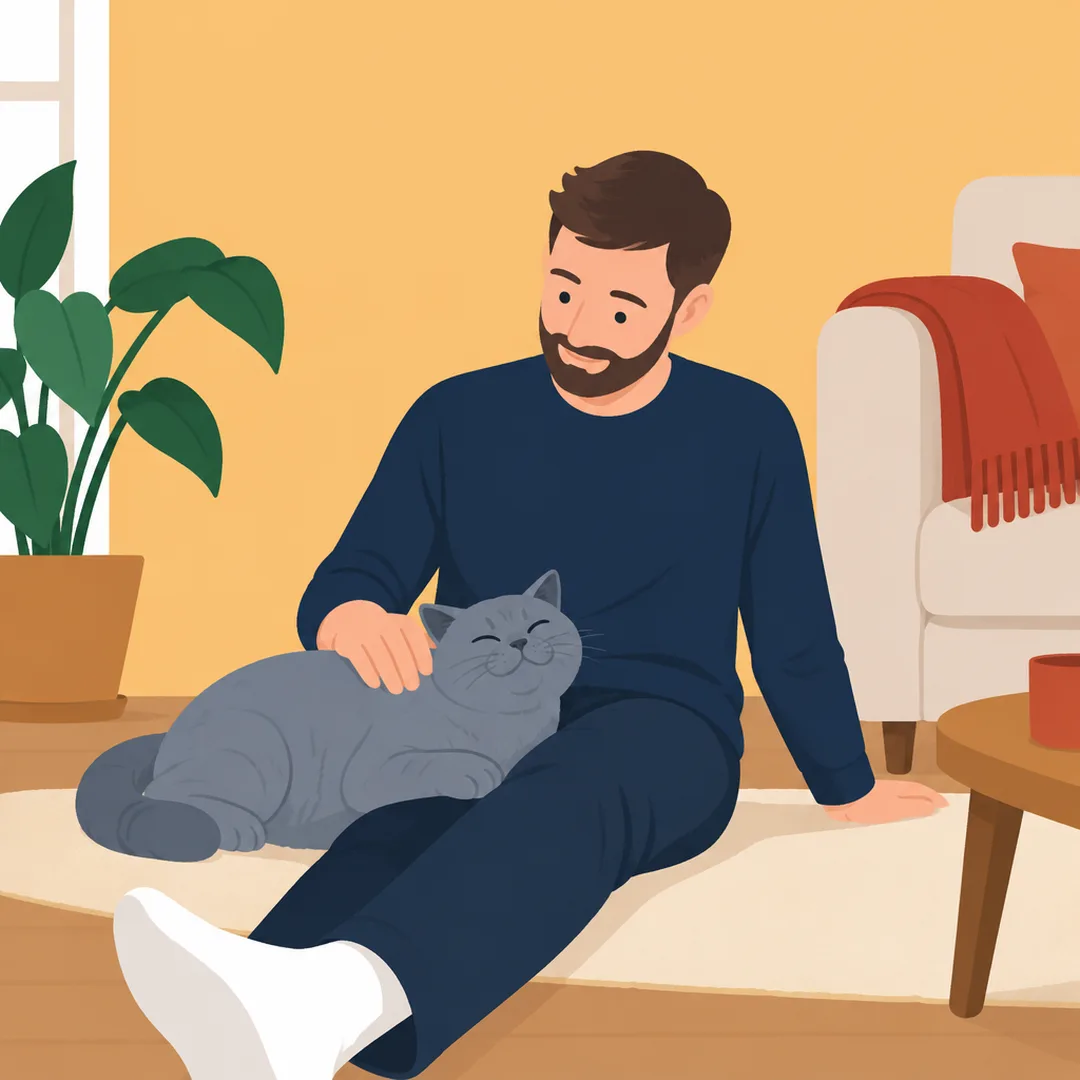
- Loose, stretched out, belly showing: a cat that feels very safe. This is not an invitation to rub the belly. Many cats grab and kick when touched there. Enjoy the trust and stroke the head instead.
- Loaf position (paws tucked under): comfortable but ready to move. If the eyes are squinted, the face tense and the cat is hunched, it can also be a sign of pain, so look at the face.
- Crouched low, weight on the back legs, tail close: scared and ready to run.
- Arched back, side-on, fur up: trying to look big to scare off a threat.
- Rolled on the side with claws out and ears back: defending, not playing.
Touch signals
- Head bunting and cheek rubbing on you leave scent from glands on the face. It marks you as part of the cat's familiar group.
- Kneading with front paws is a comfort behaviour left over from kittenhood.
- Skin rippling along the back while being stroked is a warning that the cat has had enough.
Putting it together
Imagine three cats with a raised tail:
- Tail up, ears forward, soft eyes, trotting toward you: a happy greeting.
- Tail up but puffed, back arched, ears sideways: a frightened cat trying to look bigger.
- Tail up, quivering at the base, backing up to a wall: likely urine spraying.
Same tail, three different messages. Context matters too: the same crouch means "hunting" next to a wand toy and "afraid" when a stranger walks in.
How to use this every day
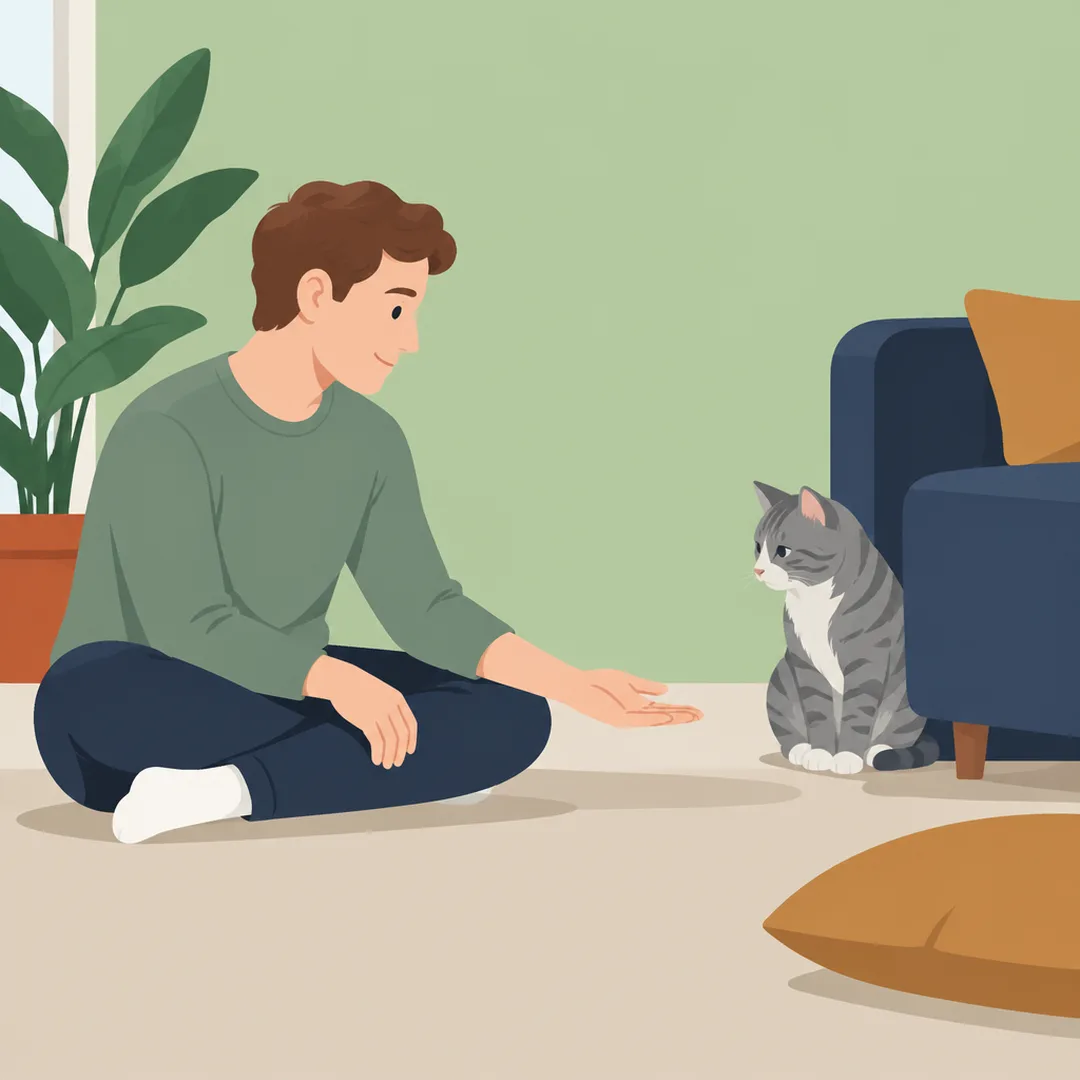
- Let your cat start the contact. Offer a finger at nose height and wait. A sniff and a cheek rub means yes. Looking away or leaning back means not now.
- Stroke where cats like it. Most cats prefer the cheeks, chin and the base of the ears. Many dislike long strokes down the back, the tail and the belly.
- Keep sessions short and stop early. Stop at the first tail flick, skin twitch or ear swivel. Your cat learns your hands are safe, and comes back for more.
- Watch for change. A cat who suddenly hides more, sits hunched or stops grooming may be unwell. Log changes in the app so you can show your vet.
Key points
- Read the whole cat: tail, ears, eyes, whiskers, posture and the situation.
- Tail up with soft eyes is a friendly greeting; tail lashing, flat ears and wide pupils mean "give me space".
- A belly display shows trust, not a request for a belly rub.
- Slow blinking is a simple, research-backed way to tell your cat you are not a threat.
- Stop touching at the first sign of irritation, and your cat will trust your hands more.
Sources
- International Cat Care: Cat body language
- Cats Protection: Understanding cat behaviour
- Humphrey et al. (2020) The role of cat eye narrowing movements in cat-human communication. Scientific Reports
- Cafazzo & Natoli (2009) The social function of tail up in the domestic cat. Behavioural Processes
- AAFP: Cat Friendly Interactions