Your puppy's first week at home
The first seven days set the tone. A calm, simple plan for arrival day, the first nights, a potty routine, a safe space and gentle first experiences.
Bringing a puppy home is exciting and tiring for everyone, puppy included. They have just left their mother, littermates and every smell they know. The goal this week is not to teach lots of tricks. It is to help your puppy feel safe, start a potty routine and learn that new things are fine.
Before your puppy comes home
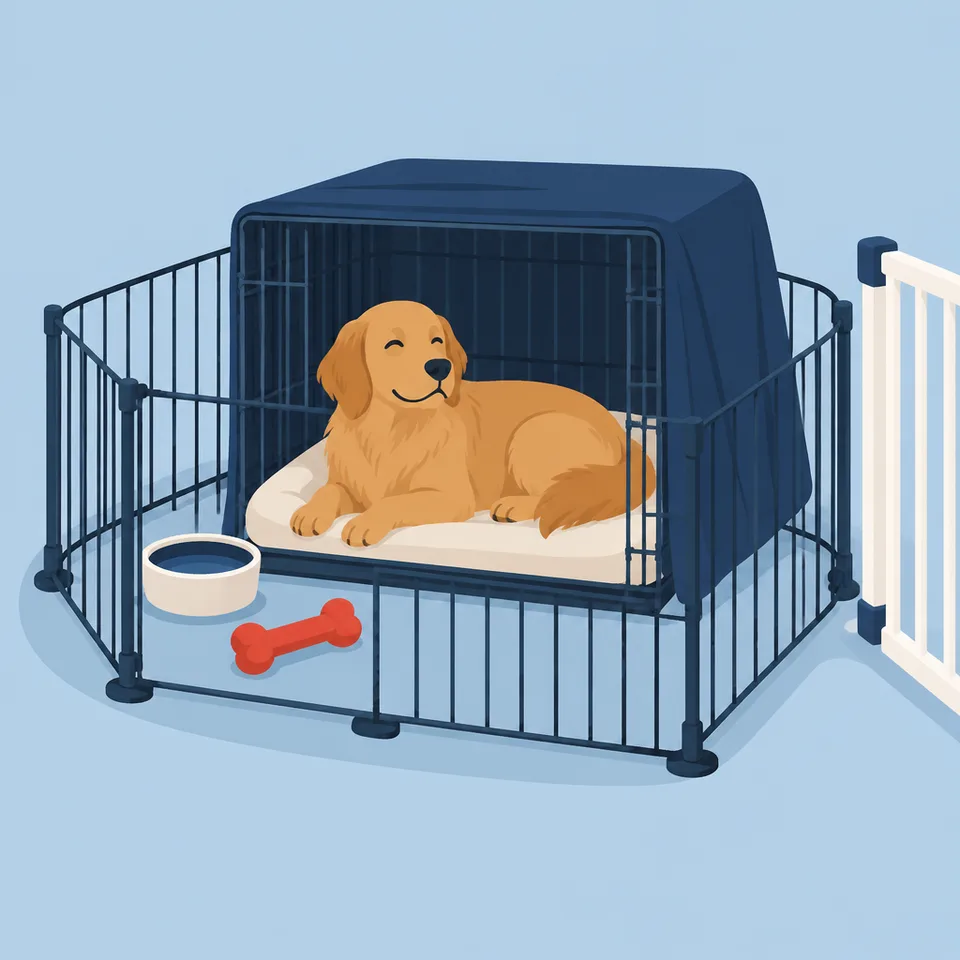
Set up a puppy zone where your puppy can be safe when you cannot watch every second. A kitchen corner or utility room with an easy-to-clean floor works well.
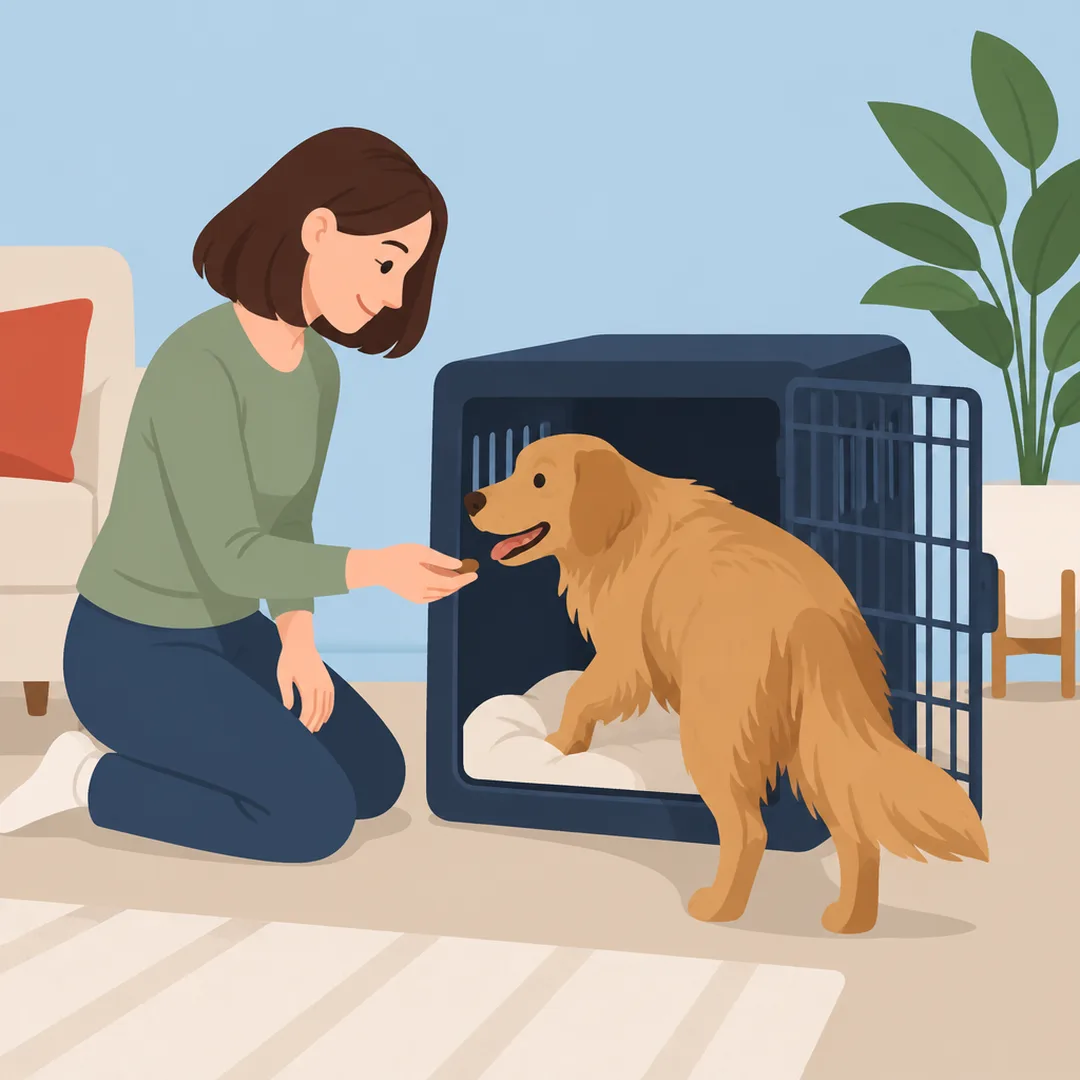
- A crate or a small pen with a soft bed. Cover the back half of a crate with a blanket so it feels like a den.
- Water always available.
- Chews and toys of the right size: a few safe chews, a soft toy, a food puzzle.
- A baby gate to block off stairs and rooms.
- Food the breeder or shelter was using, so the diet does not change on day one.
- A collar or harness with an ID tag and a light lead.
- Enzyme cleaner for accidents. Ordinary cleaners leave a smell your puppy can still find.
Puppy-proof at puppy height: tuck away cables, shoes, cleaning products, medicines and houseplants. Book a vet visit for the first week (see the first vet visit article) and check that the microchip is registered to you. The AVMA notes a chip only helps if the contact details are current.
Arrival day
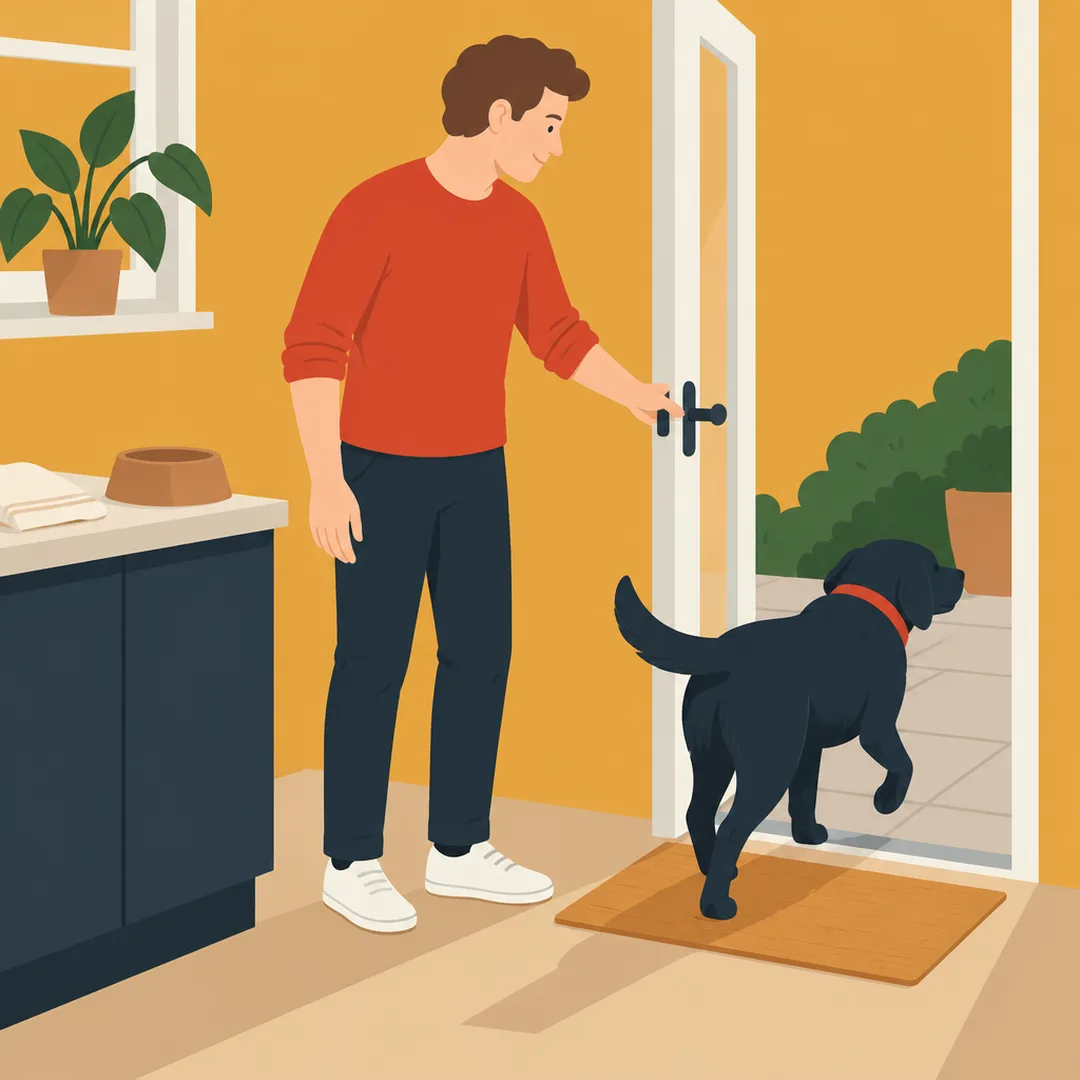
- Go straight to the potty spot. Carry your puppy out of the car to the place you want them to use. Wait quietly. If they go, praise softly and give a treat right away.
- Keep it quiet. One or two family members, not a welcome party. Visitors can come in a few days.
- Let them explore the puppy zone and one or two rooms, at their pace.
- Offer a small meal of their usual food. Some puppies are too unsettled to eat much at first; that is common for a meal or two.
- Let them sleep. Puppies need 18 to 20 hours of sleep a day. Overtired puppies get bitey and wild.
The first nights
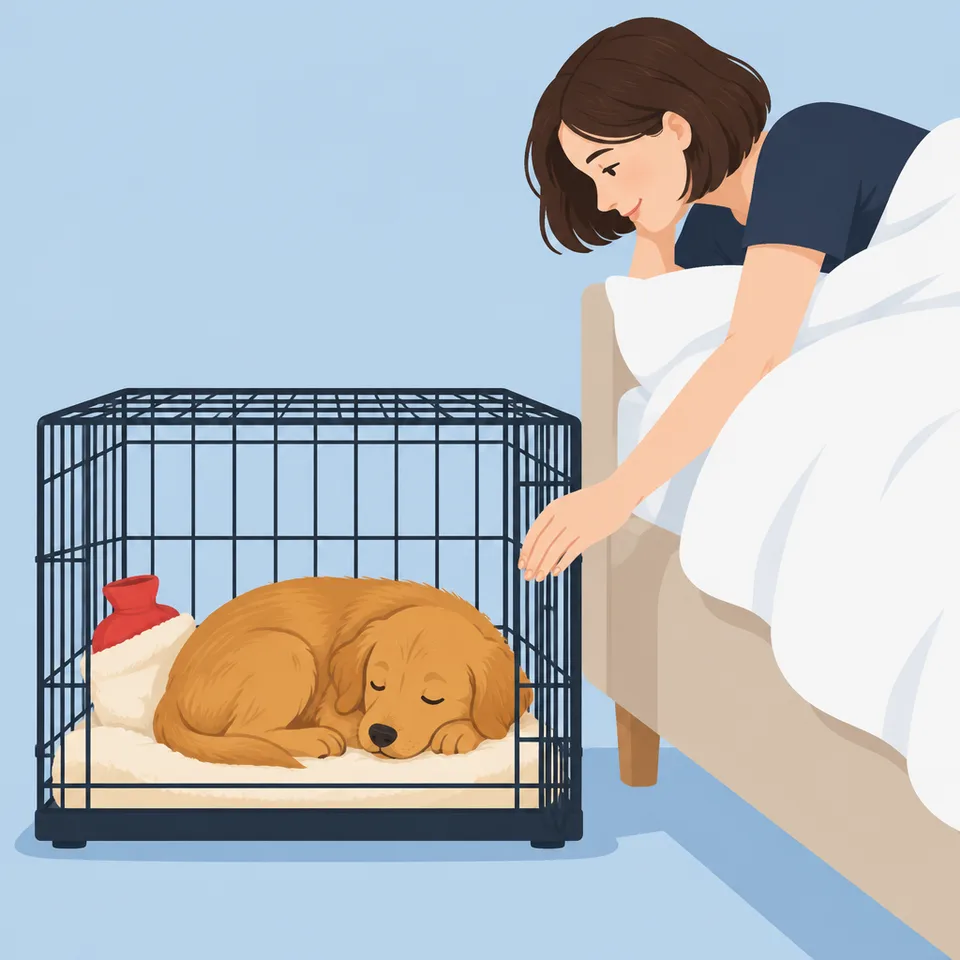
Most puppies cry the first nights because they are alone for the first time. Having the crate or bed right beside your own bed helps a lot. You can dangle a hand near them, and you will hear when they need to go out.
- Take your puppy out last thing before bed.
- Young puppies usually need one or two trips in the night. Carry them out, keep it boring (no play, dim lights), then straight back to bed.
- A warm (not hot) wrapped water bottle or a blanket that smells of the litter can comfort them.
- Once they sleep through, you can move the crate gradually if you want to.
Ignoring a scared baby animal all night does not teach independence. Comforting your puppy does not "spoil" them. Calm closeness now builds confidence later.
A simple daily rhythm
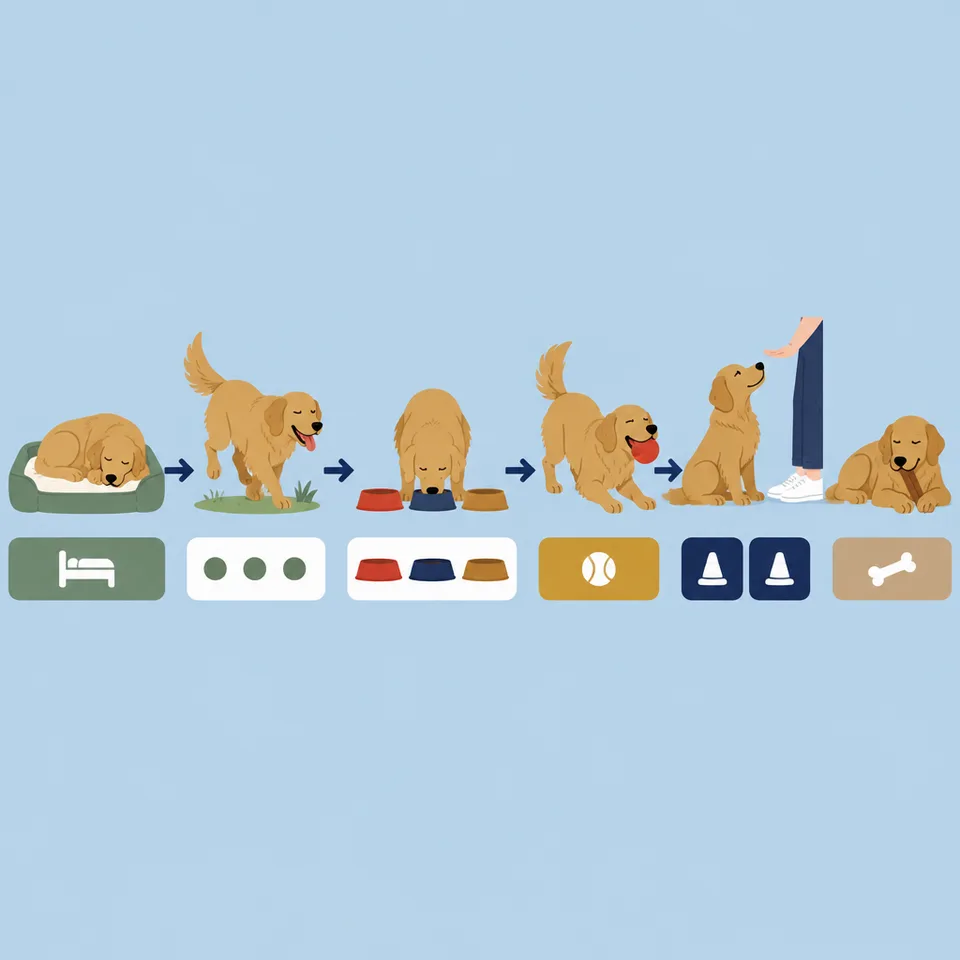
Puppies thrive on routine. A typical day:
- Potty trip on waking, after every meal, after play, after naps and every 1 to 2 hours in between.
- Three or four small meals at regular times.
- Short play sessions of 5 to 10 minutes, then a nap in the puppy zone.
- Two or three tiny training sessions of 2 to 3 minutes: name, a marker word, sit.
- Calm time for chewing.
Start socialising, gently
The sensitive period for socialisation runs to about 12 to 14 weeks of age. The AVSAB says this window matters so much that puppies can start puppy classes 7 days after their first vaccines and first deworming, in a clean, well-run class.
This week, keep it gentle:
- Let your puppy see and hear normal home life: the vacuum from another room, the TV, doors, kitchen sounds.
- Carry them to watch the street from a safe spot.
- Handle paws, ears and mouth briefly, with a treat each time.
- Let calm, vaccinated, friendly adult dogs meet them, on clean ground.
Watch for signs of worry (tucked tail, freezing, trying to hide) and back off if you see them. Quality matters more than quantity.
Biting is normal
Puppies explore with their mouths. The ASPCA advises redirecting to a toy, and if teeth keep landing on skin, calmly pausing play for a few seconds. Many "bitey" moments are really "I'm overtired" moments: a nap often fixes them.
Small and large dog notes
- Toy breeds can get low blood sugar if they skip meals. Feed small meals often and call your vet if a tiny puppy becomes weak, wobbly or sleepy and hard to rouse.
- Toy breeds have tiny bladders and need even more frequent potty trips. Watch for them slipping through gaps and being stepped on.
- Large and giant breed puppies grow fast. Feed a large-breed puppy food, and avoid stairs and jumping off sofas for now.
Key points
- Set up a safe puppy zone before arrival, with a den, water, chews and a gate.
- Keep the first days quiet and the routine simple: sleep, potty, eat, short play.
- Keep the bed beside yours at night and comfort your puppy; plan for night potty trips.
- Start gentle socialisation now; the window closes around 12 to 14 weeks.
- Book a vet visit in the first week and register the microchip.
When to call the vet
- Your puppy will not eat for more than a day, or a toy breed skips more than one meal.
- Vomiting, diarrhoea (especially with blood), or lethargy. Parvovirus is a risk for unvaccinated puppies.
- Coughing, runny eyes or nose, or trouble breathing.
- Weakness, wobbling or a puppy that is hard to wake.