A potty training plan that works
House training comes down to timing, supervision and rewards. A step-by-step plan for puppies and adult dogs, plus how to handle accidents without fuss.
Potty training is mostly about you, not your dog. If your puppy is in the right place at the right moment, and the right place pays well, they learn fast. Most puppies are reliable somewhere between 4 and 6 months old, but some take longer, especially small breeds.
The idea in one line
Get your dog outside before they need to go, reward them the second they go there, and prevent accidents indoors while they learn.
When to go out
Young puppies cannot hold it for long. A rough guide some trainers use is the puppy's age in months plus one, in hours, during the day. It is only a guide; many puppies need to go more often, and no dog should be expected to hold it for much more than a few hours in daytime.
Take your puppy out:
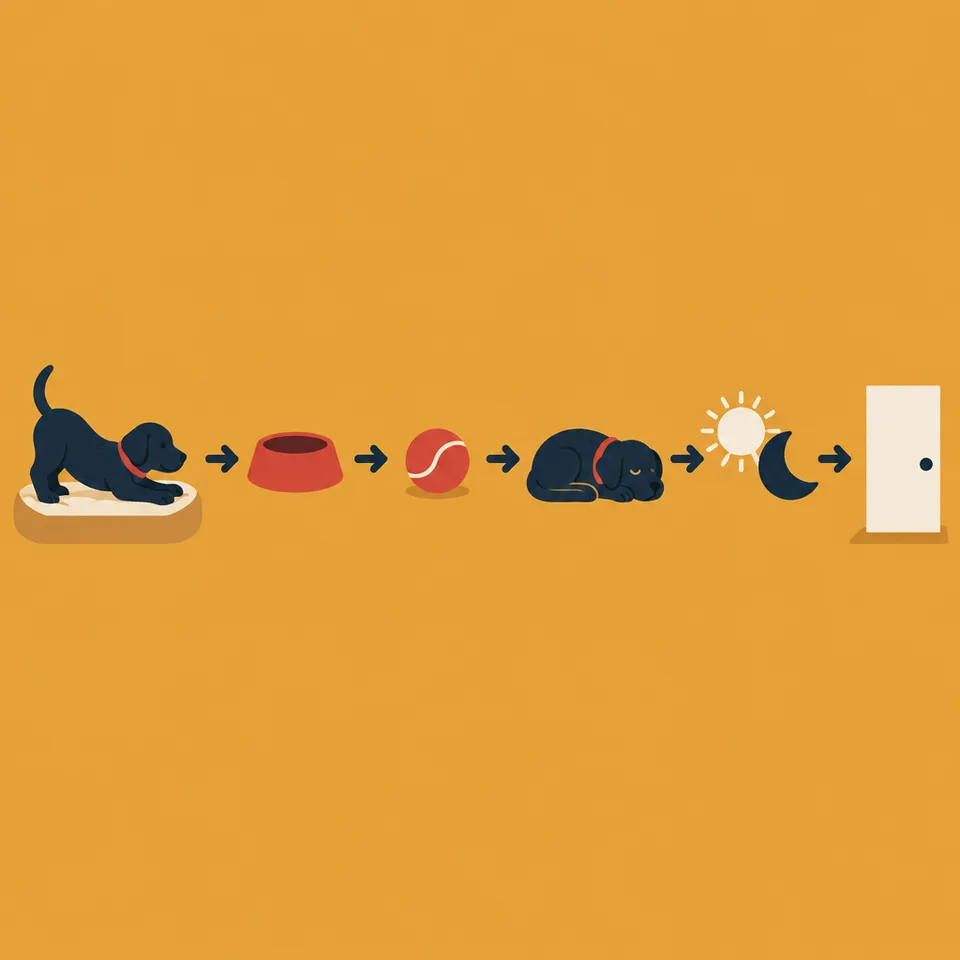
- the moment they wake up, in the morning and after every nap
- within 5 to 15 minutes after eating or drinking a lot
- after play or excitement
- before bed and before being left
- every 1 to 2 hours in between at first
Feed meals at set times rather than leaving food down all day. Regular meals mean regular toilet times.
At the potty spot
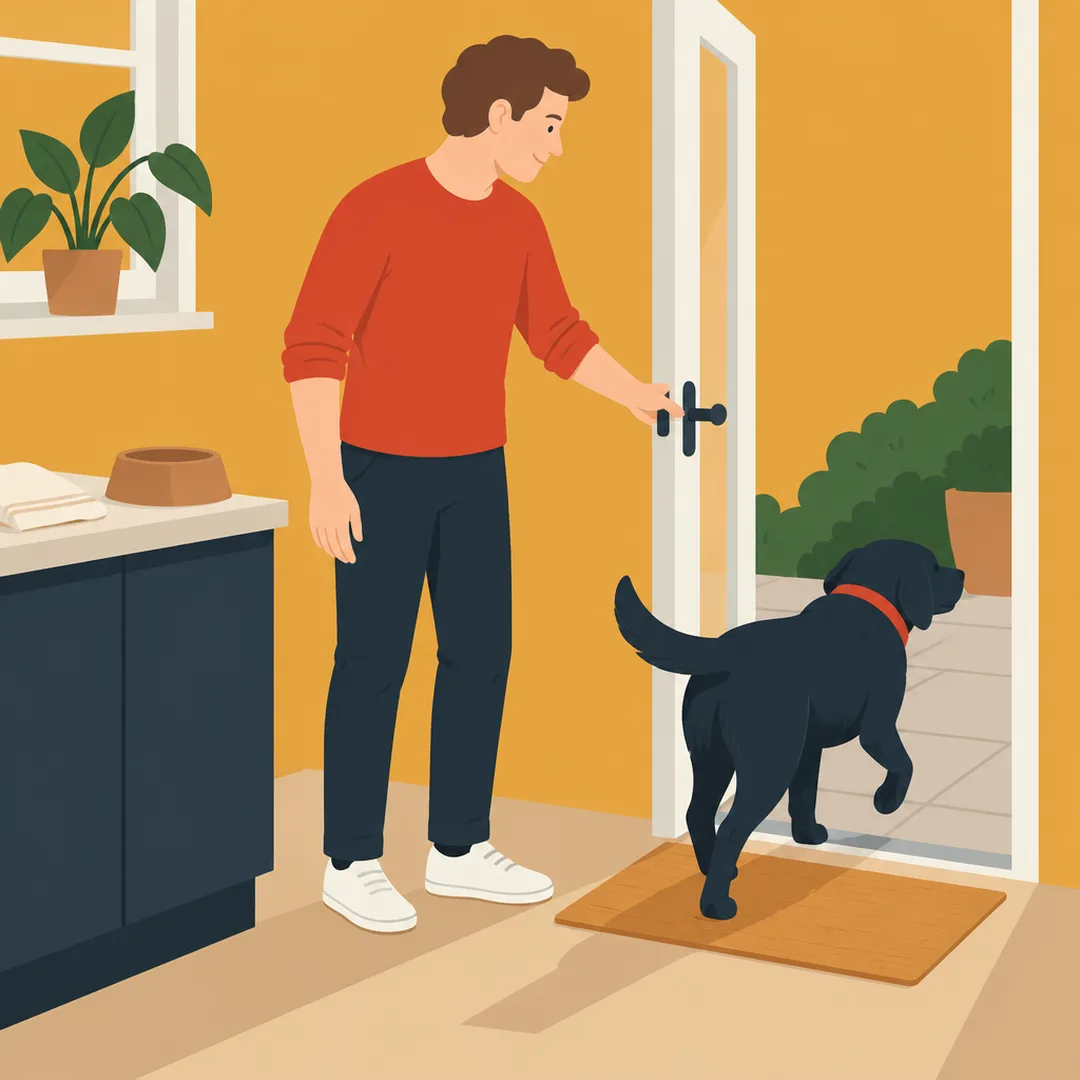
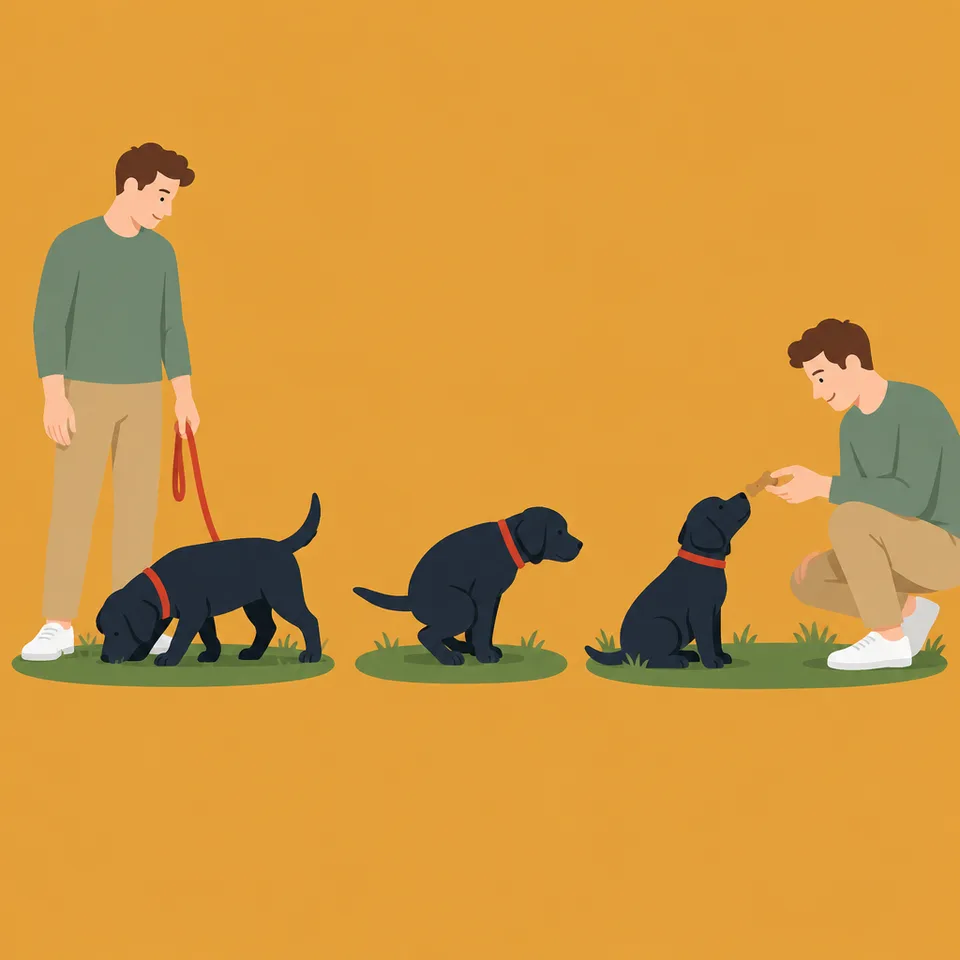
- Go with your puppy. You cannot reward what you do not see. Put them on a lead so you can stay near the same spot.
- Stand still and stay boring. Let them sniff. Do not play yet.
- Say a cue quietly as they start to go, like "be quick." Later it helps prompt them.
- Reward within two seconds of finishing. A tasty treat and calm praise, right there, not when you get back indoors.
- Then play or explore. Fun after potty teaches them to go first.
- No luck after 5 minutes? Go back in, keep them close or in their crate or pen for 10 to 15 minutes, then try again.
Supervise or confine
Every accident indoors is practice in the wrong place. While your puppy is learning:
- Watch them when they are loose. Keep them in the same room, behind a gate, or on a light lead tied to you.
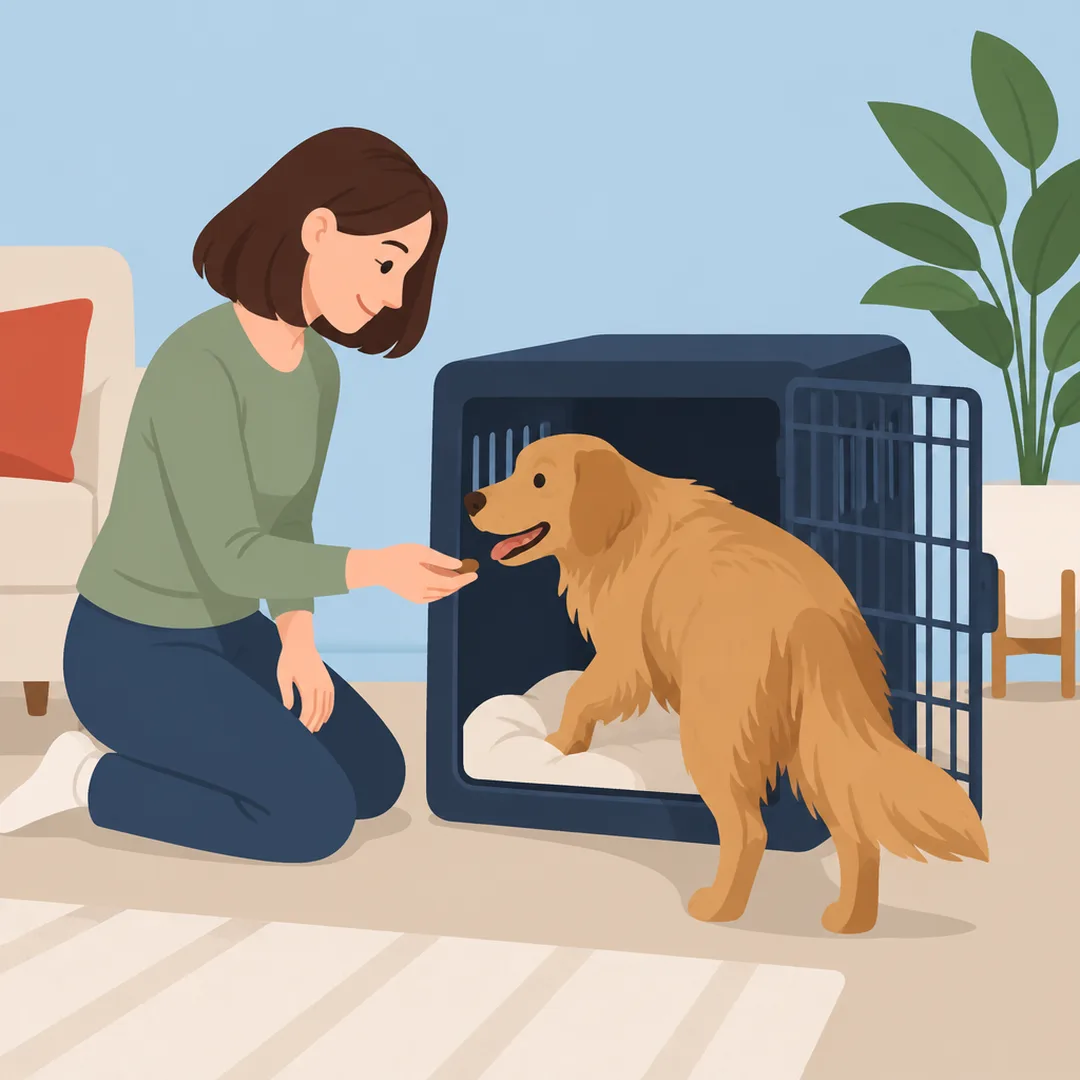
- When you cannot watch, use a crate or small pen. Most dogs avoid soiling where they sleep. The space should be big enough to stand, turn and lie down, but not so big they can toilet in one corner and sleep in another.
- For longer absences, set up a pen with a bed at one end and a puppy pad or tray at the other, or arrange a sitter.
Signs your puppy needs to go
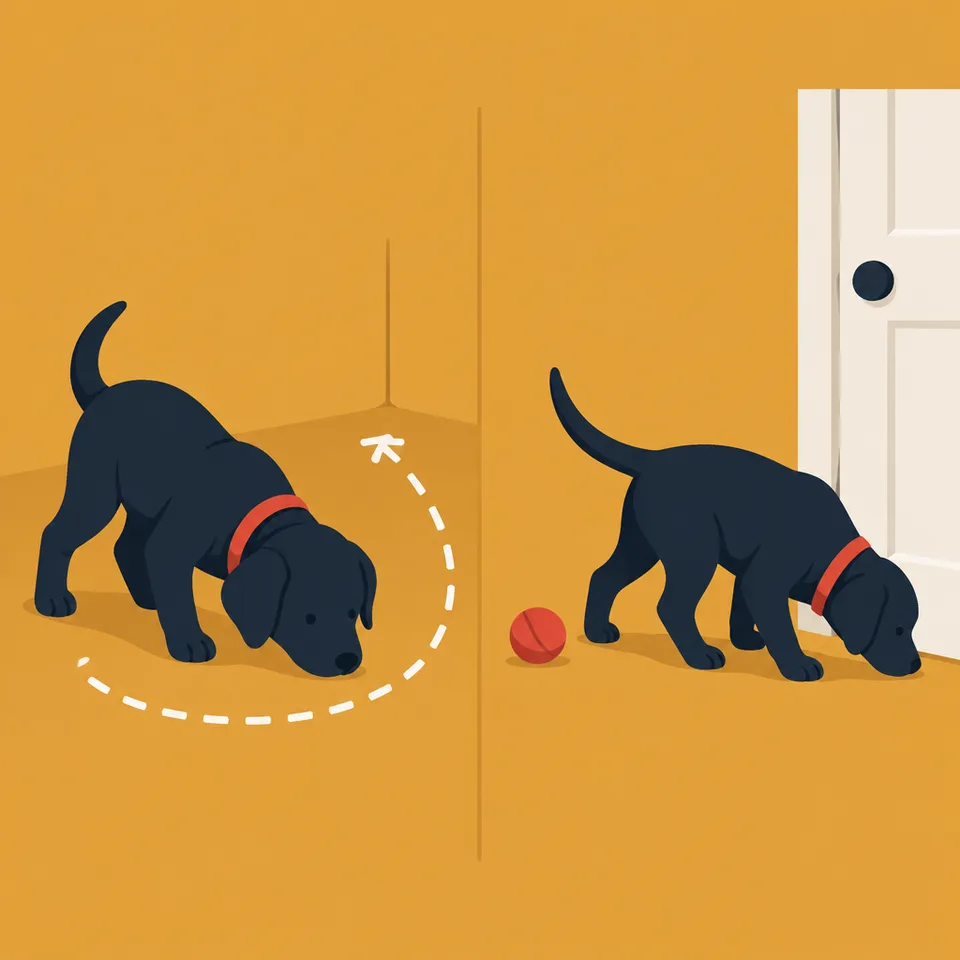
Sniffing the floor, circling, suddenly leaving a game, heading for a corner or the door, whining or restlessness. When you see it, calmly take them out right away.
When accidents happen
They will. Stay calm.
- If you catch them mid-act, say a gentle "oops" (no shouting), scoop or lead them outside and reward if they finish there.
- If you find it later, just clean it. Dogs do not connect a scolding with something done minutes ago. Rubbing a nose in it or shouting only teaches them to hide from you to toilet, which makes training harder. The AVSAB recommends reward-based methods only.
- Clean with an enzyme cleaner. It breaks down the smell that draws them back.
- Ask yourself what to change: more frequent trips, closer supervision, smaller space.
Night time
Most puppies under about 4 months need one trip out at night. Keep it dull: lights low, no play, straight back to bed. Gradually they will sleep longer.
Adult and rescue dogs
Adult dogs who were never house trained, or who are in a new home, follow the same plan. Treat them like a puppy for a few weeks: regular trips, rewards on the spot, and supervision. Many rescue dogs learn within days.
Small and large dog notes
- Small and toy breeds often take longer. Their bladders are tiny, and their accidents are easy to miss, so they get more practice going indoors. Take them out more often and use a pen or tray if you live high up.
- Small dogs often dislike cold and rain. A covered spot and a coat help.
- Large breeds often train a bit quicker, but big puppies still have puppy bladders.
When it goes backwards
A setback can follow a move, a change in routine, or stress. Go back a stage for a week or two. If a trained dog suddenly starts having accidents, think health first: urinary infections, bladder stones, diabetes, kidney disease, some medicines and, in older dogs, cognitive changes can all cause it.
Key points
- Take your dog out after waking, eating, playing and napping, and every 1 to 2 hours at first.
- Go with them and reward within two seconds of them finishing outside.
- Supervise or confine so accidents do not happen indoors.
- Never punish accidents; clean with an enzyme cleaner and adjust the plan.
- A trained dog who starts having accidents needs a vet check.
When to call the vet
- A dog who was reliable starts having accidents.
- Straining, going very often in small amounts, blood in the urine or crying while peeing.
- Drinking and peeing much more than usual.
- Diarrhoea lasting more than a day, or any diarrhoea in a young puppy who is also quiet or not eating.