Litter box setup
How many boxes your cat needs, where to put them, which litter to use and how often to clean, so your cat keeps using the box instead of finding somewhere else.
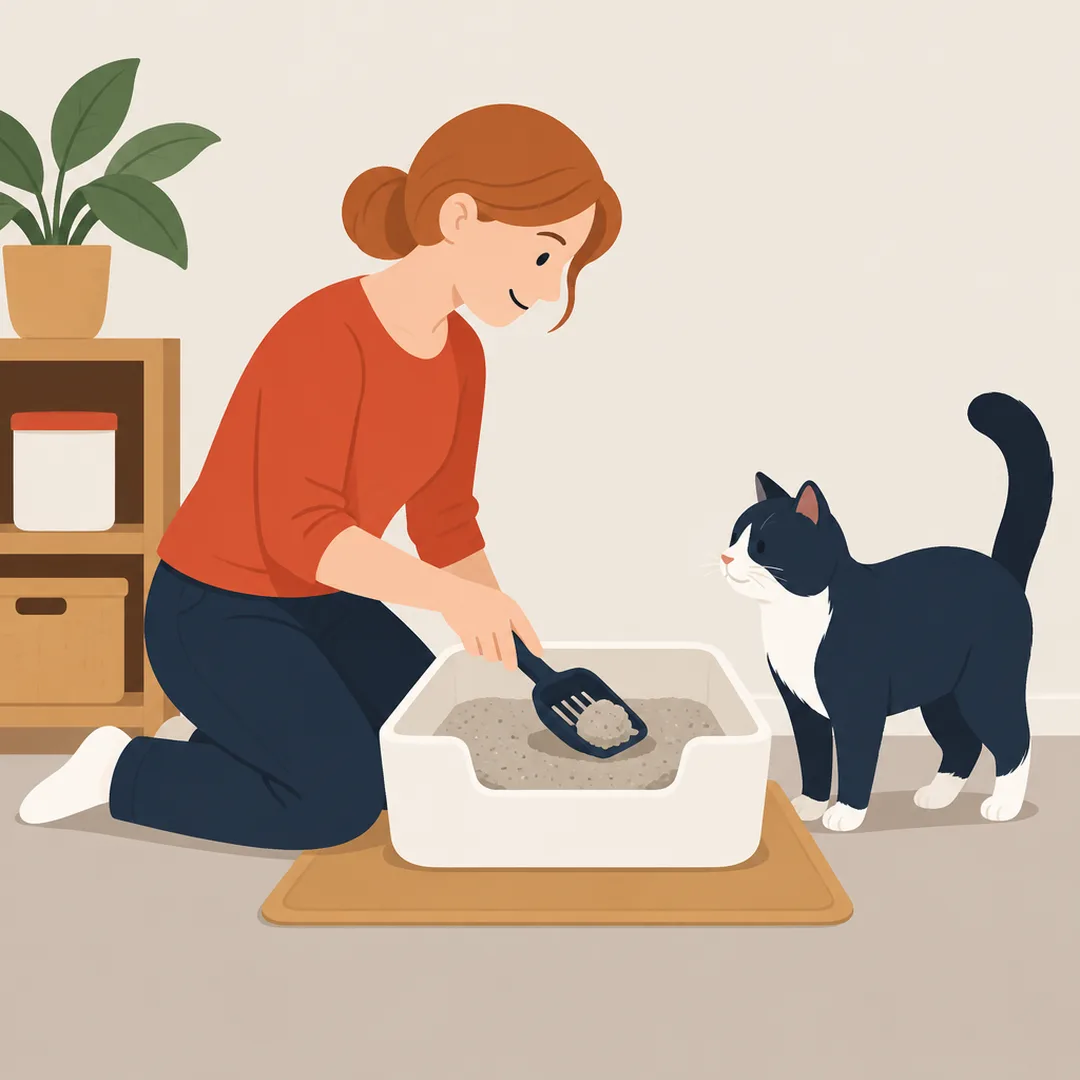
A litter box your cat is happy to use keeps them using it. Here is how many boxes you need, where to put them, what to fill them with and how to clean them.
How many boxes
- One box per cat, plus one extra: three boxes in a two-cat home.
- Even a single cat needs at least two trays, in physically separated locations.
- In a multi-level home, add one on each floor, and one on the level where your cat rests most.
Cats treat boxes placed side by side as one big box, so spread them out. In a multi-cat home, separate boxes let a shyer cat reach a tray without being blocked.
Where to put them
Choose quiet, private, easily accessible spots, away from food and water. Busy areas, corners where your cat could be blocked in, noisy appliances and cold hard floors all make a box less appealing. Do not hide it in a basement or garage your cat rarely visits.
Keep the location steady. Moving trays around can confuse and stress your cat.
Choosing the box
Bigger is better, and many boxes sold in shops are too small. Aim for about 1.5 times the length of your cat from nose to base of tail, so your cat can step in, turn around, dig and eliminate without touching the sides.
An open box is a good starting point. Covered boxes contain mess and smell for you, and some cats like the privacy, but open boxes have better air circulation and many cats will not go into an enclosed space. Offering more than one type lets your cat choose.
Storage containers and concrete mixing trays also make roomy boxes. Kittens, senior cats and cats with stiff joints need low sides to step over. Cats that pee standing up do better with high sides or a backsplash.
The litter
Most cats prefer fine, clumping, unscented litter. Start with about 3 to 4 cm, and give more if your cat digs deep - many cats want at least 3 inches of material.
Skip scented or dusty litters, litter deodorisers and box liners, which many cats dislike. Once you find a litter your cat uses happily, stay with it: sudden changes can send them back to soiling outside the box.
Cleaning routine
- Daily: scoop out all clumps and faeces and top up the litter. Some cats want it scooped more often than once a day.
- Weekly: empty the whole box, clear out residue and refill. Non-clumping litter should be changed completely every week.
- Every one to four weeks: scrub the box with hot water and mild soap. Avoid strong chemicals and ammonia-based products.
- Yearly: completely replace the litter box.
A towel or mat under the box stops it sliding and lets your cat wipe their paws.
Helping a kitten or new cat
For the first few days, put your kitten or new cat in the tray within half an hour of a meal and encourage them to scratch in the litter.
Young kittens learn fastest in one cosy room with the box, food, water, toys and resting spots, and can explore the rest of the home under supervision once they are reliable. New adult cats often need the same short spell of confinement while they learn where the box is.
Praise your cat for using the tray. Never punish a mistake - it can make a cat anxious about toileting and secretive about where they go.
If your cat goes outside the box
Talk to your vet first: going outside the box can be a sign of illness.
Then work through the setup - location, number of boxes, size, litter type, depth and cleanliness. A "litter box cafeteria" (several boxes side by side, each slightly different) helps you find what your cat prefers, and a box placed where the accidents happen can bring them back to a tray.
Clean accidents thoroughly with an enzymatic product. Cats have a sharp sense of smell and will return to a spot that still smells of urine or faeces. Do not scold your cat or carry them to the mess.
Key points
- One box per cat plus one extra, in separate locations.
- A quiet, private spot away from food, water and busy areas.
- Large open box, fine unscented clumping litter, enough depth to dig.
- Scoop daily, empty weekly, scrub monthly, replace old boxes.
- Never punish, and talk to your vet early if your cat stops using the box.
When to call the vet
Call your vet now if your cat strains in the litter box. Straining can be a sign of a life-threatening emergency, especially in a male cat.
Book an appointment if your cat starts going outside the box, or if the problem carries on after you have changed the setup.