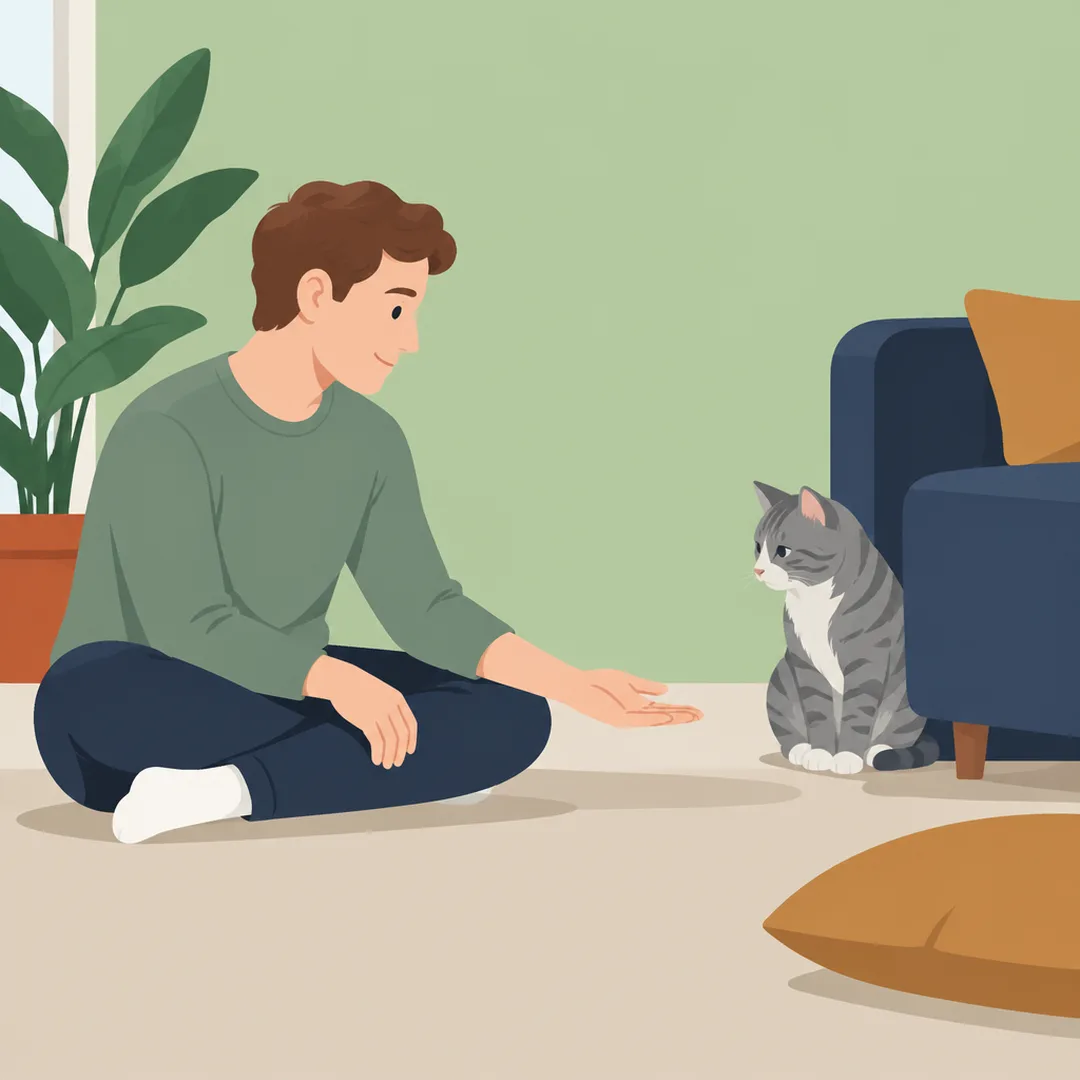
Introducing a new cat
A calm, scent-first plan for bringing a new cat home, from the first safe room to short supervised meetings and a home set up to prevent conflict.
Bringing a new cat home is exciting, but your resident cat may not agree at first. Cats are naturally solitary, and some will never want to share their home. A slow, scent-first introduction gives both cats the best chance of a calm relationship.
Start with a room of their own
Before any meeting, give your new cat a room your resident cat does not use. Set it up with food, water, comfortable beds, hiding places, a litter tray, toys and a scratching post. Use items that belong to the new cat or are brand new; using the resident cat's things can cause stress.
Synthetic feline pheromone products may help in the new cat's room and in the resident cat's favourite areas.
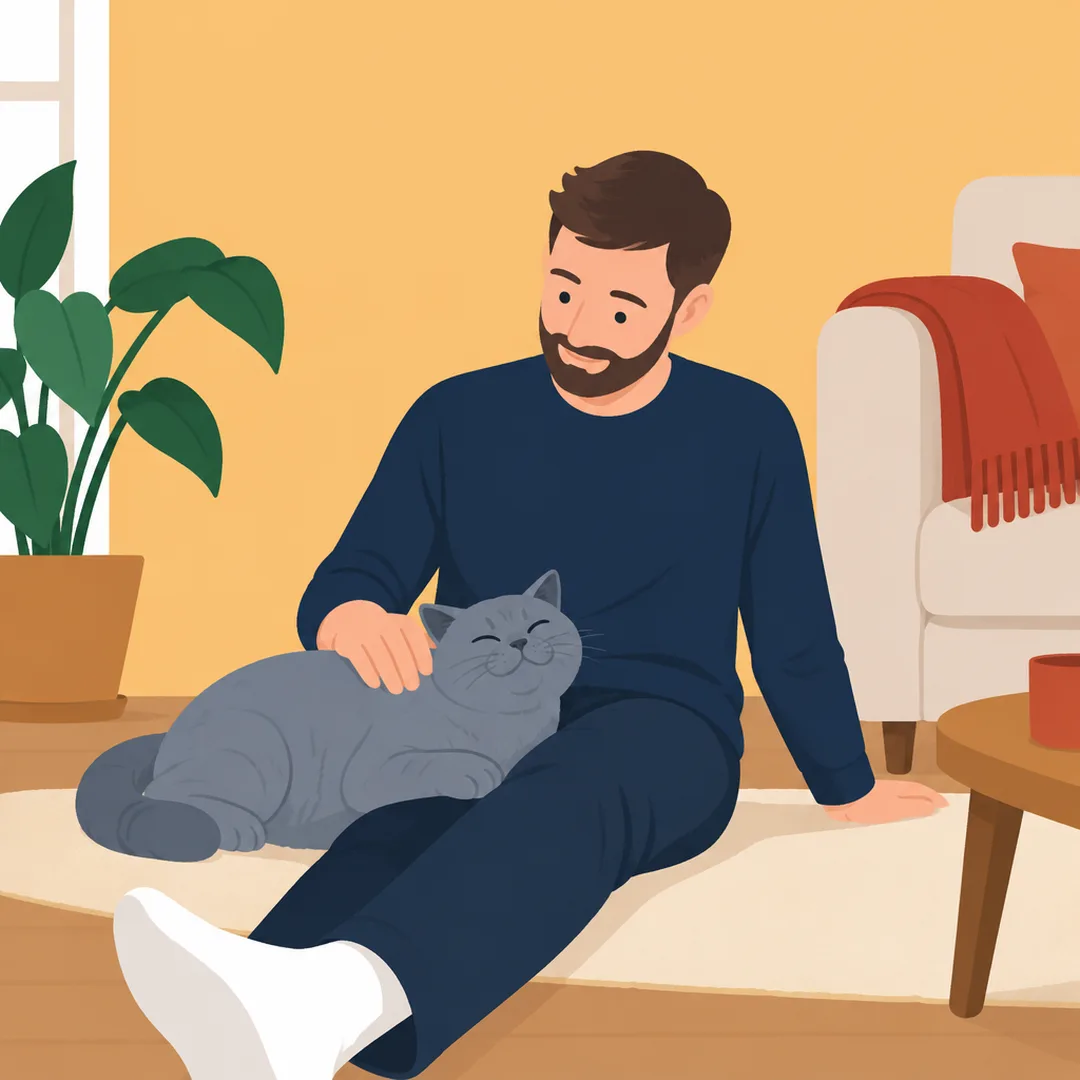
Let your new cat settle until they eat, drink, toilet, groom and play normally, rub their face on furniture, and greet you with a chirrup or purr. This can take several days to a week or two. If they pace at the door, meow for minutes or paw at the door, they may be frustrated by one room. If it is safe, give access to another room your resident cat does not use.
Step 1: swap scents
Cats recognise each other by scent. Swap a single blanket from each cat's bedding so each cat lies on the other's smell and a shared scent builds. If either cat avoids or hisses at the bedding, go slower. Once both are relaxed, return each blanket to the original cat's room to mix scents further.
Step 2: swap territories
Once scent swapping is calm, briefly confine your resident cat to one area, if that will not upset them, and let your new cat explore the rest of the home. Then swap: put the new cat back in their room and let the resident cat explore it. Do this only when the new cat is settled in their own space.
Step 3: let them see each other through a barrier
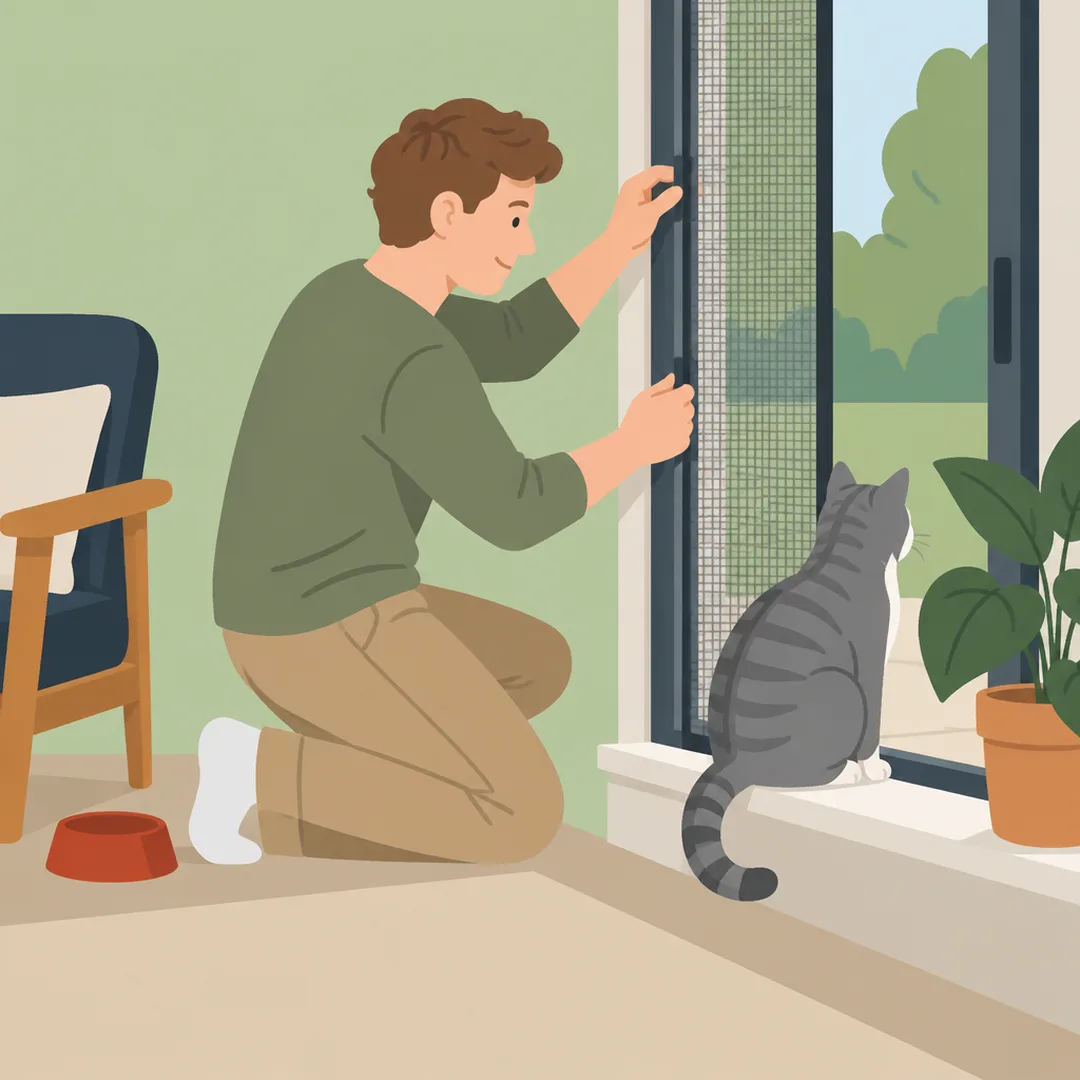
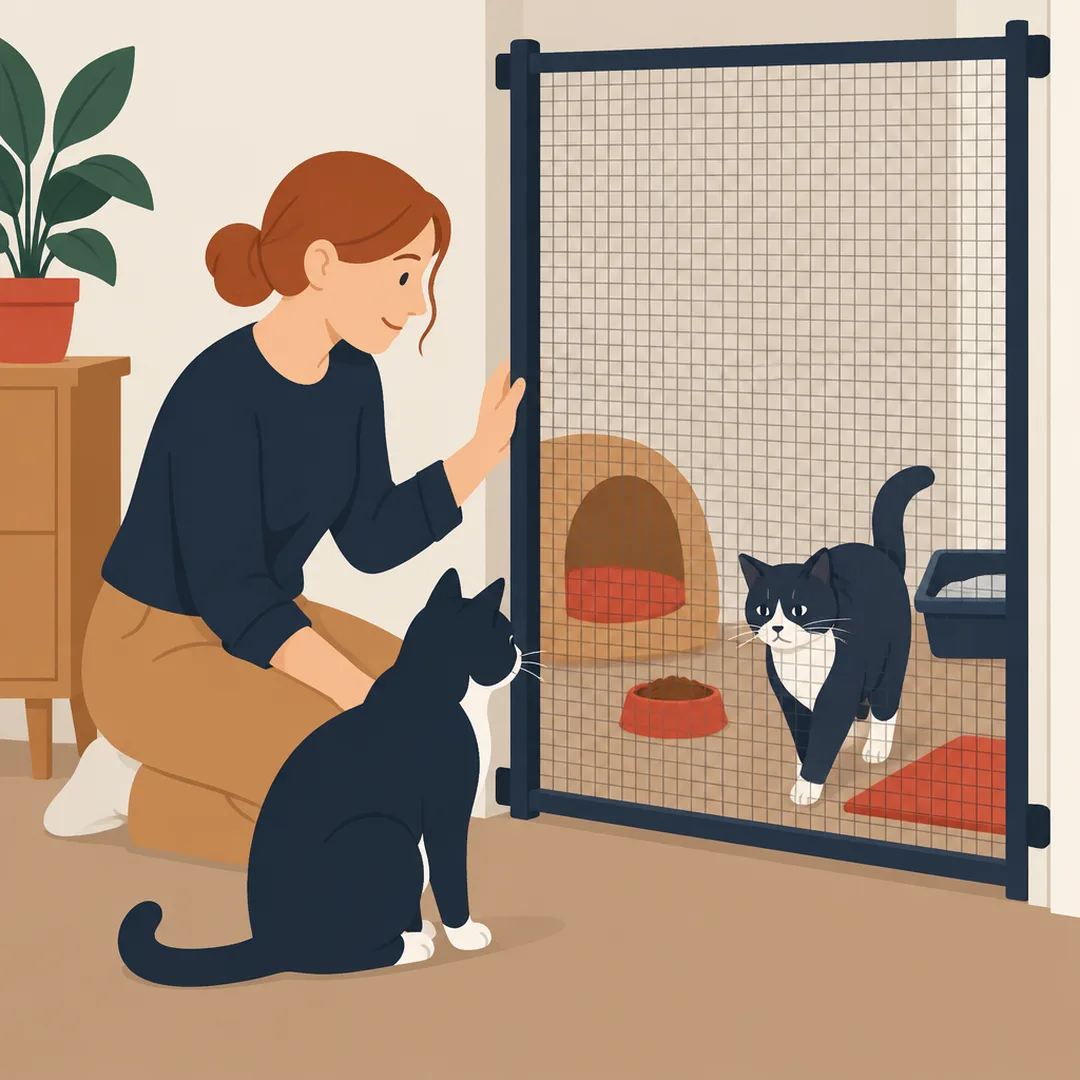
Use a glass door, screen, stair gate or purpose-built mesh barrier. Both cats should be able to see each other but not pass through. Keep sessions short and end while both are relaxed.
Look for loose, curious body language. If either cat hisses, growls, stares hard or holds their ears tense, calmly call them away. Do not punish them. If they need a break, guide them to a quiet room and offer a toy or puzzle feeder there, away from the other cat.
With more than one resident cat, introduce one resident cat at a time.
Step 4: supervised time together
Only remove the barrier when both cats are relaxed seeing each other. Open or remove it while they are busy, and do not force them to approach. They do not need to play or touch; being comfortable in the same room is enough.
If either cat shows distress, put the barrier back and go back a step. Repeat calm sessions often.
Step 5: short unsupervised time
When Step 4 is going well, allow a few minutes of free time without supervision. Keep the new cat's room available, and separate them again between sessions. Gradually lengthen the time only if both cats stay friendly and relaxed. Make sure each cat can retreat to their own space.
Set up the home for peace
Resources matter. Provide each cat with their own food and water bowls, beds, litter trays and scratching areas, plus one extra, spread around the home. Aim for at least one litter tray per cat, ideally one more, in different places. Add hiding spots at floor level and high perches. When cats compete for resources, conflict is more likely. Pheromone diffusers may help cats feel more comfortable.
After a vet visit, keep cats in separate rooms for at least a day, even if only one cat went.
When to call the vet
Call your vet if introductions are not working, if there has been a breakdown after a good start, or if one cat hides most of the time or bullies the other. Your vet can give advice or recommend a qualified clinical animal behaviourist.
Do not wait: ongoing conflict can cause litter tray accidents and other behaviour problems. Some cats may never be compatible housemates and may need separate living areas.
Key points
- Go slowly: a rushed first meeting can set the tone for the whole relationship.
- Start with a safe room, then swap scents before any sight of each other.
- Use a secure barrier for first views, and keep sessions short and calm.
- Give each cat their own resources, plus one extra, spread around the home.
- If either cat is stressed, go back a step; never punish.
- Call your vet if introductions stall or conflict continues.