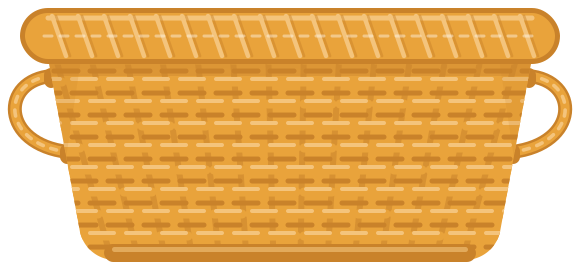
Expert puzzle board for cats: how to play
A multi-step puzzle with sliders, lifting lids and spinning discs. For confident cats that breeze through everything else.
- Time
- 15 min
- Energy
- Low
- Space
- Small room

You'll need
- multi-step puzzle board for cats or small dogs (sliders, lids, drawers)
- strong-smelling treats or kibble
- clicker (optional)
Set up
Only start once your cat has mastered level 3 puzzles. Unlock or open all parts of the board at first.
How to play
Teach one part at a time. Put food in open compartments only. Let your cat eat.
Slide one lid halfway. Click or say 'yes' the moment your cat paws it open.
Close that lid fully once it is easy. Then teach the next part (lift a lid, spin a disc) the same way.
Combine: food behind a slider that is only reachable after moving another piece.
Sit back. Let your cat solve the whole board, helping only if it stops trying.
Remove loose parts and store the board after each session.
House rules
- One new step at a time.
- Supervised only.
- Session ends on a solved compartment.
- Make it easier
- Leave half the compartments open.
- Make it harder
- Rearrange which compartments hold food, or add a second board.
Signs it's having fun
Deliberate paw work, trying different moves, returning to the board on its own.
Stop if you see
Frustration (biting the board, meowing, walking off). Open more compartments next time.
Safety
 Safety
- Check for small removable pegs; take them out if your cat could chew or swallow them.
- Supervise every session.
Sources
- Food puzzles for cats: feeding for physical and emotional wellbeing (Dantas et al., summary)
- Teach your cat to follow a target (Karen Pryor Academy)
Written from these sources and checked against vet and trainer guidance. General guidance, not veterinary advice.
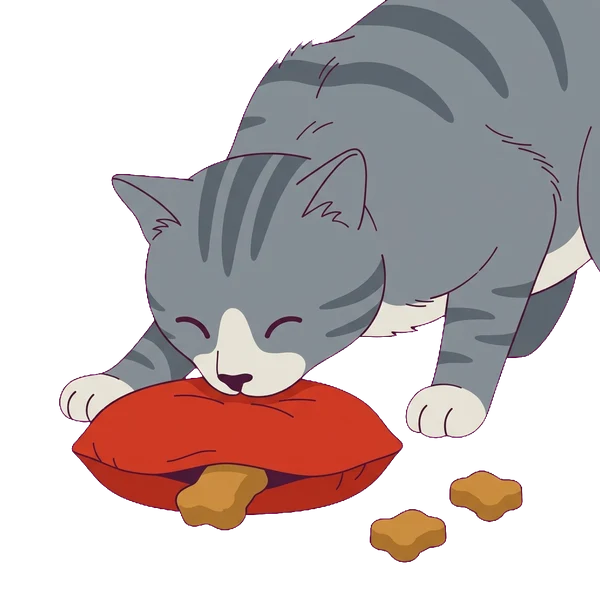
Game · 10 min
Treat treasure hunt for cats: how to play
Hide treats or kibble around a room, then around the home, and let your cat sniff them out.
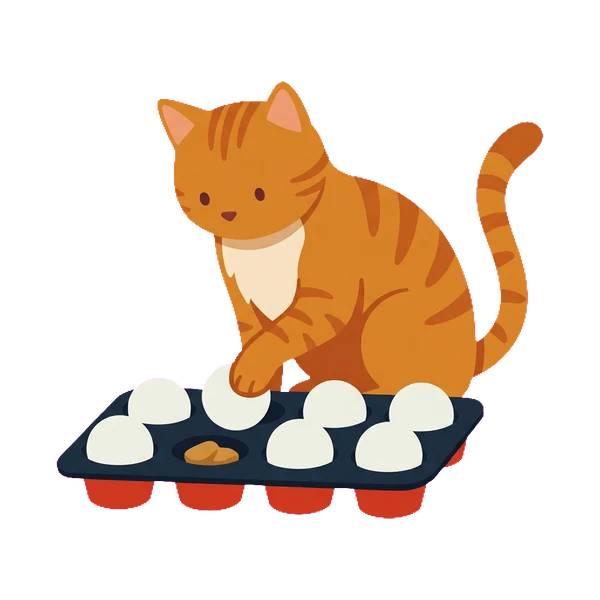
Game · 10 min
Muffin-tin puzzle for cats: how to play
Kibble in a muffin tin, cups covered with balls. Your cat scoops the balls out to find the food.
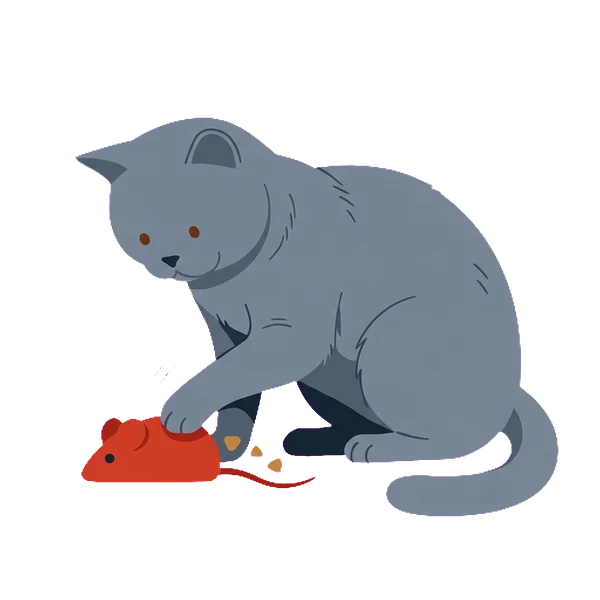
Game · 15 min
Hunting feeder mice for cats: how to play
Fill small soft feeder 'mice' with portions of kibble and hide them around the home. Your cat hunts several small meals a day.