Bird flight for cats: how to play
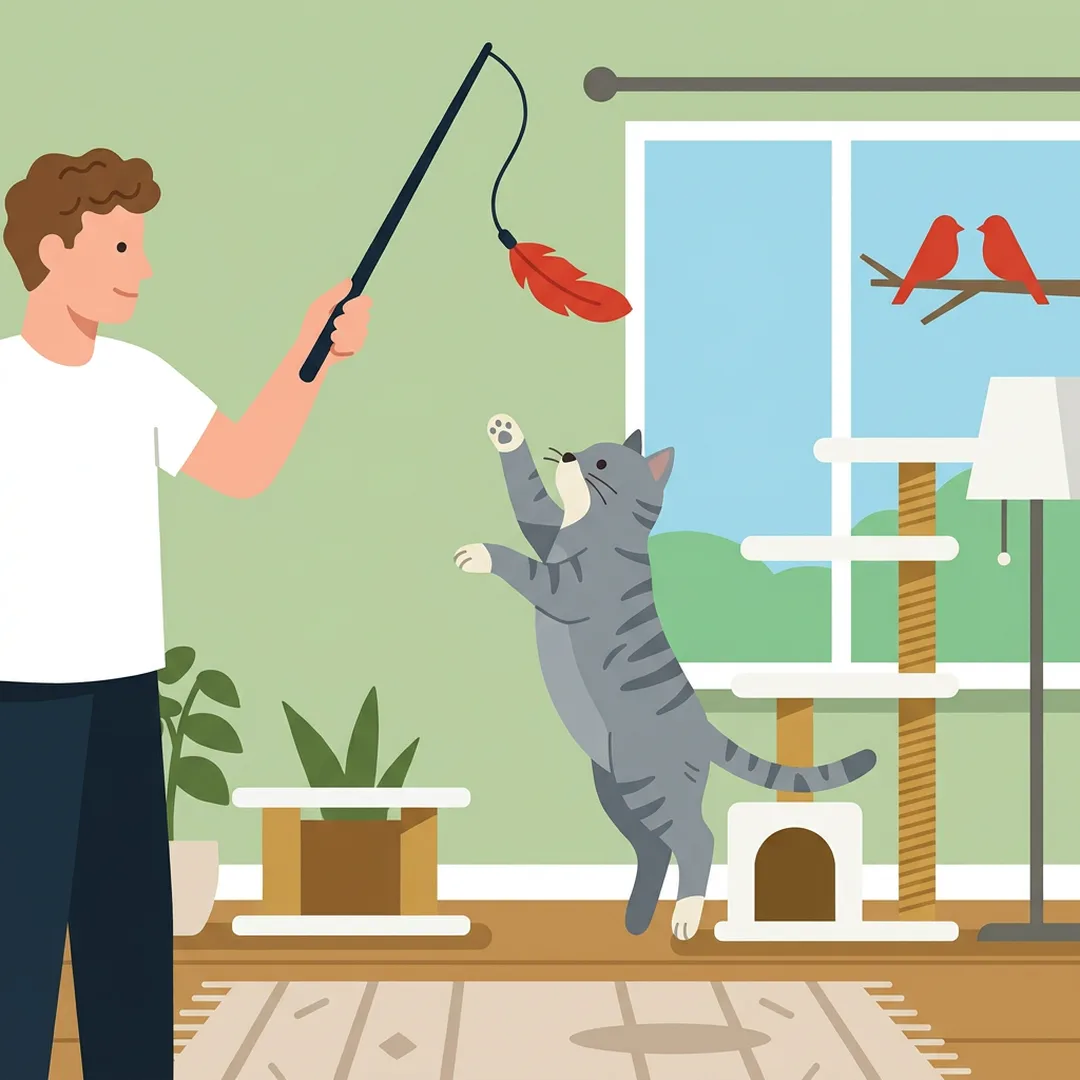
A feather wand that lands, hops and takes off. Made for cats that leap, swat in the air and watch birds at the window.
- Time
- 10 min
- Energy
- High
- Space
- A room
You'll need
- feather wand toy
- treats
Set up
Choose a room with soft landing space and nothing fragile on shelves. Move breakables and lamps. A rug helps your cat land and turn without slipping.
How to play
Land the bird. Rest the feathers on the floor a little away from your cat and make them twitch and hop, like a bird pecking.
Take off. Lift the feathers in a smooth arc just above your cat's head height and land them again a short distance away.
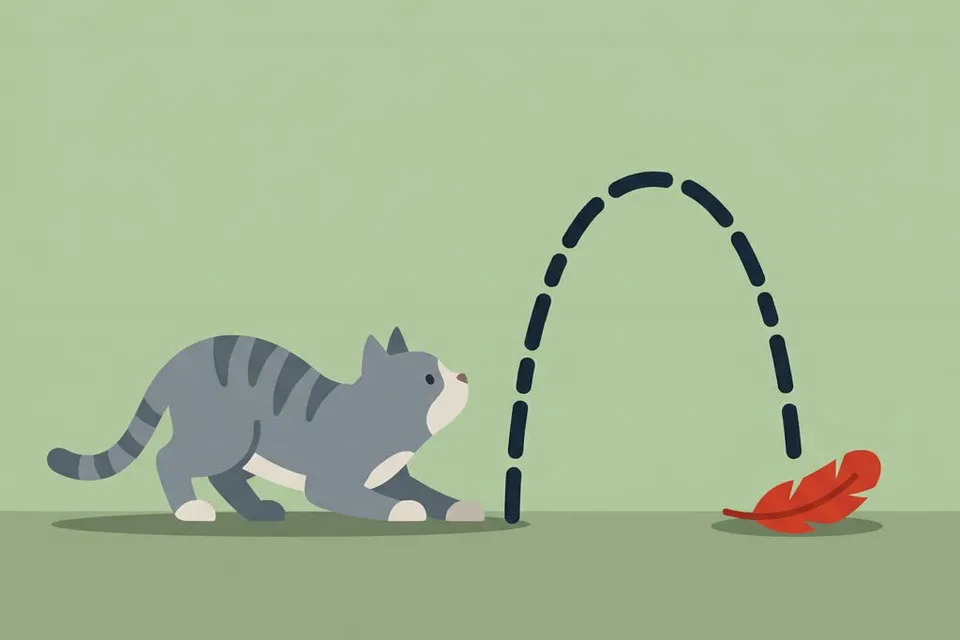
Flutter. Make small fast shakes in the air, then swoop low across the floor. Vary height: floor, knee, just above head height.
Let it be caught. Every few jumps, let your cat grab the bird in the air or pin it on landing. Hold still while it bites and kicks.
Tired bird. Slow the flights down for the last two minutes. The bird stays on the ground longer and hops weakly.
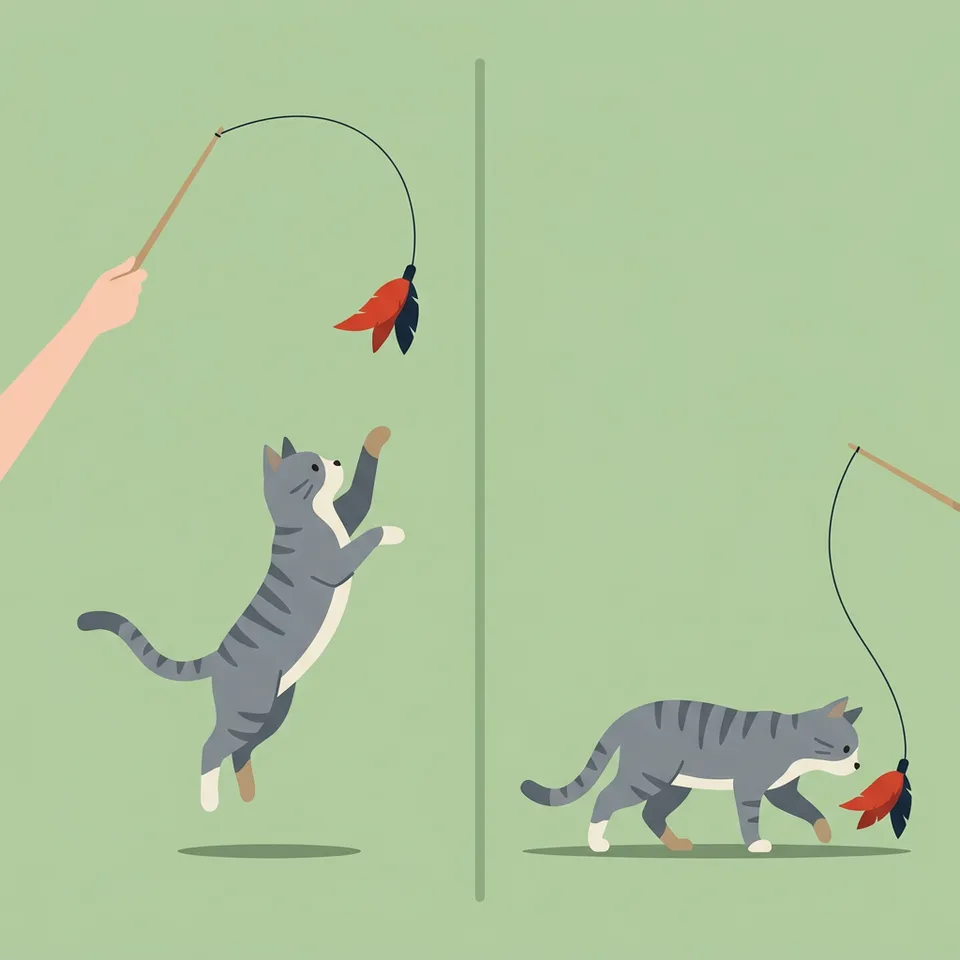
Final catch and treat. Let your cat carry the bird off for a moment, then trade it for a treat and put the wand away.
House rules
- Most flights end in a landing. A bird that never lands is frustrating.
- Keep jumps at a height your cat lands well from.
- Catch every 3 to 5 jumps.
- Make it easier
- Keep the bird low and slow, with short hops along the floor. Good for kittens and cats new to wand play.
- Make it harder
- Add higher arcs, landings on a low stool or cat tree step, and longer flights across the room so your cat sprints and leaps.
Signs it's having fun
Leaping and twisting, eyes locked on the feathers, chattering, quick return to the ready crouch after a landing.
Stop if you see
Panting, slipping on landings, limping after a jump, tail lashing, ears flattened, or your cat walking away. Limping after play is a reason to call your vet.
Safety
 Safety
- Feathers break and can be swallowed. Check the toy before play and store it shut away after.
- Avoid repeated high twisting jumps for cats with sore joints, heart conditions or that are overweight. Ask your vet if you are unsure.
- Play on a non-slip surface so your cat does not skid on landing.
Sources
- Identifying prey preference (Ohio State Indoor Pet Initiative)
- Playing with your cat (Battersea)
- Safe toys and gifts (Cornell Feline Health Center)
Written from these sources and checked against vet and trainer guidance. General guidance, not veterinary advice.
Game · 8 min
Mouse under the rug for cats: how to play
A toy rustles under a rug, towel or sheet of paper. Your cat listens, stalks and pounces on the bump.
Game · 6 min
Bug skitter for cats: how to play
Tiny, fast, jerky moves along the floor and up the wall, like a beetle or a fly. Perfect for cats who chase every moving speck.
Game · 8 min
Snake slither for cats: how to play
A long ribbon-style wand toy slides and curls along the floor like a snake. Lots of stalking, sudden pounces and bunny kicks.




